·
·


World
The Crimean Peninsula, annexed by Russia in 2014 and turned into one of its most important military centers in the Black Sea, is witnessing a notable shift in the course of the Ukrainian war, as it has become a continuous target of Ukrainian attacks aimed at military infrastructure and Russian supply lines.

The Crimean Peninsula, annexed by Russia in 2014 and turned into one of its most important military centers in the Black Sea, is witnessing a notable shift in the course of the Ukrainian war, as it has become a continuous target of Ukrainian attacks aimed at military infrastructure and Russian supply lines, in a development that threatens to turn what Russian President Vladimir Putin considered his most prominent political achievement into one of Moscow's biggest strategic weaknesses.
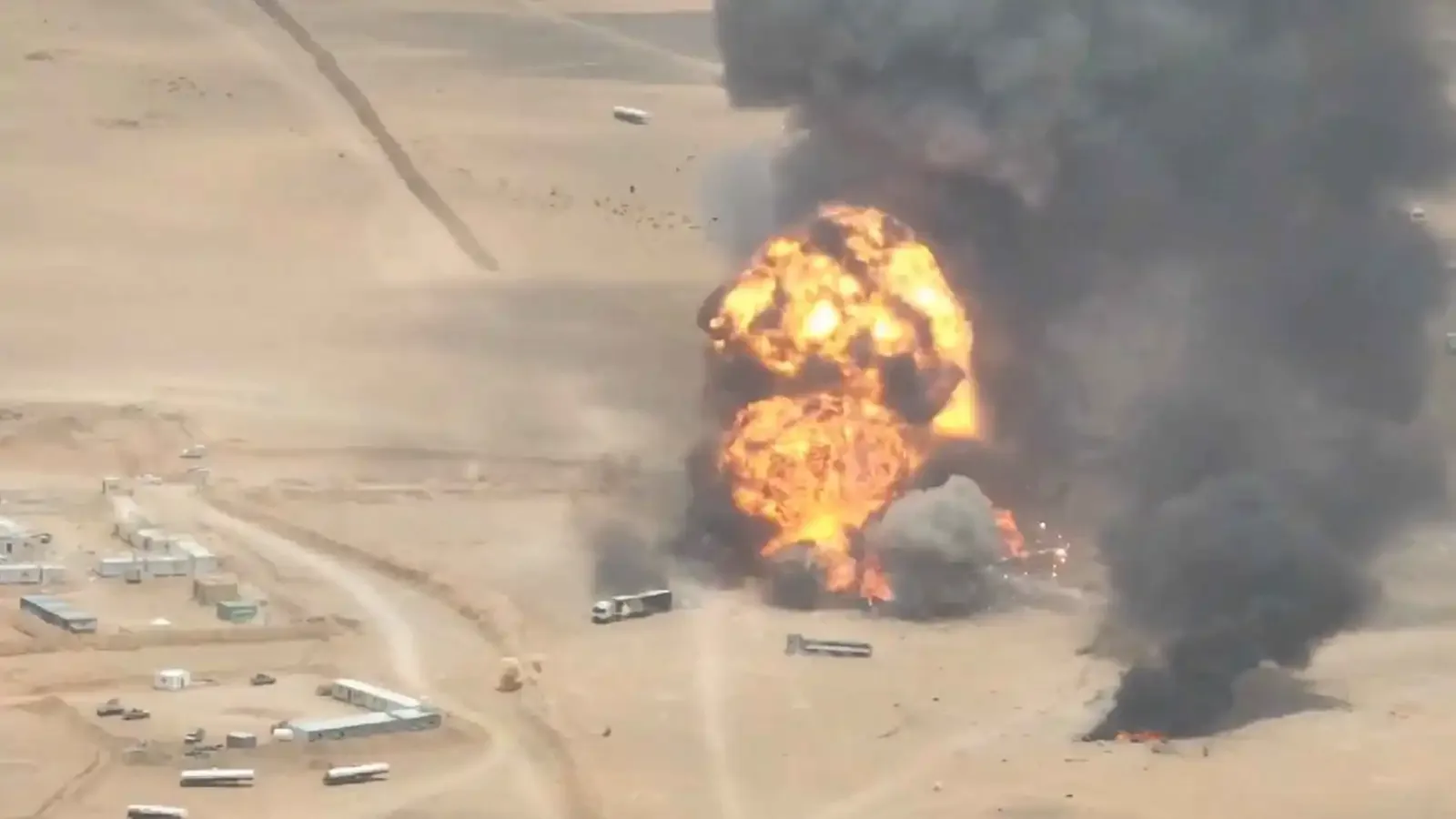
With the escalation of attacks by drones and long-range missiles, Crimea is facing increasing disruptions in basic services, amid Ukrainian attempts to isolate the peninsula from the Russian mainland and weaken its ability to support military operations in southern Ukraine, according to "Politico".
Ukrainian strikes in recent months have targeted energy facilities, military infrastructure, and supply centers in Crimea, causing repeated power, water, and communications outages, along with fuel shortages, disruption of public transport, and rising prices of basic goods.
Russian authorities also declared a state of emergency in late June, amid deteriorating living conditions and declining supplies to the peninsula's population, estimated at about 2.5 million people.
Leaving Crimea has become more difficult after bridges and roads leading to it were subjected to repeated attacks, while the Kerch Bridge, which connects the peninsula to Russian territory, witnessed heavy congestion with thousands of vehicles lining up to leave, as train traffic significantly decreased.
From a Safe Base to a Direct Target
Since its annexation in 2014, Moscow turned Crimea into its largest military base in the Black Sea, relying on it as a main launchpad during the Russian large-scale invasion of Ukraine in 2022.
The peninsula served as a logistical hub to supply Russian forces in southern Ukraine, also providing protection for rear lines, command centers, and ammunition depots.
However, the rapid development of Ukraine's capabilities in using long-range drones changed the military equation, as Kyiv became able to repeatedly target air bases, ports, and depots inside Crimea, threatening the continuity of Russian supply to the southern front.
Ukrainian officials see the main goal as weakening Russian military capabilities within the peninsula and forcing Moscow to transfer its forces and defense means from other fronts, thereby relieving pressure on Ukrainian forces.
Crimea's importance is not limited to the current war, as it represents a main base for the Russian Black Sea Fleet, and Moscow used it for years as a logistical hub to support its military operations in Syria, in addition to its role in securing Russian influence in the Black Sea and the Eastern Mediterranean.
Experts believe that losing Crimea or the decline of its military effectiveness will directly affect Russia's ability to manage its regional operations and undermine one of the most important pillars of its military strategy in the south.
A Potential Blow to Putin
The Crimean Peninsula also carries great political and symbolic importance for President Vladimir Putin, who boosted his popularity domestically after its annexation in 2014, considering it evidence of restoring Russian influence.
Analysts believe that any Russian retreat in Crimea or loss of effective control over it will represent a moral and political blow to the Russian president, and may raise internal questions about the cost of the war and Moscow's ability to retain the gains it achieved over the past decade.
Ukrainian officials describe Crimea as the "golden key" to the Russian project in the Black Sea, considering that continuous pressure on it gives Kyiv an important negotiating card in any future talks to end the war.
Civilians Pay the Price
On the other hand, military operations have impacted the daily lives of Crimea's residents, whether Ukrainian citizens who remained in the peninsula after its annexation or Russians who moved there in recent years.
Crimean Tatar leaders warn that residents may face more difficult conditions in the coming period, calling for stocking up on food and medicine and staying away from Russian military facilities that have become repeated targets of Ukrainian attacks.
Restrictions on fuel, electricity, and communications have also disrupted economic and tourism activity, increasing pressure on local residents.
A Race Against Time
Ukrainian officials and military experts believe that Kyiv currently has a limited time window to benefit from its superiority in drones and long-range weapons before Russia can develop more effective means to counter them.
Although retaking Crimea by military force remains a distant goal, Ukraine is betting on continued military and economic pressure to isolate the peninsula and exhaust Russian forces, giving it a stronger position at the negotiating table in the future.
On the other hand, Moscow appears compelled to allocate more military and economic resources to defend Crimea, making the peninsula, once described as one of Russia's most prominent strategic gains, gradually turn into an increasing burden on the Kremlin as the war continues.