·
·


World
Recent satellite photos reveal Iran's efforts to reactivate missile tunnel entrances damaged by US and Israeli airstrikes during the last war.

Satellite imagery has exposed signs that Iran is reactivating missile sites destroyed by intense US and Israeli airstrikes during the recent conflict, according to a visual report by CNN. Iran reportedly maintains around 1,000 missiles stored underground and has rebuilt 50 ballistic missile production facilities.
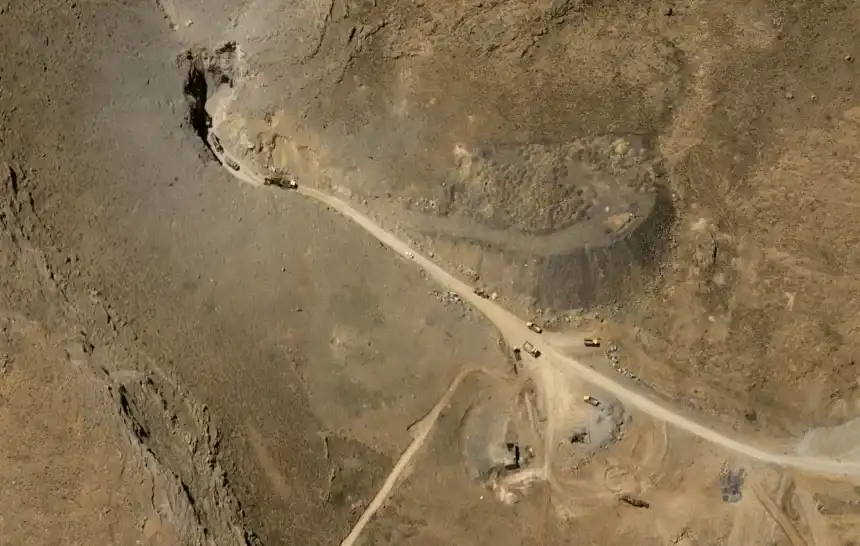
The images reviewed and published by CNN indicate that within weeks following the ceasefire on April 8, Tehran managed to reopen most of its buried missile tunnel entrances using basic construction equipment such as front loaders and dump trucks.
The latest satellite photos show that sites previously appearing completely destroyed have become active again, highlighting the limitations of a military strategy focused on destroying tunnel entrances and access roads.
During the initial weeks of the war, which began on February 28, US and Israeli strikes concentrated on closing 69 tunnel entrances across 18 underground missile facilities. The bombardment buried entrances under large amounts of rubble and destroyed surrounding roads to prevent Iran from accessing missile stockpiles and launch platforms.
However, images obtained more than seven weeks after the ceasefire tell a different story. Iran has reopened 50 of the 69 targeted entrances. In many locations, deep craters caused by the strikes have been filled, and roads have been repaved at least in two sites.
The photos clearly depict front loaders clearing debris and dump trucks filling holes with earth, showing intensive repair work conducted under satellite surveillance.
At a military base outside Isfahan, one of the main missile facilities, multiple US and Israeli air raids closed four tunnel entrances. Satellite images reveal at least 18 craters at two of these entrances, indicating the scale of munitions used.
Recent images from May show a dump truck filling these craters while the other two entrances have already been reopened and the previously destroyed access roads repaved.
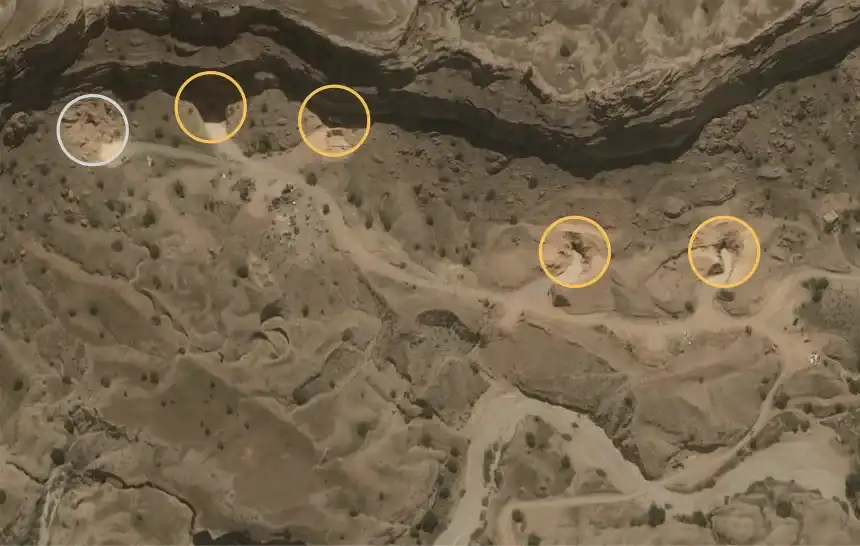
Another base near the city of Khomein was captured in mid-April satellite images showing at least 10 construction vehicles working to reopen one of the entrances.
CNN's report states that these recurring scenes at multiple sites provide crucial new information, demonstrating that Iran's efforts extend beyond debris removal to include repairing logistical infrastructure targeted during the strikes.
Experts cited by CNN link this rapid recovery to Iran's large missile stockpile, estimated at about 1,000 missiles stored underground, some beneath hundreds of meters of rock.
This stockpile is unlikely to have suffered significant damage from strikes aimed at surface targets, especially considering that the Israeli military employed similar tactics during last year’s twelve-day war.
Sam Lair, a senior researcher at the James Martin Center for Nonproliferation Studies, noted that if hostilities resume, Iran could continue missile launches as long as it retains launch platforms and crews, even if production halts.
He added, "There is nothing preventing the arming of launch platforms with the vast missile stockpile Iran still possesses."
Timur Kadishev, a researcher at the Institute for Peace Research and Security Policy at the University of Hamburg, described Iran’s preparedness as a "20-year readiness," highlighting that the technological differences reveal the difficulty of military options against Iran.
Kadishev explained, "Extremely advanced and costly weapons are needed to inflict this kind of damage, while the recovery process is very simple—just bulldozers."
During the conflict, Iran excavated tunnel entrances under hazardous conditions, with strikes targeting excavation equipment. Despite this, Tehran managed to maintain missile launches, albeit at a reduced rate.
Following the ceasefire, reconstruction efforts accelerated significantly. US intelligence assessments indicate Iran exceeded expected rebuilding timelines and began resuming drone production and replacing launch platforms.
US President Donald Trump had identified the "complete destruction of Iran's missile capabilities and launch platforms" as one of five main war objectives. However, satellite imagery raises questions about the effectiveness of this strategy, according to CNN's report.
Sam Lair commented, "The US military excels at achieving tactical successes, with the destruction and suppression of Iran’s missile force being a prime example," but he cautioned, "Without a set of reasonable strategic war aims and a feasible theory to achieve victory, it may result in strategic failure."
While Iran and the United States have reached a preliminary agreement to reopen the Strait of Hormuz, which will require months to finalize, the Iranian missile threat remains, experts say.
As US supplies of interceptor missiles dwindle, analysts warn that Iran’s underground missile arsenal could continue to be a decisive factor in any future confrontation.