·
·


Economy
A report reveals that at least £325 billion of illicit funds pass through the UK each year, highlighting concerns over government investigations and crypto asset expansion plans.

A recent report published by a British newspaper disclosed that no less than £325 billion in dirty money flows through the United Kingdom annually.
This figure, based on research from the charitable organization Finance Innovation Lab, raises concerns about the funding of government investigative bodies and the government's plans to expand into cryptocurrency assets.
The newspaper indicated that this amount represents over 10% of the UK's gross domestic product and includes illicit funds linked to financial crimes, money laundering, corruption, illegal trade, and tax evasion. When including territories under the British Crown and overseas territories such as Jersey and the Cayman Islands, the total rises to more than £788 billion annually.
This study is believed to be the first comprehensive attempt to quantify the scale of illicit financial flows associated with the UK. Cross-border data on tax evasion and financial crimes illustrate the UK's international role as a global hub for dirty money from around the world.
The figures were released as the UK postponed the “Illicit Finance Summit,” initially scheduled for June 23-24, to December.
The British charity urged Labour Party ministers to “show leadership” by confronting the UK's role in facilitating economic crimes and tax evasion.
Jesse Griffiths, one of the report's authors, stated: “Rachel Reeves described the British financial sector as the ‘crown jewel’ of the economy. However, our report shows that it often plays a central role in supporting illicit financial flows: harming the economy, diverting funds from public services, and enabling crime. Understanding the true scale of this phenomenon is a crucial step to ensure the financial system works for society, not against it.”
The organization called for a “freeze” on ministers' plans to make London a global center for digital crypto assets, a plan partially influenced by the Trump administration's enthusiastic promotion of alternative digital assets, despite the increasing association of cryptocurrencies with money laundering and opaque market transactions.
The report noted: “The UK's global role as a financial center brings economic benefits but also attracts criminal activities, corruption, and tax evasion that undermine national integrity, distort markets, and erode public trust. The government's plans to make the City of London a global hub for crypto assets could worsen this situation.”
It also called for a stringent campaign against UK-linked tax havens, emphasizing the necessity of full transparency regarding the true owners of shell companies in offshore territories, including the British Virgin Islands.
The newspaper quoted a government spokesperson stating: “Corruption makes Britons poorer and less safe and undermines our democracy. That is why the anti-corruption strategy published last December aims to bring more criminals to justice.” The spokesperson added, “New rules for cryptocurrencies will regulate this sector in the UK by 2027, and we are hiring 5,500 additional compliance staff to combat tax evasion.”
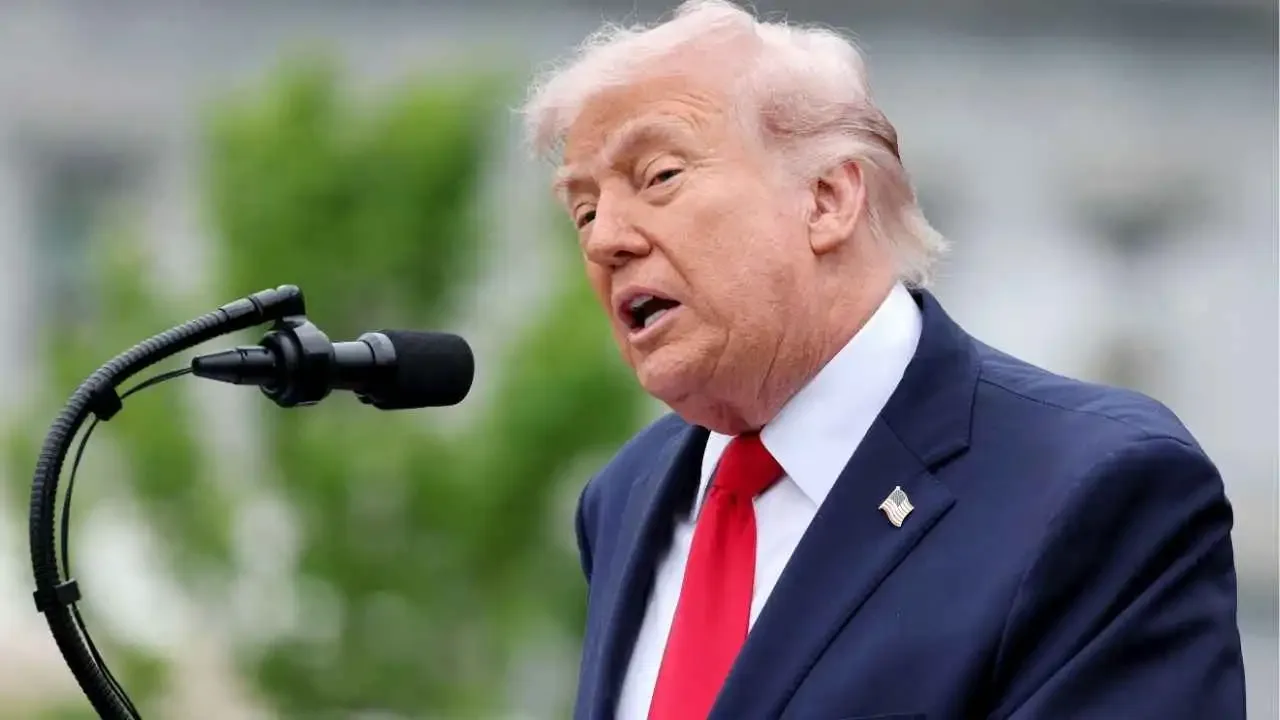
Separately, former US President Donald Trump intensified his criticism of UK Prime Minister Keir Starmer's handling of several sensitive issues.
Trump views Starmer's political future as contingent on overcoming two major challenges threatening his tenure as head of the British government.
Speaking aboard Air Force One after returning from an official visit to China, Trump painted a bleak picture of the Labour leader's prospects amid increasing pressure within and outside his party following the party's poor results in recent local elections.
Although Trump described Starmer as a “nice man” who temporarily managed to overcome internal challenges that nearly toppled his leadership, he clarified that this personal regard does not translate into political confidence in Starmer's ability to withstand the mounting crises facing his government.
Trump identified Starmer's first major challenge as immigration, describing it as the government's most significant weakness. He emphasized that the Prime Minister's capacity to address this issue is critical to maintaining his political position amid growing public concern over its security and social repercussions.
The second challenge, according to Trump, concerns London's energy policies. He sharply criticized the British government's insistence on expanding renewable energy projects and called instead for reopening investment opportunities in North Sea oil.
Trump asserted that Britain possesses one of the largest oil discoveries that has not been adequately exploited, considering neglecting this strategic resource a major economic and political error. He added that Starmer “harms himself and his country” by adhering to what he termed impractical green policies at this sensitive stage.
Trump's criticisms extended to foreign policy, particularly regarding the growing divergence between Washington and London over approaches to escalating tensions in the Middle East.
He recalled the sharp disagreement with the British government over the joint UK-French defense plan to secure navigation through the Strait of Hormuz, a vital maritime passage experiencing rising tensions with Iran.
Trump expressed dissatisfaction with Starmer's remarks suggesting that Britain would intervene militarily “after the wars end,” viewing this stance as unjustified hesitation at a moment requiring strategic clarity from Western allies.
This position aligns with criticisms from US Secretary of State Marco Rubio, who described the UK-French approach as unrealistic, revealing a widening gap in perspectives between the traditional allies on how to contain regional escalation.
This escalation follows a series of critical stances Trump has taken toward Starmer over recent months, during which he downplayed Starmer's leadership abilities, stating he “is not Winston Churchill” and warning him against making a “strategic mistake” by not fully supporting the US position on Iran.
While Trump has so far refrained from explicitly calling for the British Prime Minister's resignation, combining personal praise with ongoing political doubt increases pressure on Starmer, who faces a complex political test intertwining domestic challenges with rising transatlantic tensions.