Football
Germany’s 44-Player Dual-Squad Plan Under Klopp Sparks Focus on Depth
Jürgen Klopp has named 44 players for Germany’s upcoming UEFA Nations League fixtures, dividing them into two non-hierarchical squads to manage a compressed four-game schedule across two weeks.

Forty-four players have been selected by new Germany head coach Jürgen Klopp for the national team’s next four UEFA Nations League matches — the largest single call-up in recent memory — and distributed across two distinct squads.
Klopp confirmed the split after revealing both rosters, citing the condensed fixture calendar as the central rationale: four competitive matches scheduled within a 10-day window from September 24 to October 3.
“It’s mainly because we have to play four games in two weeks, which is very unusual for the national team,” Klopp explained.
He emphasized that neither squad carries formal seniority or designation.
“We haven’t created an A or B team,” Klopp underlined.
“We want to, and I think that’s normal in football, win all four games.”
The composition of each group reflects deliberate balance: positions, player personalities, experience levels, and age distribution were all factored into selection. Klopp stated his objective is to “get as many impressions as possible of the players.”
Finn Dahmen is the sole player named to both squads.
“He’s a highly talented goalkeeper whom I’d also really like to see for a little longer,” Klopp said, noting that Dahmen’s dual inclusion supports extended observation.
Klopp added that continuity beyond the initial matchweek is part of the operational design: “That’s right, the plan is for a few players from the first squad to stay with us for longer.”
Germany’s first match under Klopp will be away to the Netherlands in Amsterdam on September 24. The team then hosts Greece on September 27 and Serbia on October 1, before concluding the cycle with an away fixture against Greece on October 3.
Latest news

Temporary Opening of the Bint Jbeil Civil Registry Office in Saida's Municipal Building Starting 17/9/2026
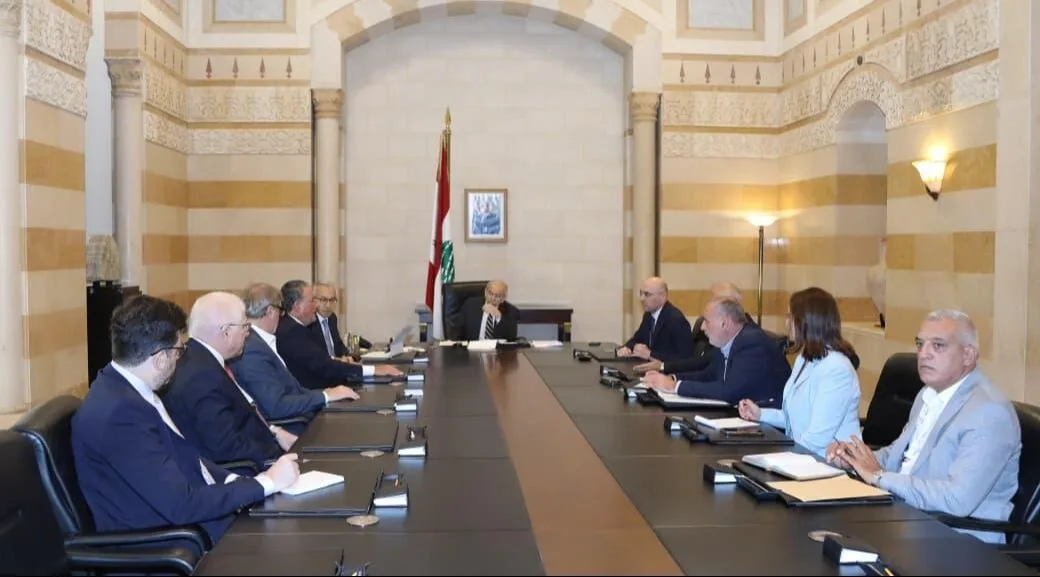
Salim chaired two meetings on southern projects and revitalizing Beirut's vegetable and fruit market

Jumblatt: The Events of the Last Two Days Proved That the Majority of the Lebanese People Support the Government