Lebanon
Geagea: The State Diminishes Itself with Its Own Hands
Lebanese Forces leader Samir Geagea criticizes the Lebanese state for failing to address Hezbollah's military apparatus, warning that this negligence undermines national sovereignty and economic stability.

Samir Geagea, head of the Lebanese Forces party, stated that the Lebanese state "is diminishing itself with its own hands." He argued that some officials, through their practices and disregard for serious security realities, are undermining the image of the actual state that Lebanese people have waited decades to see. He warned that continuing this approach will lead to a loss of confidence in the state and its institutions, reaching a stage where no one takes Lebanon seriously. He emphasized that what was revealed in the overlapping area between the Batroun and Bcharre districts, along with the earlier seizure of an explosives shipment at Dahr al-Baydar, raises issues far beyond investigating elements, drivers, or individuals caught at specific sites. The core issue lies in the existence of a military and security organization operating outside the framework of the state, its laws, and its decisions, while relevant authorities avoid reaching the leadership behind these activities, despite Hezbollah officials publicly claiming responsibility for some of them. He asked: "How can a state that respects itself limit its investigation to the driver of an explosives truck when the entity behind it declares its responsibility?" He considered that the function of investigation is not to stop at the executors but to reach those who gave orders, planned, and made decisions, noting that overlooking this reality means the state continues to evade its constitutional and legal responsibilities. He affirmed that "as long as there is a military and security Hezbollah, there will be no real state in Lebanon," stressing that the problem is not the existence of the political party, which has the right to engage in political work under the constitution, but rather its retention of an armed organization possessing independent security, military, and strategic decision-making from legitimate institutions. He pointed out that the continuation of this reality not only prevents the establishment of the state but also keeps Lebanon in strategic isolation from its Arab surroundings and the international community, preventing the return of investments, aid, stability, and economic growth, forcing Lebanese people to pay heavy prices in terms of job opportunities, livelihoods, and their children's future.
Considering that continued procrastination in addressing this dilemma is no longer acceptable, he rejected using civil peace as an excuse for not applying the law, affirming that what is required is not confrontation among Lebanese people, but for the elected and legitimate authority to fulfill its responsibilities, gradually deterring violations and imposing its sovereignty and authority over all its territory.
Geagea's remarks came during the annual dinner held by the Lebanese Forces coordination committee in the Batroun region at the party headquarters in Meerab. Attendees included Industry Minister Joe Issa El-Khoury, MP Ghiath Yazbek of the Strong Republic bloc, former MP Fadi Saad, Batroun Municipalities Union President Roger Yazbek, Lebanese Forces Assistant Secretary for Administrative Affairs Rafiq Shaheen, Batroun Regional Coordinator Joe Al-Faghal, former coordinator Paul Harb, several directors general, municipal presidents, council members, Batroun Mukhtars Association President Jack Yacoub and mukhtars, Central Council members, professional, economic, and social figures, alongside a crowd of party officials, cadres, and supporters.
In detailing the security issue, Geagea started with the cell recently discovered in the overlapping area between Bcharre and Batroun, noting that available information speaks of five Hezbollah elements, some residents of the area, while others hail from the South and Bekaa, possessing maps and documents related to military plans. He clarified that the debate over whether these plans were defensive or offensive does not touch the essence of the problem, because the question that should be asked first is: Is Lebanon a state with a constitution, laws, and exclusive legitimate institutions, or is it an open space where any organization can do whatever it pleases in military and security matters?
Geagea indicated that information regarding this cell suggests its members had gathered in one member's home in the town of Bahran in the Koura district, and after Internal Security Forces left the site, Hezbollah individuals entered briefly and removed phones and documents present there. He considered that if these data are handled according to legal procedures, they raise the issue of belonging to an illegitimate military and security organization, referring to the concept of "criminal association" in the law, and stressing that the discussion should not be limited to the nature or source of seized papers, but must address the origin of the military and security activity these elements were engaged in, and the entity they belong to and work for. He said Lebanon has specific legitimate security institutions defined by the constitution, laws, and relevant decisions, particularly UN Resolution 1701 and the Lebanese government decision issued on March 2, 2026, which emphasized banning any military and security activity outside the state framework. He listed the institutions authorized to bear arms and exercise security powers within their jurisdictions, including the Lebanese Army, Internal Security Forces, General Security, State Security, Customs, and municipal police within legally defined limits, affirming that no other organization has the right to establish military and security apparatuses or perform their missions. He stressed that, based on this principle, the discovered cell cannot be treated as a group of individuals independent of any organizational framework, as the main issue is their affiliation with an armed military and security organization operating outside state authority.
Geagea moved to the Dahr al-Baydar explosives file, considering it a clearer example of the flaw in how the state deals with illegal military and security activity. He noted that the quantities seized were not limited or treatable as a passing incident; according to the figures he cited, one shipment contained between 700 and 800 kilograms of explosives, preceded by other quantities totaling around 150 kg and 100 kg, amounting to nearly a ton of explosives in total. He expressed surprise that the investigation continues to focus on drivers and elements transporting these materials, while Hezbollah officials publicly declared that the explosives belonged to the party and were prepared for use in confrontation with Israel in the South. He questioned the utility of limiting the investigation to the truck driver—whether he was driving at a certain speed or knew the cargo details—when the entity behind the operation does not hide its responsibility.
He considered that a natural investigation starts from arrested elements to reach those who gave orders and made decisions, rather than letting these individuals become the boundary where the investigation ends, leaving actual decision-makers unaccounted for. He added that Hezbollah's declaration that the explosives were intended to confront Israel does not change the essence of the matter, even assuming the justification is valid, because determining military, strategic, and security options belongs solely to the Lebanese state. He stressed that the state decides, according to its constitution, laws, and institutions, whether to confront Israel, how to confront it, and what options to adopt for defending Lebanon; no entity has the right to wake up in the morning, decide on its own military strategy, and impose its results on the Lebanese. He pointed out that states are not managed this way, and each faction cannot draw up security or military policies according to its own convictions, as this leads to the collapse of the concept of the state and turns national decision-making into a set of contradictory and conflicting decisions.
Geagea saw that more dangerous than these facts is the state's continued ignoring of the real problem, considering that it acts as if closing its eyes to reality is enough to erase it. He said the state can ignore what happened at Dahr al-Baydar or in the overlapping area between Bcharre and Batroun, and settle for limited investigations or descriptions that downplay the severity of events, but this will not change the truth. In this context, he referred to the statement issued by the United States, Britain, Canada, Japan, and Australia regarding the Dahr al-Baydar explosives case and the measures to be taken, asking how countries geographically distant from Lebanon can pause at this issue while the Lebanese state itself avoids confronting it with the required firmness.
He asked: "How long will the state keep its eyes closed to facts? How long will it continue to diminish its own value?" Considering that a state that does not enforce its laws or deal seriously with challenges contributes to undermining its prestige and image himself. He expressed surprise that Lebanese people spent decades struggling for a real state, only to reach a stage where features of this state began to emerge, yet find some officials working to weaken it from within.
Geagea paused at the hopes Lebanese placed on the new political phase following the election of a president and formation of a new government, noting that everyone breathed a sigh of relief and looked forward to a different start ending the reality Lebanon lived for four decades. He pointed out that the presidency and government indeed took decisions he described as "honorable," but the value of these decisions remains linked to their implementation, warning that they will lose content and meaning if they remain ink on paper. He saw that the image of a serious state, which began forming in the first phase, receded during the last six or seven months, expressing fear of reaching a stage where the Lebanese state loses credibility entirely, so that neither the international community nor relevant parties deal with it with the required seriousness.
He affirmed that the Lebanese Forces, based on their participation in the current government and clear stance on this issue, will continue pushing until the end toward establishing a real state, because any attempt at reform or advancement in other fields will remain incomplete unless the issue of legitimate authority and exclusivity of security and military decision-making is resolved.
In addressing the Hezbollah issue more broadly, Geagea clarified that the Lebanese Forces' objection to the party's military and security organization does not stem from direct political competition in areas where LF presence is traditional. He noted that Hezbollah is not a direct political competitor to the LF in areas like Batroun, Bcharre, Keserwan, Koura, Deir Ahmar, Zahle, and Ashrafieh, and that their stance is not based on narrow electoral considerations or local influence struggles, but on a national vision concerning Lebanon's future and ability to survive as a state. He stressed that Hezbollah has the right to practice politics, run elections, and express positions within constitutional frameworks, but the problem lies in retaining an independent military and security organization separate from state institutions. He considered that any country where the state does not monopolize strategic, military, and security decision-making cannot be a real state, and no external entity can deal with it as having independent sovereign decision-making. He said that excessive statements and justifications do not change this fact, no matter how long the talk lasts or attempts to bypass the core issue multiply, affirming that things do not need further complexity: "As long as there is a military and security Hezbollah, there will be no real state in Lebanon."
Geagea moved to the external repercussions of the ongoing situation, noting that Hezbollah's Iranian ties, positions, and interventions in other countries' affairs form a major obstacle to rebuilding Lebanon's normal relations with its Arab surroundings and the international community. He pointed out that many Arab countries harbor genuine love for Lebanon and want to help it, proven in previous stages, but today refrain from providing necessary support as long as Hezbollah's military and security organization exists. He explained that these countries do not view the party merely as a factor hindering the Lebanese state, but also consider it a hostile entity due to its interference in their internal affairs, a matter they handle with great sensitivity. He added that European countries and the United States also view the Lebanese reality from a political and strategic angle affecting the nature of their relations with it.
Geagea considered that Lebanon places itself, due to this reality, in something resembling a strategic blockade preventing serious and fruitful relations with countries capable of helping it. He questioned the actual results of continuous diplomatic visits, calls, and movements, noting that frequent mutual visits have not yet translated into concrete political, economic, or investment outcomes because the main problem remains unsolved. He stressed that the continuation of Hezbollah's military and security organization means the continuation of Lebanon's strategic isolation, regardless of the volume of contacts, meetings, and initiatives.
Geagea affirmed that losses resulting from this reality do not stop at politics and foreign relations but directly affect Lebanese lives and their economic and social future. He noted that continued instability, especially in the South, reflects on various Lebanese regions because the national economy is interconnected, and the economy in the North or any other region cannot grow naturally while the South lives in disturbance and constant threat. He considered that returning investments, aid, and creating jobs require a stable environment, which cannot be secured as long as there is a military and security organization able to make critical decisions away from state institutions, without officials themselves knowing what it might decide the next day.
Geagea wondered how a Lebanese person can work, secure a livelihood, build a family, and create a future if the economy is paralyzed, investments are absent, and job opportunities are limited. He pointed out that the crisis is also evident in daily human scenes, when young men and women and patients are forced to seek help via television screens to cover medical operations and essential treatments costs, after the state, through the Ministry of Health and its institutions, was previously able to bear the burden of many such cases. He explained that the weakness of state capabilities stems from declining economic resources, and securing these resources requires investments, aid, production movement, and job opportunities, all factors affected by the ongoing political and security crisis.
Geagea considered that Lebanese people pay the cost of stalling and procrastination from their daily lives, whether through unemployment, declining incomes, or inability to provide basic needs for their families. He stressed that what is required is for Lebanese people to live a dignified life worthy of them, not to remain prisoners of suffering and despair due to the survival of a military and security organization outside state control, considering it unacceptable to continue burdening the country after four decades of crises.
Geagea wondered if any citizen or state official could know in advance what Hezbollah might decide militarily or security-wise, considering the lack of this knowledge and control as additional evidence of the absence of actual sovereign decision-making. He said that official authorities themselves do not have an answer about what the party might do, although its decisions may have serious repercussions on Lebanon's security, stability, and economy.
In this framework, he reminded that Lebanese participated in parliamentary elections, produced a parliament that elected a president and granted confidence to the government, meaning Lebanon has legitimate and constitutional authorities responsible for managing country affairs and protecting citizens. He considered that these authorities cannot settle for procrastination and postponing decisions under various pretexts, foremost being preserving civil peace.
He rejected portraying law enforcement as a call for internal fighting, clarifying that the issue is not a confrontation between the Lebanese Forces and any other Lebanese faction, nor a civil war among society components, but the existence of a legitimate state that must deal with violations and gradually impose the law on everyone. He stressed that preserving civil peace is not achieved by disabling the law or turning a blind eye to illegal activities, but by having a strong and fair state to which all parties refer. He concluded by reaffirming that the issue concerns exclusively Hezbollah's military and security organization, not its political existence, because political work is a constitutional right for all, while military and security decision-making must remain exclusively with the state.
Geagea began his speech by expressing deep love for the Batroun region and its people, likening the area to an olive tree, with its integrity, steadfastness, and resilience against storms, winter, and difficult conditions, besides its distinctive characteristics and continuous giving. He noted that trees vary between olive, fig, cherry, and others, but the olive tree has special features making it an example of resilience and integrity, considering these traits apply to the Batroun region and its people. He joked with attendees saying the only difference between the olive tree and the Batroun region is that the former gives fruit one year and retreats the next, whereas Batroun gives every year, indicating the steadfastness, commitment, and continuous giving of its people. He wished that the region and its people remain thus, and that the joint journey continues to the end. Then he welcomed attendees individually, appreciating their participation despite busy schedules and travel difficulties, specifically greeting Minister Joe Issa El-Khoury with a joking salute linking the minister's presence to cooperation between Bcharre and Batroun regions against the backdrop of recent security developments, before moving to detail them.
In concluding his speech, Geagea returned to his historical relationship with the Batroun region, affirming that he feels among its people and comrades as if at home, exactly as he feels in Bcharre, Deir Ahmar, Ashrafieh, and other regions where deep struggle and human bonds connect him with their people. He recalled the specificity of the relationship connecting him to Batroun since the beginning of the journey, considering that comrades present in early stages hold a special place in conscience, and that this relationship was never just an organizational or political link, but a partnership founded on struggle, sacrifices, and steadfastness on principles. He affirmed that the journey started together in those days will continue with the same spirit and determination, saying: "Just as we started together guided by those days, we will continue together to the end if God wills," wishing everyone lasting goodness and renewal of meetings in upcoming occasions.
MP Ghiath Yazbek of the Strong Republic bloc delivered a speech addressed to Geagea on behalf of the Batroun region and its people, confirming the depth of the historical relationship connecting the region to the LF head and the party's struggle journey.
Yazbek began by saying: "From the Batroun region that embraced the revolutionary Samir Geagea and was embraced by him, loved him and was loved by him, protected him and was protected by him, from the region of heroes and saints, we come carrying incense of love, perfumes, and a candle of love to the Wise One, in a meeting we wanted as the Wise One wanted, a meeting of family and loved ones." He affirmed that Batroun remains loyal and generous in giving, and across seasons and stages, continues supplying Lebanese Forces ranks with believing youth who choose commitment to a clear national line based on defending free, sovereign, and independent Lebanon. He pointed out that this line, from ancestors and fathers, through martyr President Bashir Gemayel, to Samir Geagea, never retreated from defending Lebanon, whether during military confrontation stages or in the journey of political and civilized struggle.
Yazbek touched upon crises plaguing the Batroun region, like other Lebanese areas, noting worsening living, developmental, educational, and demographic burdens. He explained that high prices, lack of investments, and unemployment push regional sons, especially younger generations, to internal migration emptying villages and rural areas, and external migration depriving Lebanon of productive energies and scientific competencies. But he noted that migration, in an era of communication and fast mobility, should not necessarily be considered a final break with the homeland, but can be transformed into an opportunity to strengthen expatriates' connection to their land and society, supporting Lebanese resilience and staying power.
Yazbek stressed that regional officials, MPs, coordinators, union presidents, municipalities, and activists exert maximum effort to alleviate citizen suffering and provide assistance within available capacities. However, he affirmed that no one can replace the state, whose absence from fulfilling responsibilities has been prolonged, considering that when it appears, it is not always in the right place or time.
Yazbek saw that the state cannot play its positive role as long as many administrations are under the influence of the corruption system and alliance of gangs and militias, and as long as remnants of the "deep state" control some joints. He affirmed that this harsh reality does not discourage the Lebanese Forces or push them to retreat, but prolongs citizen suffering and delays recovery chances. He stressed that there is no salvation for Lebanon nor return to investment and prosperity without restoring stability, and this stability will not be achieved as long as there is weapons outside legitimacy.
Yazbek moved to the security file revealed in the overlapping area between Bcharre and Batroun districts, considering its danger requires a serious approach from the state and its institutions, not settling for traditional handling of security incidents. He addressed the government and presidency, and through them security agencies and judiciary, recalling the government decision issued on March 2, which he considered defines the illegality of Hezbollah's military activity and weapons outside state authority, imposing on official institutions to move to regulate and prevent this reality. He noted that the party admitted inability to deter Israel but still clings to its weapons, considering that the goal of retaining these weapons now relates, in his estimation, to the possibility of using them internally to change security equations paving the way for changing political balances. He stressed that the state is required to stop chasing cells and scattered elements on the ground while leadership entities behind them remain unaccounted for. He cited what happened in the Dahr al-Baydar explosives file and in the overlapping area between Bcharre and Batroun, considering both cases highlight the necessity of moving from investigating executors to identifying decision-makers, instigators, and beneficiaries. He affirmed that the judiciary must respect investigation procedures and reach the "commander-in-chief," not settling for apprehending individuals and leaving responsible leaders without accountability or punishment. He also called on security agencies to move from relying on chance in revealing violations and cells to adopting a proactive and preventive security approach, ensuring risk prevention before occurrence, instead of dealing only with consequences.
Yazbek addressed sons of neighboring Shia villages, inviting them to contribute to deterring any cells or armed security activities threatening area safety and people. He affirmed this invitation stems from care for good neighborliness and preventing dragging the country into seditions, besides protecting safe villages from potential Israeli strikes resulting from any illegal military activity. He recalled historical relationships connecting sons of these areas, especially during the civil war, when neighbors dealt with each other with kinship and solidarity, stressing that this relationship must not turn into enmity or treating neighbors who provided protection and support as adversaries. He considered maintaining these bonds a moral and national responsibility compatible with religious values and social traditions uniting Lebanese.
In the developmental aspect, Yazbek revealed numerous projects and ideas worked on by concerned parties in the region, whose implementation would restore pulse and prosperity to Batroun, from coast to mountain. He affirmed that work does not stop waiting for national crises to dissipate, but preparation for projects and suitable conditions for launching the recovery workshop continues whenever potentials and opportunities arise. He stressed that the Lebanese Forces in Batroun will remain cohesive, shoulder to shoulder, preserving their struggle legacy baptized with sacrifices, cooperating with regional people and all sovereign forces to protect and develop it.
Yazbek concluded by renewing the pledge to Geagea to continue the journey alongside MPs, past and current coordinators, center heads, and activists, working to supply the party with best female, youth, and competency energies in various fields, enhancing its presence and national role.
The event began with the Lebanese national anthem and the Lebanese Forces anthem, followed by a welcome speech by Vanessa Roux, media officer for the Lebanese Forces coordination in Batroun, before Joe Al-Faghal, coordinator of the Lebanese Forces in Batroun region, delivered a speech focusing on the historical relationship connecting the party head to the region and the struggle legacy forming the basis of LF presence there.
Al-Faghal recalled war stages, when Geagea, according to him, was present in front lines alongside youth defending Batroun region, and when he worked to open roads connecting Qattara to Batroun people, considering these moments cemented a relationship that cannot be reduced to politics or party work, as it was founded on difficult positions and shared sacrifices. He said Batroun is not just a region on the map, but land watered by martyrs' blood, history carved in people's memory, noting that photos of martyrs remain hung on walls of many homes in various towns, witnessing sacrifices offered for the cause. He addressed comrades affirming that preserving this legacy is a trust on everyone's necks, and it must not be abandoned or dissipated under any circumstance.
Al-Faghal remembered sacrifices offered by Geagea, his wife MP Strida Geagea, and many comrades during persecution and arrest stages witnessed by the country during Syrian guardianship, and attempts to eliminate the Lebanese Forces and dissolve the party. He noted that that harsh stage did not manage to end the journey or weaken belief in the cause, but proved the LF's ability to withstand and persist despite challenges. He stressed that struggle did not stop with the end of that stage, and responsibilities today remain large, even if challenge natures and conditions changed. He considered true loyalty is not just words or slogans, but daily work, commitment, and responsibility, and preserving the cause requires continuing organizational, political, and social building.
Al-Faghal paused at the organizational journey of the Batroun coordination, saluting all coordinators and officials who led it, and comrades who exerted efforts and sacrifices over past years. He affirmed that each laid a brick in building the coordination, until it became a fortress of the Lebanese Forces, stressing that achievements were not result of individual efforts, but cumulative work involving generations of fighters, officials, and activists. He specifically greeted MP Ghiath Yazbek with appreciation, considering him a fundamental partner in this journey, and that cooperation and coordination between them are permanent, starting from common goal of serving Batroun people and enhancing LF presence. He explained that the coordination continues today, cooperating with center heads and comrades, working to strengthen organization and enhance party spread, especially among youth, and consolidating commitment to leadership and cause. He stressed that strong organization is not built with slogans, but daily work, continuous effort, and sacrifices offered by comrades from their time and energies based on belief in principles they fight for.
Al-Faghal affirmed importance of cooperation and coordination with municipalities and local actors in various Batroun towns, to achieve development, enhance services, and improve economic and social conditions. He stressed that the goal is for Batroun to remain prosperous and developed region, enabling its youth to build future there instead of being forced to leave seeking job opportunities and dignified life. He considered political and party work inseparable from developmental responsibility, and serving regional people and improving conditions must remain core of daily work. He also greeted Batroun sons in diaspora, appreciating their continuous connection to region and role in supporting people and preserving presence and extension outside Lebanon.
In the political aspect, Al-Faghal addressed those believing they can change Batroun sons' convictions or alter region's political identity through projects, interests, and material inducements. He considered they misunderstand Batroun's nature and history, because its people do not reduce political choices to immediate interest calculations, but rely on legacy of struggle, positions, and principles proven across generations. He stressed that money may vanish, interests may change, and temptations may end, but principled positions alone remain, and region's history cannot be erased or bought. He affirmed all attempts to change political equations in Batroun will collide with people's adherence to established choices and convictions.
Al-Faghal concluded by affirming Batroun will continue playing historical role in Lebanese Forces journey, however conditions change and challenges multiply, saying: "Money is fleeting, interests change, and temptations are transient; only position and principle remain. From here, no matter how they try to change equations, Batroun will remain from waves to cedars, the first reservoir of the Lebanese Forces."
Latest news
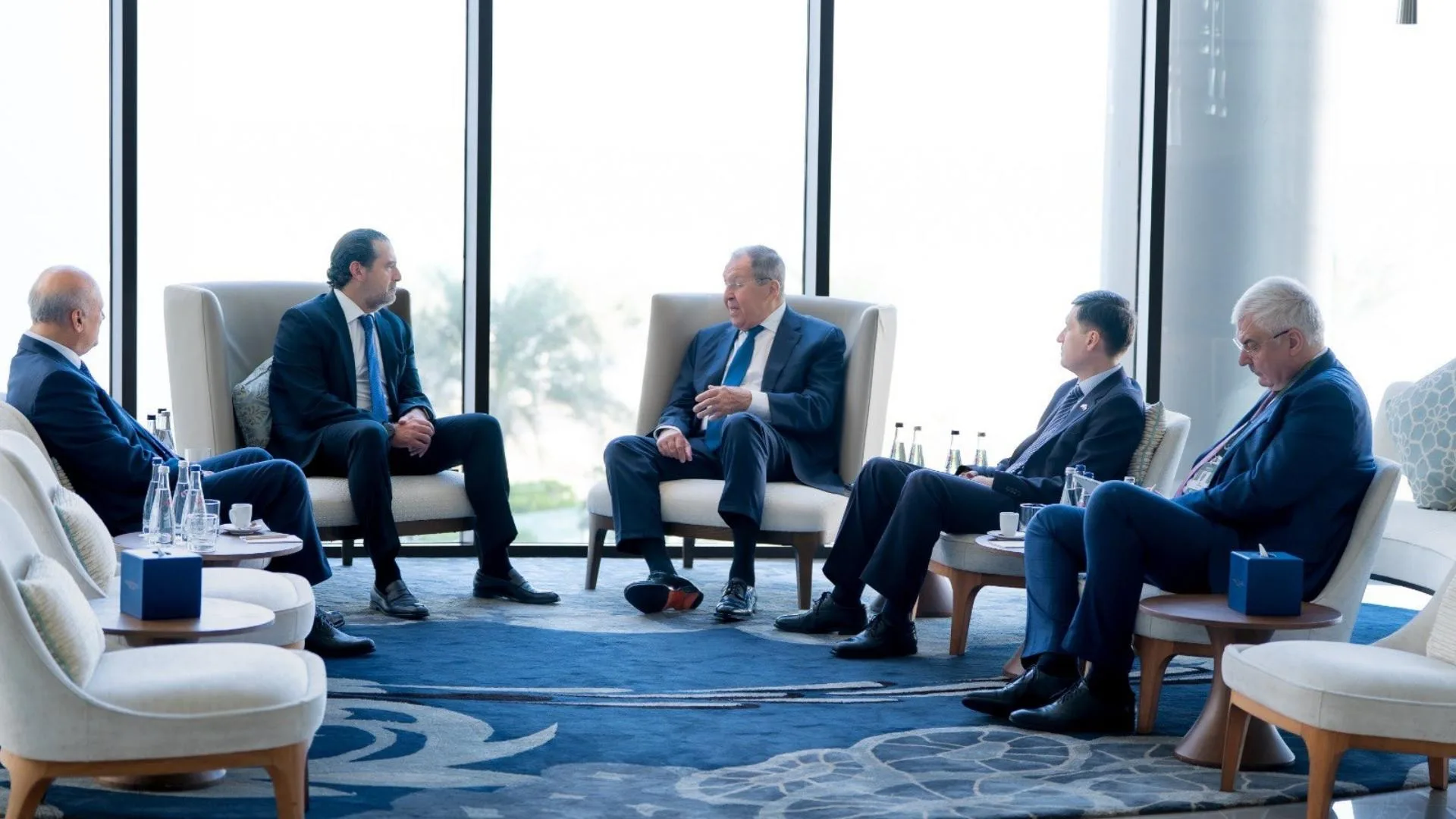
Saad Hariri Meets Lavrov in Abu Dhabi with Russian Diplomats Present
North Korean Hackers: Washington Seizes $1.2 Billion in Stolen Crypto
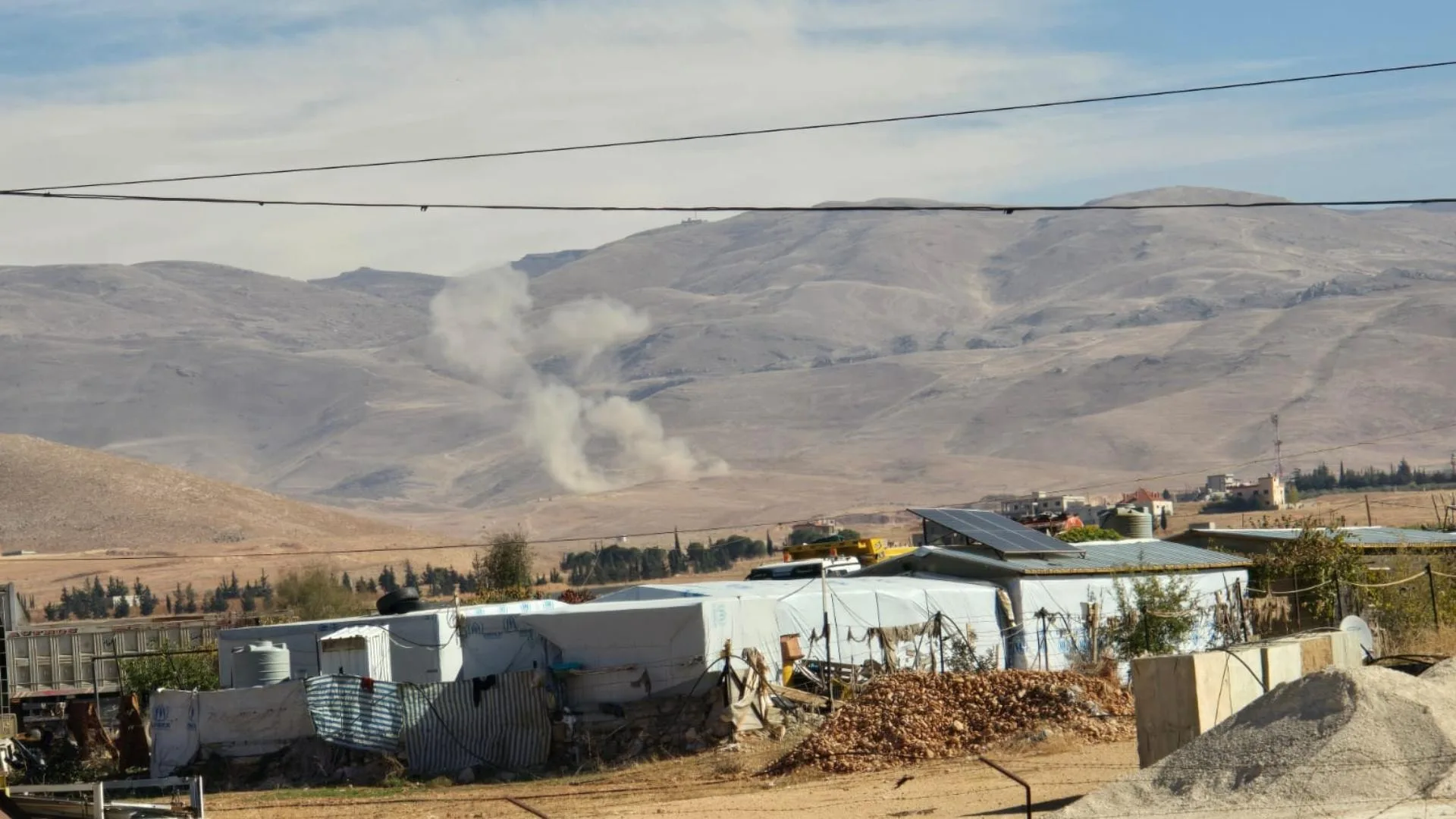
Sounds of Explosions in the Bekaa... What Is Their Source?