Lebanon
Geagea: Lebanon Approaching a State That Monopolizes Military and Security Decisions
Lebanese Forces Party leader Samir Geagea stated that Lebanon is closer than ever to establishing an effective state that monopolizes military and security decisions, emphasizing that the next phase will be measured in months rather than years.

Samir Geagea, head of the Lebanese Forces party, affirmed that Lebanon has become closer than ever to the establishment of an effective state that alone monopolizes military and security decisions. He considered that developments, despite their slowness and complexities, are moving in the right direction, and that the upcoming phase is now measured in months rather than years.
Geagea stressed that he is not pessimistic about the country's future, despite delicate economic and security conditions. He pointed out that the Lebanese situation today differs fundamentally from what it was two, three, four, or five years ago, and that what has been achieved so far constitutes about three-quarters of the path toward establishing an effective state. The final stage remains one that Lebanese people must accomplish through their own will and decision, so that external forces are not left to shape their future and consequently have a say in their country's affairs. He said: "I am not pessimistic, despite all the recent developments taking place. We are today in a different position than we were two, three, four, or five years ago. It is true that events are not moving at the speed we want, but this does not mean they are not moving in the right direction."
Geagea's remarks came during the annual dinner of the Kesarwan coordination unit of the "Lebanese Forces" party, held at the party's headquarters in Meerab. The event was attended by MP Shawki Dkash, former MP Mansour Ghanem Al-Boun, President of the Kesarwan-Al-Futuhat Union of Municipalities Elie Baayoun, member of the party's Executive Committee Maya Zaghrini, Secretary General Emile Makrezl, President of the Jounieh and Kesarwan-Al-Futuhat Traders Association Consul Jack Hakim, Kesarwan-Sannine Coordinator for "Lebanese Forces" Sanine Baayoun, Director General of "Voice of Lebanon Free" Charbel Azar, former coordinators Charbel Zgheib and Nehra Baayni, along with heads and members of municipalities, mukhtars, social and economic figures, members of the party's Central Council, members of the Kesarwan coordination unit, and a crowd of party cadres, comrades, and friends.
Geagea clarified that his wish was for the required transformations to occur through Lebanese efforts and internal decision-making, rather than as a result of regional and international pressures and developments. He added: "I am not pessimistic because I see that events will go in the right direction, but due to regional and international pushing, which is something we have no credit for. I do not know how this will reflect on our future in Lebanon, because when you are not the maker of your present and future, you may not have the influence you desire in shaping the image of this future."
Geagea viewed that this specific equation explains the insistence of "Lebanese Forces" on exerting maximum possible political pressure within the government and pushing it to take the required decisions, instead of merely waiting for what external developments will impose. He added: "Events are going in the right direction, and history has never returned backward; this time too, it will not return backward. We have covered three-quarters of the road toward an effective state, and the last quarter remains. My greatest wish is that we accomplish this remaining quarter ourselves, because if we do not, someone else will come to accomplish it for us."
He warned that leaving the completion of this stage to external actors would necessarily grant them the ability to influence Lebanese decision-making, saying: "The worst thing we can think of is that whoever comes to complete the remaining quarter of the road for us will then have a say in our country. We want no one to have a say in our country, except to the extent required by normal relations between states."
In this context, Geagea expressed his belief that Lebanon is approaching the end of the first phase of the state restoration process, confirming that the basic criterion for its success lies in making the entire military and security decision in the hands of legitimate institutions. He said: "It is true that we are living difficult and delicate situations today, especially economically, but this should not drive us to pessimism, because events are moving in the desired direction. One month, two months, three, four, or five—we have started counting months, not years. God willing, the first phase will end, and we will reach a state where the entire military and security decision is in the hands of the state."
In addressing the security and military situation, Geagea sought to dispel fears of potential widespread internal disturbances in Lebanon, considering that the balance of power and existing conditions no longer allow any party to go far in any attempt to destabilize internal stability.
He noted that the President of the Kesarwan-Al-Futuhat Union of Municipalities, Elie Baayoun, had raised with him before the dinner the concern among citizens regarding security and military possibilities, clarifying that he explicitly told him he did not share this concern to the same level. He said: "On the internal level, we hear many 'rocket-like' statements, but these statements lead nowhere, and I am not worried by them. I do not see what new things could emerge internally. At most, we might witness some chaos, demonstrations, and motorcycle movements here and there, perhaps a little more or less, but no one can go far in these days anymore."
Regarding the external level, Geagea did not rule out Lebanon facing new military developments, considering that the worst possible scenarios would not, in his estimation, be worse than what Lebanese experienced during recent months and years. He said that "Lebanon may be exposed to military events and developments, but even in the worst cases, these events will not be worse than what we have witnessed so far, during this year, last year, or the year before."
He pointed out that any future military moves targeting Lebanon could have been avoided if the required positions and steps had been taken, especially since the reality of the Lebanese situation and the causes of the crisis are known to the international community. He added: "Unfortunately, although everyone knows the truth of the problem, any future military moves against Lebanon could have been avoided, but this requires a certain behavior that no one is undertaking. Consequently, the situation remains as is, which may expose Lebanon to further developments."
He stressed that this approach does not mean that Lebanese fears are unjustified, but rather that the requirement is not to surrender to them or allow them to turn into a state of permanent anxiety, whether regarding internal or external matters.
He described the current stage as one of the psychologically hardest, not only because of existing challenges but also because of the ambiguity surrounding the future. He explained: "We are passing through heavy days, sometimes heavier than just difficult, because when you know a hurricane is coming, you can prepare for it, and when you know a specific problem will face you, you can get ready for it. But when you do not know what awaits you or where things are heading, that is where the difficulty of the stage lies."
Geagea called on Lebanese people to show determination and prepare to cross the coming months with as little damage as possible, expressing confidence that the country is heading toward the "shore of safety." He said: "The most important thing we must do is to strengthen our resolve and prepare ourselves to pass these coming months in the simplest way possible, until we reach the shore of salvation. I see the shore of safety ahead of us."
He clarified that determining the date of arrival at this shore is not possible given the intertwining of internal and external factors, explaining that external factors are currently the most influential, and the speed of regional and international developments makes it difficult for any party to accurately predict the timing and outcomes of events.
Geagea moved to the responsibility of Lebanese people for their political and economic future, affirming that peoples cannot hold the political class alone responsible for the deterioration of their conditions without realizing their direct role in bringing officials to power positions.
He stressed that change is not achieved merely by criticizing politicians and parties, but begins with citizens believing they have the actual capacity to change their country's course through their electoral choices. He said: "Most people criticize politicians, and most politicians deserve criticism, but has anyone ever stopped to ask themselves: Who brought these politicians? Have you seen a deputy who carried himself into parliament without being elected by the people?" He added: "Your fate is in your hands. I say this clearly, 'eye to eye': People's fate is in their hands. But how can we instill this concept in people's minds? This is what I find difficult sometimes, although it is the fundamental truth."
He indicated that this conviction is not just a political theory, but the conclusion of a personal experience spanning nearly fifty years of following Lebanese political life, witnessing its fluctuations, confrontations, and transformations. He said: "I have lived the political situation in Lebanon for fifty years. I saw much and lived much, from above ground to underground, and I saw many successive countries and ambassadors. Therefore, what I say is not a theory I propose, but the summary of a tangible and lived experience."
He noted that Lebanese spend the years between one electoral milestone and another complaining about the lack of water, electricity, roads, and services, and about poor economic and educational conditions forcing their children to emigrate, without sufficiently linking these problems to their political and electoral choices. He added: "Every four years, we hear people say: No water, no electricity, no roads, no paving, look at the economic situation and our children's education, and in the end, we are forced to leave. But the person speaking this way is the same one capable of changing this reality with his hand."
He stressed that change is neither impossible nor complex, nor does it require citizens to dedicate themselves full-time to political work. It suffices that they follow what happens, evaluate the performance of parties and officials, and use their votes in the right place. He said: "Do you believe we are capable of changing our future with our own hands? Yes, we are capable. What we need is for all of us to make every possible effort to convince our people that their fate is in their hands. It does not require much, but a mental effort once every four years, so the citizen knows whom to choose and where to place the ballot paper."
He criticized the persistence of some Lebanese in treating political decision-making as if it is made exclusively abroad, considering that this mentality returns the country to the atmosphere of the nineteenth century, when foreign consulates played a key role in determining political paths, in the absence of organized local powers capable of influencing.
He explained that in that era, foreign consulates agreed among themselves and pressured the Ottoman authority to steer events in this or that direction, while there were no large local parties or political powers leading public work. He added: "We are today in the twenty-first century, not the nineteenth. We have local political powers capable of determining our fate entirely with our own hands, and this does not require the citizen to pay money or dedicate five days of his week to political work, but to follow developments, and when election time comes, to place his paper in the right place."
Geagea confirmed that his speech does not fall within the framework of an electoral campaign, nor is it tied exclusively to a specific political milestone, but reflects a deep-seated conviction about the necessity of changing the prevailing political culture and enhancing citizens' confidence in their ability to shape their future. He said: "We are not today in the midst of an electoral campaign, but these are fundamental and deep issues. I always think about how we can push our society forward one step, or two or three steps, and the least we aspire to is advancing one step." He continued: "The most important thing we can do is convince people to have confidence in themselves, and that they are capable of change. If they decide to change, everything changes. We vote correctly, in the right place, thus securing our future."
He pointed out that Lebanese now have a clear experience regarding the performance of various parties and political forces, and that the results of the recent municipal elections reflect, in part, how people evaluate these experiences and act accordingly.
Geagea began his speech by welcoming the attendees, expressing his joy at meeting this large number of Kesarwan residents and dignitaries in Meerab. He said: "Good evening to everyone, a hundred thousand welcomes to you. You are here welcoming me, not I welcoming you, because you are in Meerab. I am extremely pleased to have this large number of Kesarwan notables among us."
Before addressing general conditions, Geagea dedicated a tribute to the "Lebanese Forces" coordinator in Kesarwan, Sanine Baayoun, the coordination unit's team, and all comrades in the region, appreciating their efforts. He considered the dinner a station in the continuous organizational work undertaken by the party.
He noted that many do not realize the nature of work inside "Lebanese Forces," explaining that this work relies primarily on volunteers who dedicate their time and effort, sacrificing personal interests, out of deep faith in the cause they struggle for. He said: "All of Lebanese Forces are volunteers, and when a person is a volunteer, it means he believes to the end in the cause he works for. Who is ready to leave his job or part of it, spend from his pocket, sacrifice, or even risk himself, if he is not 100 percent convinced of what he is doing? These are the Lebanese Forces, in Kesarwan and outside Kesarwan."
Geagea addressed the dignitaries of Kesarwan and the attendees, calling on them to realize the value of having "Lebanese Forces" in their region and to preserve it, describing the party as a "jewel" in their hands. He said: "You have a jewel in your hands, and I do not say this from a partisan or narrow perspective, but objectively. You, like residents of other regions, have a jewel called Lebanese Forces. This jewel costs you nothing; you do not pay taxes or fees to it, nor do you spend on it. Rather, it spends for you, and it defends you."
He called for doing whatever is necessary to preserve this jewel, confirming that this serves the interest of society, its children, and their future, not the interest of any individual or party official. He added: "I tell you this not because I am the head of this party. Today I am the head of the party, and tomorrow someone else might be. The issue is not about persons, but about the value and role of this party. Anyone who followed Lebanese events for fifty, forty, thirty, or even twenty years, up to today, knows exactly what I am talking about."
He stressed that preserving "Lebanese Forces" and developing its presence is not merely a party duty, but a responsibility that serves the interest of Lebanese who find in it an organized political force, faithful to its cause, and capable of defending their choices and future.
Geagea directed a special greeting to the President of the Kesarwan-Al-Futuhat Union of Municipalities, Elie Baayoun, and all attending municipality heads, praising their efforts in facing difficult conditions and the cooperation between them and "Lebanese Forces" to serve the region and its people.
He confirmed that public work, regardless of the difficulties it faces, requires persistence, faith, and full commitment, without surrendering to obstacles or linking effort to guaranteed results. He said: "A person must do everything he can, but the result is 'upon God.' We must strive, and strive with all our heart, strength, and effort, and leave what follows to God." He added: "I have faith that a person who strives correctly, with all his heart, must eventually arrive, and we will arrive." He considered that this logic should govern political, municipal, and social work, especially in a stage where state capabilities decline and citizens' needs double.
In concluding his speech, Geagea affirmed that the true value of party work is not measured by positions or organizational posts, but by the degree of faith in the cause and readiness to struggle and sacrifice for it. He said: "I am very happy with this meeting, with municipality heads, mukhtars, friends, and dignitaries present among us, and especially with the comrades, whether in the coordination unit, center heads, or ordinary activists." He added: "The highest rank in Lebanese Forces is that of an ordinary activist. This is the top rank, and below it ranks descend: Center Head is slightly lower, Regional Coordinator is slightly lower, and the Party Head is much lower than everyone."
He greeted the attendees for holding onto their faith in Lebanon, despite all the crises, collapses, and challenges the country has witnessed in recent years. He said: "Your faith and presence in the country in the situation it is passing through are enough. Frankly, it required heroism. During the last ten years in Lebanon, it took real heroism for a person to remain faithful to this country." He continued: "All of you showed this heroism, and the biggest proof is that you are still present in Lebanon. We, in the worst days, from underground, remained faithful to this country as we are today, and the biggest proof is the position we have reached at present."
Geagea concluded by expressing hope that all of Lebanon would reach the level of faith, solidity, and steadfastness that "Lebanese Forces" has attained, saying: "With the hope that the whole country becomes in the position we are in today, keep your hearts full of good, and God willing, we will have other meetings."
The gathering began with the Lebanese national anthem and the "Lebanese Forces" party anthem, before MP Shawki Dkash delivered a speech addressing Kesarwan's place in national and political life, the role of "Lebanese Forces" in the region, and the developmental and economic challenges facing its residents.
Dkash began his speech recalling what some used to repeat years ago, that Kesarwan is an apolitical region that does not love parties, considering that facts and experiences proved this belief wrong. He said: "Several years ago, some repeated that Kesarwan, this good land, is apolitical and does not love parties. Facts refute this talk. Kesarwan gave to all parties, except that the problem lies in some parties and currents planting in rocky soil, so barely did their seed sprout before it dried, whereas what Lebanese Forces planted in the good land yields multiples of multiples."
He considered that a simple comparison between the reality of municipalities and the union of municipalities today and what it was a few years ago reveals the magnitude of change the region has witnessed, confirming that Kesarwan-Al-Futuhat is among the most committed regions to the Lebanese cause and its constants.
He pointed out that student election results in Kesarwan universities also reflect the status of "Lebanese Forces" among the region's youth, especially in the conscience of young men and women. He added: "Kesarwan, like Lebanese Forces, is a space of freedom and faith, a reservoir of energies that contributed and will continue to contribute to building the state, its institutions, and its economy."
Dkash described Kesarwan as "the good land," confirming that it is not just a geographical area or points on a map, but the land of monasteries, churches, schools, and universities, representing history, culture, identity, and national role. He said these landmarks are "titles of dignity, firmness of stance, and commitment," considering Meerab the best example. He added: "Meerab is in the heart of Kesarwan, and whoever lives in the heart hears every beat, especially if the resident is knowledgeable and wise?"
Dkash stressed that Kesarwan, like "Lebanese Forces," will remain the compass of the correct stance, rejecting any attempt to boast over the region's people or the party, whether in patriotism, openness, or willingness to learn from mistakes. He said: "Kesarwan, like Lebanese Forces, will remain the 'Compass of Right.' Therefore, let no one boast over us, neither in patriotism, nor in openness and learning from mistakes, nor in courage and persistence in holding onto hope and working to improve people's lives."
He paused at the image some carry of Kesarwan, as if it enjoyed an exceptional share of state achievements and projects, confirming that reality is different.
He explained that many envy Kesarwan because they believe the state flooded it with achievements, while the region's sons and residents know that most of what was achieved there goes back to what he described as a "blessing from God," and to the effort of people, municipalities, and local administrations, more than to central state policies.
He noted that the needs of Kesarwan-Al-Futuhat remain numerous and great, and its sons suffer, like other Lebanese, from difficult economic and social conditions.
He confirmed that facing these challenges requires strengthening administrative and financial decentralization and applying it practically, enabling local authorities to manage their affairs, determine priorities, and respond to citizens' needs more effectively. He said: "Starting from this reality, we enhance work to establish administrative and financial decentralization in practice, so we can uplift our region."
In this context, he pointed out that Kesarwan managed to achieve tangible progress in local consensus, particularly in managing the waste file away from central complications and bureaucracy. He added: "We are proud that we succeeded largely in establishing consensus in Kesarwan to manage the waste file independently of central bureaucracy."
Dkash moved to the responsibility of "Lebanese Forces" towards society, citing the Gospel saying: "To whom much is given, much is required," considering that the political success the party achieved, thanks to its steady, clear, and rational positions, imposes additional responsibilities towards citizens.
He explained that "Lebanese Forces" managed to attract different segments of Lebanese society, imposing on it to work as much as possible to help alleviate people's worries and burdens. He said that meeting social and livelihood needs is not originally the responsibility of political parties, but it can form part of the role of "Lebanese Forces," starting from its nature and historical responsibility. He added: "Lebanese Forces is not just a political party, but a party entrusted with the sacrifices of thousands, from the era of John Maron to today."
He concluded by confirming that this trust imposes on "Lebanese Forces" the preservation of its community's faith in Lebanon and its future, saying: "We will not allow, for any reason, the faith of our community in Lebanon to waver, in light of our presence and role in it."
For his part, the "Lebanese Forces" coordinator in Kesarwan, Sanine Baayoun, confirmed that the annual dinner forms an important station to enhance communication, meeting, and cooperation between the party and the region's dignitaries and local institutions, starting from shared responsibility towards Kesarwan and its people.
He said this meeting "reflects the importance of communication, meeting, and cooperation for the benefit of Kesarwan and its people," noting that he assumed responsibility for the coordination unit five months ago, after a party experience in Kafardbyan, during which he gained a deep conviction that party work transcends the concept of organizational post or administrative responsibility. He added: "Five months ago, I assumed this responsibility, after experiencing party work in Kafardbyan that taught me party work is not just a post or administrative responsibility, but daily commitment, relationship with people, and ability to gather energies and transform them into actual work."
He pointed out that past months strengthened his confidence in the large potentials in Kesarwan, whether in terms of party cadres or local and municipal dignitaries. He said: "During this period, I became more and more sure that Kesarwan includes great energies and comrades enjoying faith and impetus, as well as dignitaries and municipality heads with will and persistence to work for the interest of their towns and region."
Baayoun directed a greeting of thanks and appreciation to the team of the Kesarwan coordination unit, praising the time, effort, and commitment its members provide without any compensation.
He stressed that the success of the coordination unit does not rely on the person of the coordinator, but on collective work, spirit of responsibility, and integration among its various members. He said: "The real coordination unit is not limited to one person, but is based on a cohesive team, faithful to the cause, and working with a spirit of responsibility."
Baayoun touched upon the difficult economic and social conditions the country is passing through, and the increasing challenges they impose on citizens, amid declining capabilities and rising needs.
He confirmed that "Lebanese Forces," like any other political party, cannot alone address all problems or meet all people's needs, stressing that the primary responsibility lies with the state and its institutions. He said: "Neither Lebanese Forces nor any other political party is able alone to meet all people's needs or replace the state, which is the foundation and solution, and the fulfillment of its institutions' tasks and responsibilities is the natural path to address citizens' problems."
However, he stressed that acknowledging the state's responsibility does not exempt parties and political forces from the duty to take initiative and help citizens within available capacities, especially amid the decline of public institutions' presence. He added: "In the absence of the state or weakness of its presence, we cannot stand by and leave people to their fate facing these conditions."
Starting from this, Baayoun confirmed the importance of the role played by municipalities and local authorities, as the institutions closest to citizens and most aware of their daily needs and priorities of their towns and villages. He stressed that the relationship between the "Lebanese Forces" coordination unit and municipalities must be based on actual partnership and constant cooperation, not on compliments or protocol occasions. He said that "the coordination unit's openness to all municipality heads and constant communication and cooperation with them is not just a protocol duty or compliment, but a necessity and responsibility towards the region and its people." He added: "Our goal is to be partners with municipalities, listening, cooperating, and placing all available capacities in service of Kesarwan, and enhancing the relationship that is not tied to an occasion or electoral milestone."
He confirmed that the coordination unit seeks to build a permanent and active party presence, transcending political and organizational occasions to field work and social and developmental initiatives.
He explained that the requirement is for "Lebanese Forces" centers to be open spaces for communication with citizens, for comrades to be present in their communities, and for the coordination unit to become a framework that gathers energies, coordinates efforts, and launches initiatives. He said: "Our ambition is for Lebanese Forces in Kesarwan to be strong in organization, present in political stance, and close to people and their concerns. We do not seek to limit our presence to occasions and milestones, but we want to be present through work and initiative." He continued: "We want our centers to be spaces for communication, our comrades present in their communities, and our coordination unit capable of gathering, coordinating, and initiating."
Baayoun concluded by confirming that belonging to "Lebanese Forces" transcends the boundaries of organization, centers, and responsibilities, because it is linked to a historical cause carried by comrades who offered the dearest sacrifices for it. He said: "Lebanese Forces, for us, is not just organization, centers, and responsibilities, but a cause carried by comrades before us, who offered the dearest sacrifices for it. Our loyalty to them lies in continuing the journey with faith and commitment."
The media officer of the "Lebanese Forces" coordination unit in Kesarwan, Dina Ashqar, delivered the opening speech, reviewing the national and historical role of the Kesarwan region, its contribution to defending Lebanon's identity, freedom, and independence, and the connection between this history and the journey of "Lebanese Forces" and its head Samir Geagea.
Ashqar confirmed that Kesarwan is not just a geographical region, but land that witnessed pivotal stations in Lebanese history, and its sons played a key role in struggling for freedom, independence, and sovereignty. She said: "Kesarwan is land that witnessed pivotal stations in Lebanese history, and was present in the journey of defending freedom, independence, and sovereignty, with what its sons offered of struggle and sacrifices for a free, sovereign, and independent homeland."
She pointed out that Kesarwan, from its coast to its mountain, and from its Futuhat to its various towns and villages, carried across generations a history rich in national stances, and its sons were present in the stations that contributed to shaping Lebanon's features and identity.
She paused at the historical role played by the Patriarchs in defending Lebanon, its independence, and unity, confirming that these stances formed a key part of the region's national heritage. She said: "From Kesarwan rose the stances of the Patriarchs in defense of Lebanon, its independence, and unity, and the right of its sons to live in freedom and dignity."
She added that Kesarwan's national history is linked to the journey of "Lebanese Forces," as well as to Geagea's journey which witnessed multiple stations of confrontation, challenges, and sacrifices.
Ashqar addressed the stages Geagea passed through, from war and resistance years to eleven years of imprisonment, until his return to political life and continuation of defending the principles he carried. She said: "From war and resistance years, to the imprisonment stage lasting eleven years, and his return to political life, Dr. Samir Geagea's journey witnessed stations of confrontation, challenges, and sacrifices."
She pointed out that Geagea chose, after years of imprisonment, to continue political work and adhere to his positions calling for Lebanon's sovereignty, independent decision, and the establishment of a state that alone monopolizes weapons and authority, with its institutions being the sole reference for all Lebanese.
She confirmed that these principles remained at the core of "Lebanese Forces" political discourse, from the resistance stage to the stage of political and institutional struggle.
Ashqar concluded by stressing the unity of the cause connecting Kesarwan's national history with the journey of "Lebanese Forces," saying: "From Kesarwan's history to the journey of Lebanese Forces, the link remains the cause of Lebanon, the one, free, sovereign, and independent state."
Latest news
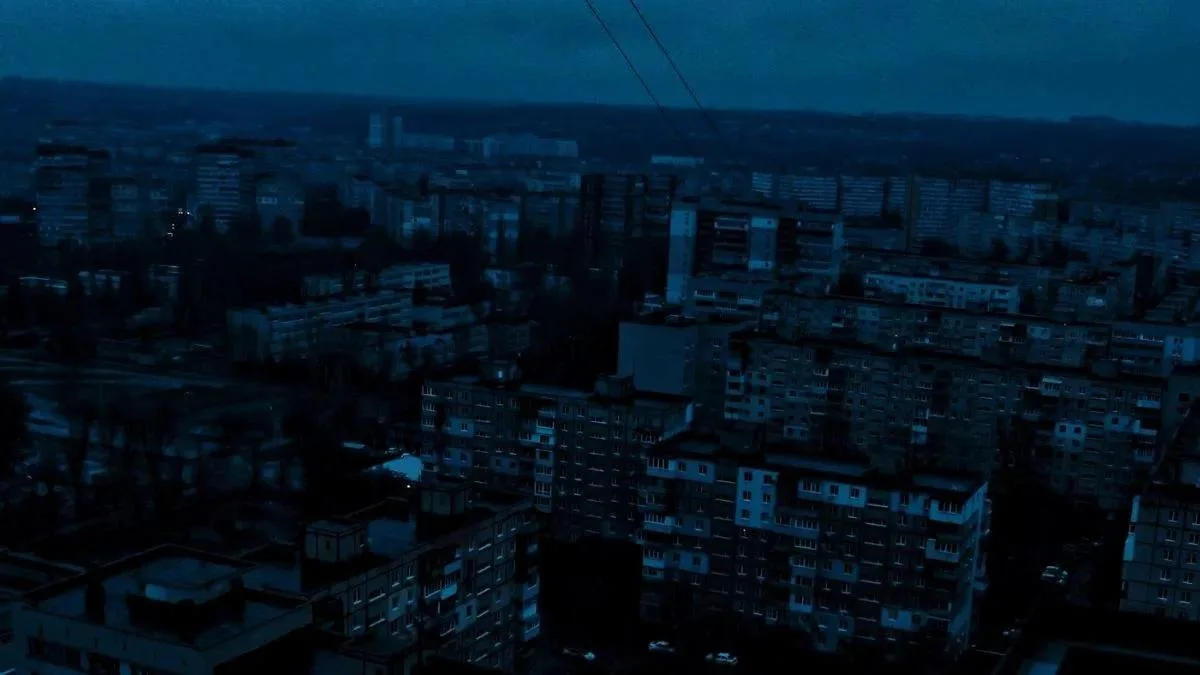
Russian strikes cut power to 600,000 in Dnipropetrovsk
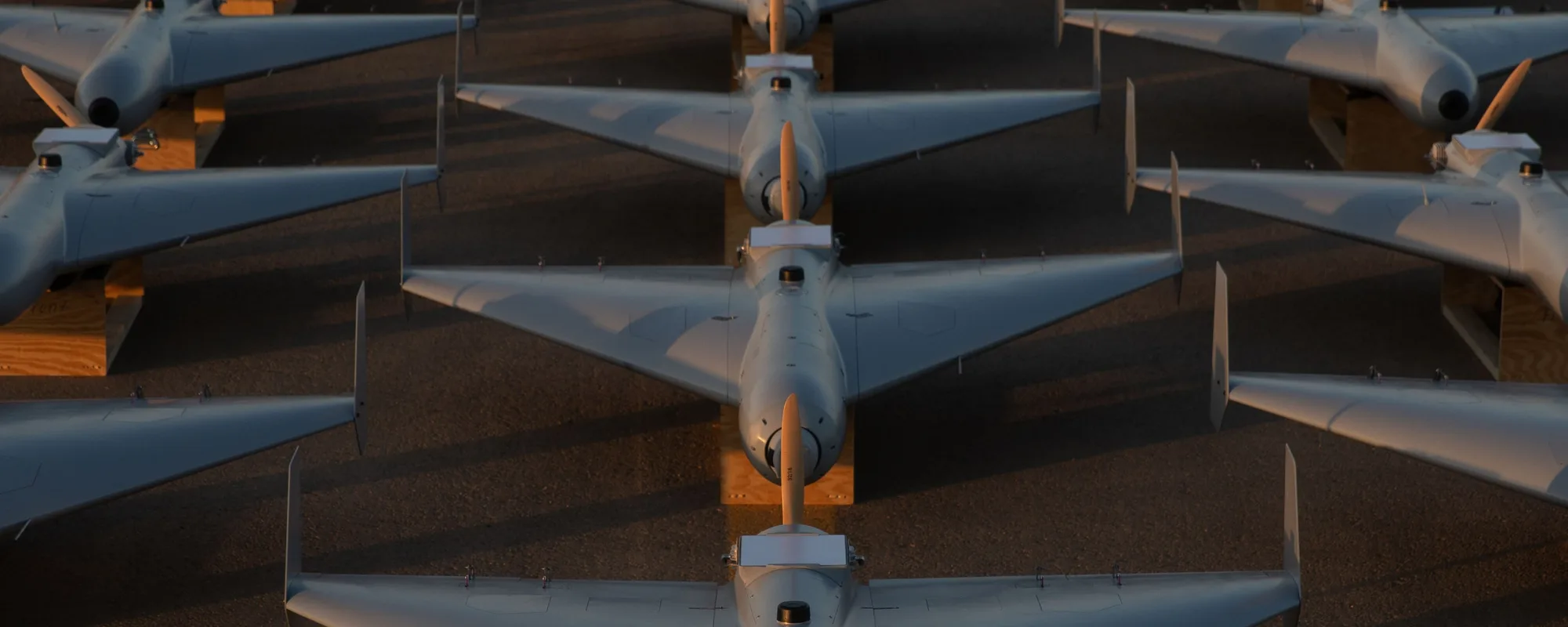
Drone War Enters New Phase: Iran Announces Tracking of US 'Scorpion Strike' Unit

Finance Committee Discusses Additional 8.95 Trillion Lira Allocation for Electricity