

Lebanon
Karami After Meeting on Finance to Discuss Contractual Faculty Sabbaticals at Lebanese University: First Batch to Be 400 Professors
Minister of Education Rima Karami confirmed that the first batch of 400 sabbatical professors from the Lebanese University has been agreed upon, with final approval expected from the Council of Ministers tomorrow.

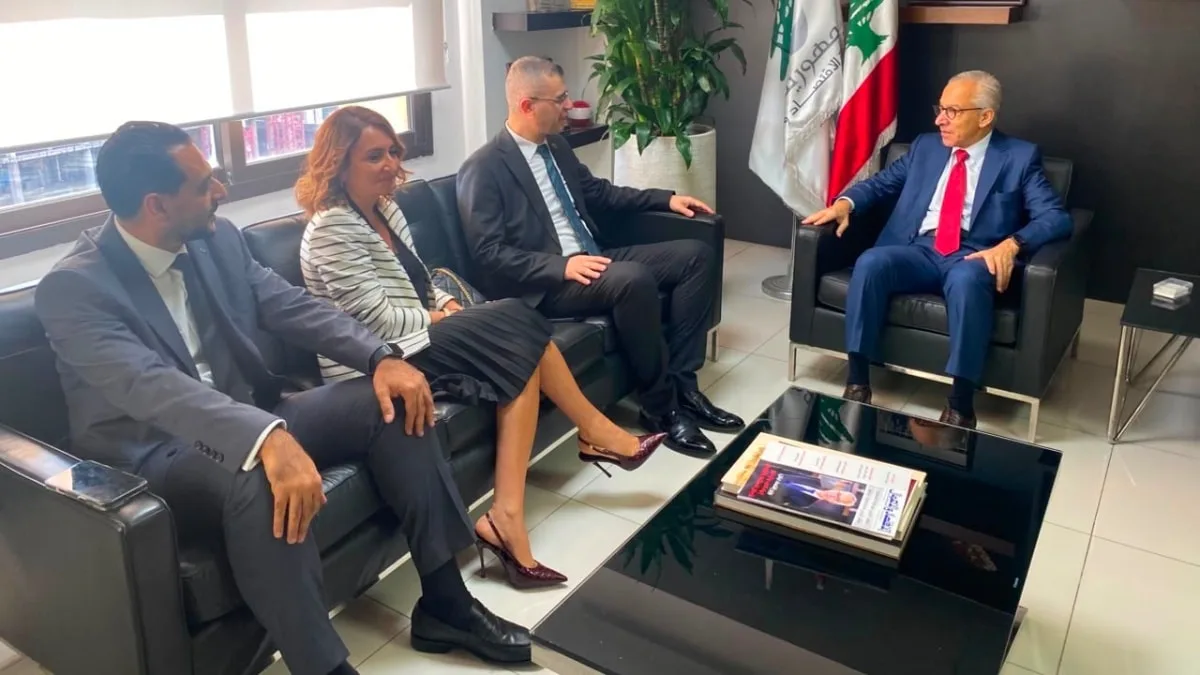
A meeting was held at the Ministry of Finance dedicated to discussing the sabbatical file for contractual faculty at the Lebanese University, attended by Minister of Finance Yassine Jabber, Minister of Education and Higher Education Rima Karami, President of the Lebanese University Bassam Badran, and Advisor to the Minister of Education Adnan Amin.
After the meeting, Minister Karami stated: "We met today with the Minister of Finance at the request of Prime Minister Najib Mikati. The meeting was very positive, and we reached an agreement on a strategy, as everyone knows the final step remaining in the sabbatical file is securing funding for all batches we have agreed upon, which will be divided into four installments. The names are now ready for release by the Lebanese University. Insha’Allah, there will be an item on tomorrow’s Council of Ministers agenda, and I will present it alongside Minister Jabber."
She added: "These are the matters we seek final approval for from the Council of Ministers. By God’s grace, the file is moving in the right direction toward completion, and we will soon launch the first batch—tomorrow.
When asked whether the first batch includes 400 professors, Karami replied: "We will revisit all these details and confirm them. Our goal today was not to revise any decisions previously taken by the Council of Ministers. The number was already agreed upon, as were the four installments, and it was initially agreed that the first batch would be 400."
She noted that "the university president was by my side throughout, and he knows that at every stage of this file’s work, we have collaborated closely, with the university’s needs always being the priority. Indeed, this file’s urgency stems from the large number of retired professors, creating vacancies, and the university’s clear need for their expertise. Moreover, our national university is evolving and introducing new disciplines, and we are deeply committed to securing these positions. The contracts signed with professors and the experience in this field reflect this necessity."
She added: "Several criteria were considered: the number of years these professors served at the university, the number of contracted hours, and how long they have been under contract. But the university’s needs have always been the foundation. I assume we are working on this file because we prioritize the Lebanese University’s interests; if professors don’t receive their rights and we fail to harness their talents and experience, the Lebanese University cannot reach the level we all wish to preserve and advance."
When asked whether college needs were prioritized in selecting professors, she responded: "That is the rule. I don’t want to say what is or isn’t a priority; it was one of the criteria—undoubtedly, college needs, along with the size ratio relative to the college and the number of students. All these are standard, as any university worldwide relies on such grounds. However, we faced an exceptional situation due to delays: instead of this process occurring annually based solely on university needs, we had accumulated backlogs. Therefore, we worked on this file to protect the university first and meet its needs, while also safeguarding the rights of sabbatical professors who have served the university for many years without ever having a chance to qualify for sabbatical status."
She emphasized: "The entire file, from day one—and of course with the university president’s agreement—we adopted specific criteria and proceeded accordingly. This is exactly what happened. We prepared for each session where the sabbatical file was discussed, worked on these criteria, and in the most recent session received directives and a decision from the Council of Ministers, then moved forward with the names. These names are fixed and locked—they cannot be increased, removed, or changed. We have now reached a critical juncture: securing funding. We will agree in the Council of Ministers on the financial principles binding all parties so we can move forward with the file."
On the question of those demanding parity, she replied: "We have followed the path established in previous discussions, and the criteria are clearly defined. I don’t know if anyone intends to bring it up before the Council of Ministers, but from our side, as the Ministry of Education in coordination with the Lebanese University, we have followed the steps laid out from the beginning, applied all necessary criteria, and based on them, these names emerged."
Karami stressed: "What has been written is written for us, and this is what we will follow. I’ve said this to every contractual professor who came to us discussing and supporting this file, and I reaffirm it: both I and the university president are committed to this matter."
When asked whether tomorrow’s Council of Ministers session would focus solely on financial issues, Karami answered: "That is the proposal for tomorrow."
Regarding whether political parties had submitted names, Karami confirmed: "Nothing has reached me, nor has anything reached the university president." She continued: "No names were raised at all during this meeting—this topic was not discussed at all. As I said: we have reached a turning point. In fact, this phase should not have occurred had things unfolded differently. Remember, the last time we received directives was before the war; since the war began, many equations have changed, and you know the financial pressures facing the country—everyone does. This is why we returned to reassess our strategy, with the commitment of the Minister of Finance, the Prime Minister, and our own Ministry of Education to ensure this file moves forward and reaches its conclusion."
Latest news

"We Are Very Close".. Netanyahu Reiterates Threat to Overthrow Iranian Regime
Economic Agreement Reached Between Lebanon and Syria on This File

Aany security vacuum in the south constitutes a pretext for attacks, says Aoun
