·
·


Lebanon
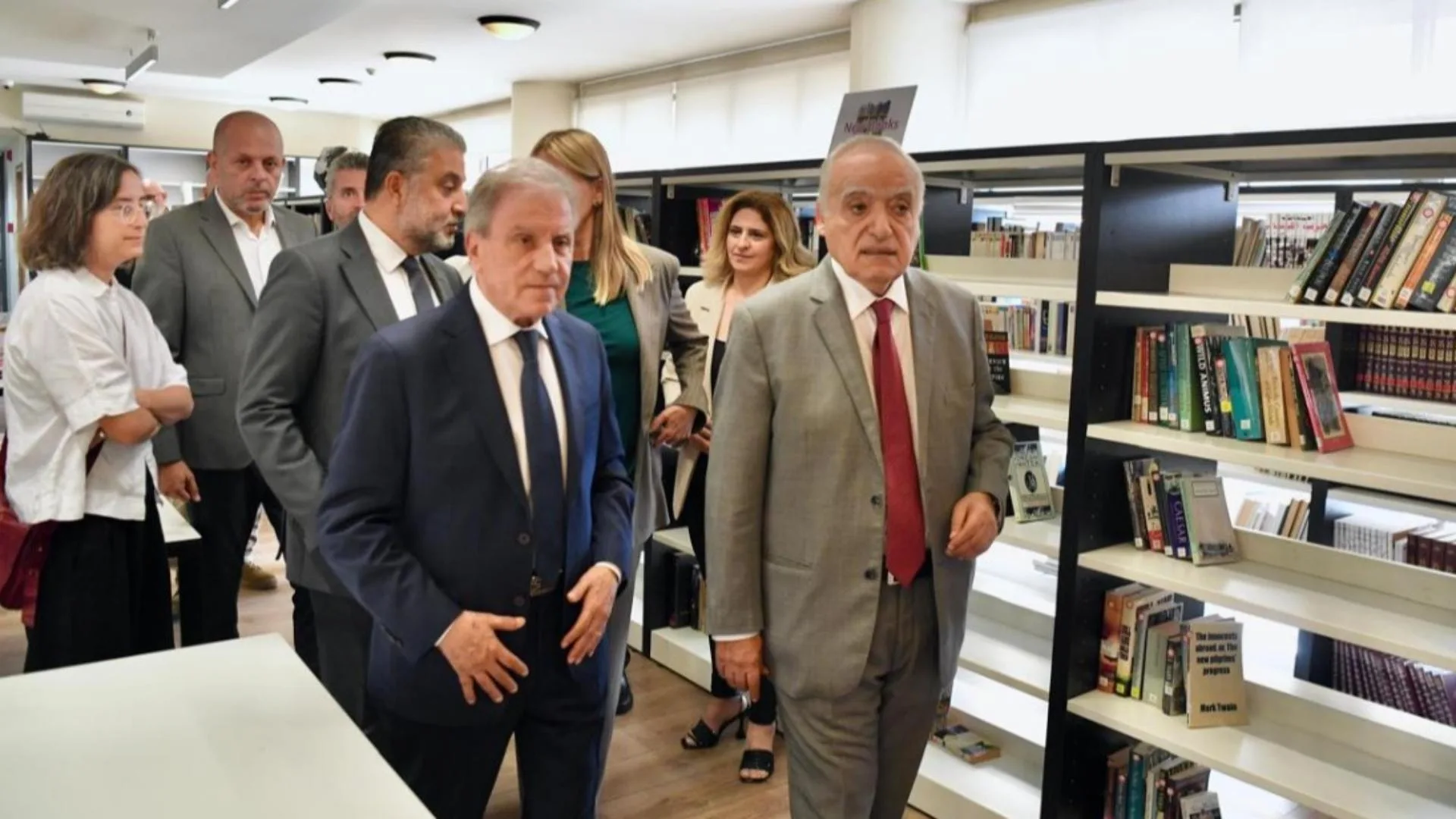
Environment Minister Tamara al-Zein handed over new solid waste management equipment to facilities in Jib Jinnine, Zahle, and Baalbek under the EU-funded Tadwir project implemented by UNDP.

Lebanon’s Ministry of Environment, with Environment Minister Tamara al-Zein present, delivered new solid waste management equipment to several waste management facilities in Jib Jinnine, Zahle, and Baalbek. The equipment includes sorting plants and landfills, part of the ministry’s efforts to strengthen sustainable solid waste management.
This delivery falls under the “Tadwir” (Recycling) project, funded by the European Union and implemented by the United Nations Development Programme (UNDP). The initiative aims to bolster municipal and facility capacities and improve waste collection, transport, and treatment services.
During her visit to the facilities and meetings with municipal presidents, Minister al-Zein stated: “We are all racing against time, constrained by scarce funding and the accumulation of deep-rooted problems, striving to avert waste crises across all regions and place this file on the path toward sustainable solutions following the completion of essential reforms.” She emphasized that “these pieces of equipment do not constitute a standalone solution to the waste crisis, but they enhance the operational capacity of institutions and municipalities—facilities whose functionality has been impaired, to varying degrees, by successive crises over recent years, resulting in noticeable declines in performance and effectiveness in some cases.”
Al-Zein outlined that advancing waste management requires broader cooperation across multiple parallel tracks:
In Jib Jinnine, al-Zein confirmed that financing has been secured from the World Bank for constructing a new landfill, as the existing one has reached its full capacity and its closure and rehabilitation have become urgent necessities.
In Zahle, during the equipment handover and tour of the sorting facility, al-Zein reviewed project implementation progress—including upgrades to the sorting plant and the addition of a line for producing alternative fuel from waste—as well as the municipality’s plan to advance source separation. She also followed up on the issue of chemical substances transferred to the facility’s premises, reiterating the Ministry’s request to Electricité du Liban to retrieve those materials, given the municipality’s refusal to landfill them—even after treatment—and affirming ongoing work to identify an alternative solution compliant with applicable laws and regulations.
In Baalbek, prior to the equipment handover and during her inspection of the sorting plant and landfill—including observation of a fire in one of the landfill cells—al-Zein reiterated that the case had been referred to the Environmental Public Prosecutor for investigation into its circumstances. Technical remediation related to gas drainage has also commenced, based on a recent technical inspection report prepared by the Ministry of Environment.
The distribution of this equipment supports a broader objective: more efficient facilities, more capable municipalities, improved source separation, and ultimately a more sustainable waste system—one that reduces volumes sent to landfills and curbs associated environmental impacts.