·
·


Lebanon
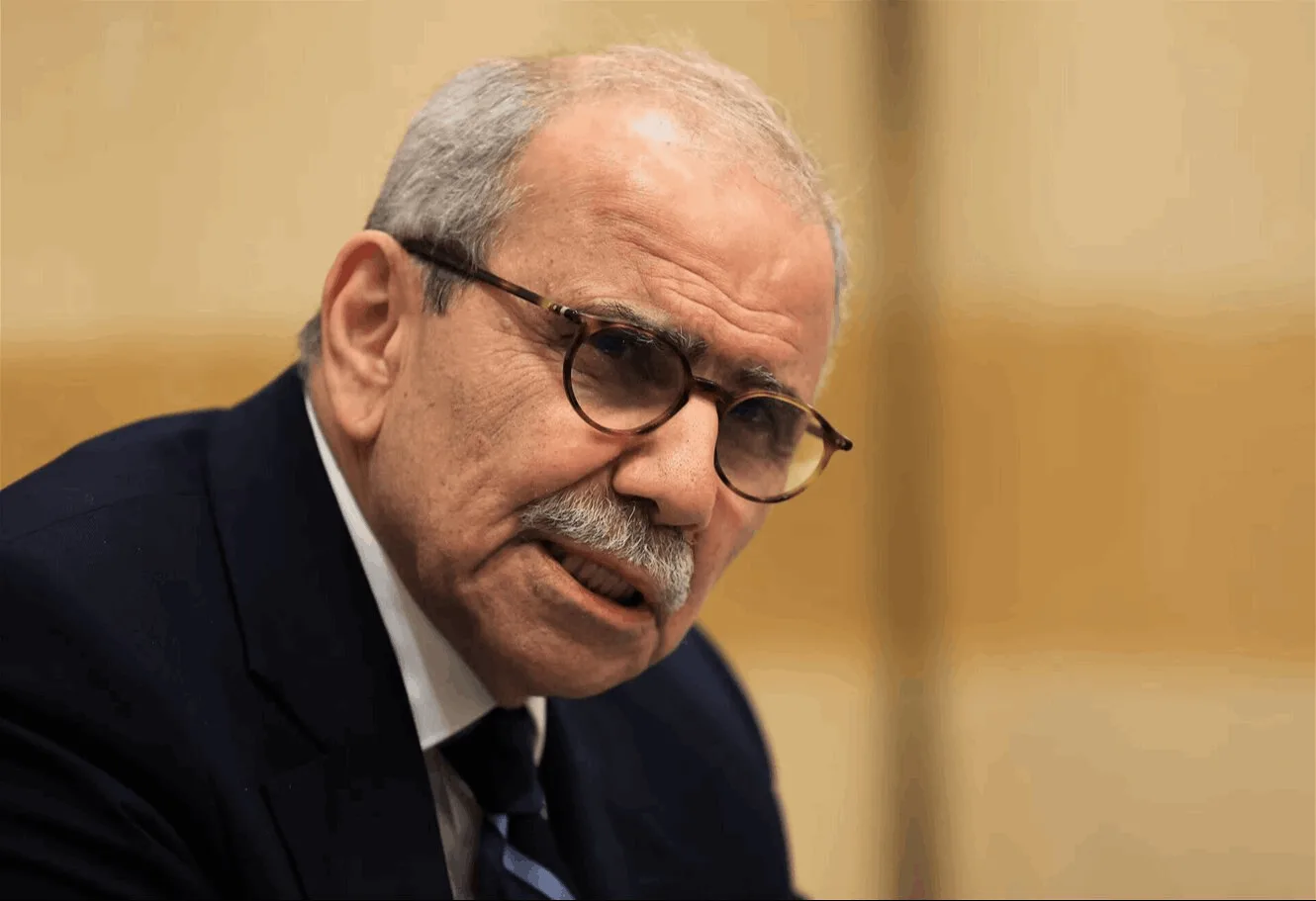
Justice Minister Adil Nassar addressed the global anti-death penalty conference in Paris, emphasizing Lebanon's commitment to abolishing capital punishment despite ongoing violence.

Justice Minister Adil Nassar participated in the ninth World Congress against the Death Penalty, inaugurated by French President Emmanuel Macron in Paris. The event gathered over 1,500 participants from approximately 100 countries, including heads of state, government officials, justice ministers, parliamentarians, judges, legal experts, and representatives from international and human rights organizations. It represented the largest international assembly dedicated to opposing the death penalty and promoting human rights.
In his address representing Lebanon, Nassar stressed that the decision to pursue the abolition of the death penalty arises not despite Lebanon’s exceptional circumstances but because of them. He stated, "A country where the bloodshed of innocents has not ceased is the most capable of understanding the importance of the state refraining from taking life. The strength of a state is measured not by its capacity to kill but by its ability to uphold justice and preserve human dignity."
Nassar quoted Albert Camus: "The true human is one who knows how to abstain," and declared that today’s gathering affirms that states must also abstain. Lebanon has initiated the process of abolishing the death penalty. After more than twenty years of a de facto moratorium with no executions carried out, the Lebanese government recently approved a draft law aiming to abolish capital punishment. This proposal received the endorsement of the parliamentary committees and now awaits ratification by the full parliament. While this determination to abolish the death penalty may appear surprising in a country exhausted by over fifty years of violence and ongoing innocent bloodshed, Nassar argued that precisely because Lebanon has endured such prolonged violence, its decision to abolish the death penalty carries greater depth and significance.
He acknowledged that Lebanon is abolishing the death penalty in a world seemingly thirsty for blood and bent on engulfing it, but rejected the notion that Lebanon is like the musicians on the Titanic. Borrowing Paris’s motto, he said it aptly describes Lebanon as well: "The waves toss it... but it does not sink." Regardless of the storms and winds, Lebanon will not sink. It will not succumb despite cynical and violent foreign interventions that have exploited some citizens for their agendas. It will not sink despite disproportionate attacks, massive destruction, bloodshed justified by brutal ideologies, a regional environment torn by dictatorships, exclusion, and ruin, or the global decline in human rights frameworks, which are essential for Lebanon’s survival. For these reasons, Lebanon has chosen to abolish the death penalty.
Nassar emphasized that the Lebanese judiciary should no longer decide the ending of a human life. While the atrocities of war, terrorism, and especially crimes against children and the elderly shock consciences, abolishing the death penalty should not be misconstrued as leniency toward crime or tolerance of heinous acts, often victimizing innocents. He explained, "We do not protect the criminal; we protect our republic. Our republic neither kills nor takes revenge. Our judges will no longer bear the unbearable moral burden of deciding a person’s death. Human nature itself supports the abolition of the death penalty, as nothing is more dangerous to humanity than believing oneself above it. A judge may need to rise above passions to rule but must never forget that they are judging a human being like themselves."
He reiterated a message he often shares with Lebanese judges, citing Charles Péguy: "A judge who becomes accustomed is a judge in whom justice has died. A judge who is not accustomed to issuing rulings remains dignified before every decision and delivers judgments as if standing before the one being judged. A judge who lacks this dignity risks betraying their mission." Therefore, a judge overwhelmed by the awe of justice cannot take a human life. While crime must be fought relentlessly and victims supported unequivocally, believing that abolishing the death penalty reflects a lack of empathy for victims involves two errors. First, attributing to death a healing power it does not possess, as it only fuels violence and revenge. Second, underestimating imprisonment, wrongly seen as a mild punishment, though it is among the harshest humans can endure. Nassar quoted Julien Green’s bitter and ironic remark that no one should ever be sentenced to death because death is unknown, and such a sentence adds an unknown element to the punishment beyond all the uncertainties surrounding the convicted and their trial. Humanity’s rejection of the law of retaliation marked a great moral advance, yet it is difficult to understand how society accepted that an eye should not be taken for an eye without concluding that a life should not be taken for a life either."
He pointed out that the death penalty will not restore peace to victims’ families. Death consoles no one; it leaves a bitter taste and only deepens pain. No one feels more at peace after witnessing an execution. Victims have the right to have their suffering acknowledged and, above all, the right to justice, which must reject death rather than invoke it. Nassar made these remarks while noting that nearly every Lebanese household has lost someone to violence. He spoke as blood continues to flow in his small country and because every citizen has known violent death and still lives alongside it. Such death must not lead to normalization of crime. Violent death is not an anonymous statistic; behind every victim is a family engulfed in confusion, enduring endless mourning, and living with the solitary pain of absence imposed by crime. It remains their duty to be outraged by every crime committed. Abolishing the death penalty should not diminish condemnation of crime but rather clarify and strengthen it, always accompanied by unwavering sympathy for victims. He expressed these views in Paris while Lebanon remains a victim in the Middle East, having paid and still paying the price of the fragility that accompanies democracy, freedom, and pluralism. He affirmed that Lebanon will never abandon democracy, freedom, or pluralism regardless of the cost.
Concluding, Nassar cited Paul Valéry’s post-World War I poem "The Maritime Cemetery": "Here comes the wind... we must try to live." He affirmed that despite war, Lebanon will continue to live regardless of the strength of the winds. For decades, Lebanon has carried the banner of human rights in a region that has not only ignored these rights but has also defamed and mocked them. Nothing is more painful than hearing human rights discussed with disdain, as if defending them were a naive act unworthy of politics. Yet politics today suffers from a deficit of trust and an excess of cynicism. Lebanon will continue to defend fundamental rights even if it is the last to do so. By abolishing the death penalty, Lebanon, together with all participants, contributes to building a lifeboat that will preserve, against the rise of obscurantism, the great principles and values passed down by France and still defended by Europe. This lifeboat will continue to be battered by waves but will not sink.