Lebanon
Lebanon's War Costs May Exceed $27 Billion, Salam Says: Not More Spending Needed, But Better Spending
Prime Minister Najib Mikati warns that Lebanon's war costs could surpass $27 billion, stressing the need for better spending rather than increased expenditure.

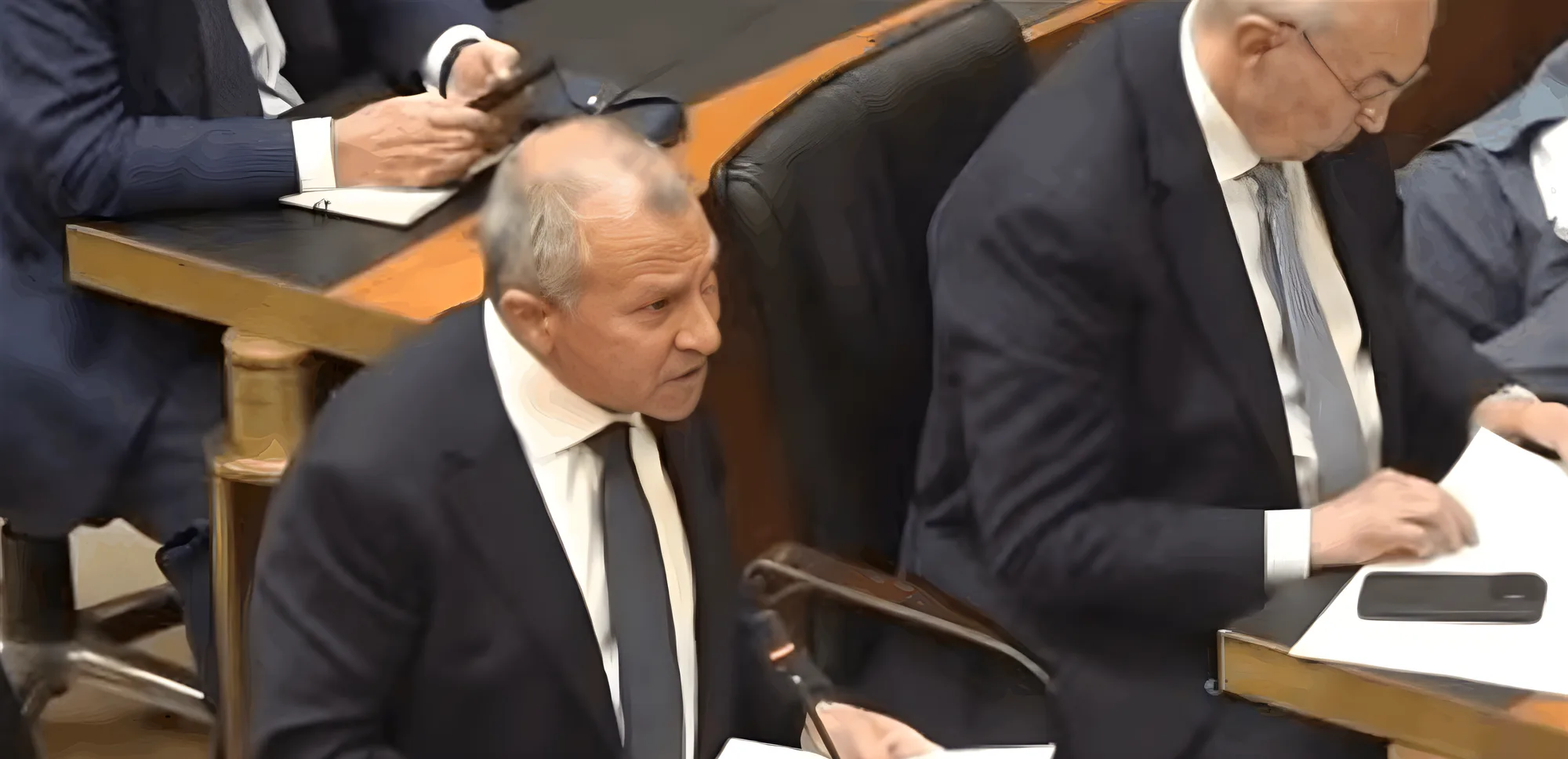
Prime Minister Najib Mikati delivered a speech at the Parliament on Tuesday morning during a session dedicated to discussing the government, stating:
Mr. President,
Ladies and Gentlemen Members of Parliament,
I stand before your esteemed parliament today on behalf of the "Reform and Rescue" government, speaking frankly, to present the country's actual situation as it is, what we have managed to achieve in facing major challenges, and what we commit to accomplishing in the coming phase.
As has always been our approach since forming this government, I will speak to you with honesty and transparency, using the language of national responsibility, not one of justification or making promises without basis.
And here, through you, I wish to be frank with all Lebanese people: Our reality is difficult—indeed, extremely difficult. But escaping from it is not impossible when sincere efforts unite to place national interest, truly in action and not just words, above any other consideration, regardless of its nature.
Mr. President,
In March last year, Lebanon was hit by a war we did not choose, nor were we consulted about participating in it; it was imposed upon us at a time when the deep wounds from the 2023–2024 conflict had not yet healed. When we saw the dangers of war escalating across the region, we repeatedly warned, as you all know, against the peril of entering it, urging reason and careful calculation to protect the country and show compassion toward citizens. But you all know what happened. The results are as follows:
According to the World Bank’s estimate for the first war, which began on October 8, 2023, the total cost amounted to approximately $14 billion, of which around $7.2 billion was due to physical damage, and roughly $6.8 billion in economic losses caused by halted activity, reduced production, and declining revenues. Of course, the highest cost was more than 4,000 fatalities and over 16,000 injured.
The most recent war, which began on March 2, has so far incurred direct costs estimated by the World Bank between $3 and $4 billion. This figure does not include the economic cost, which exceeds direct physical destruction and, at minimum, reaches between $4 and $5 billion. Here again, the greatest cost remains more than 4,000 fatalities and over 12,000 injured.
Thus, the two wars combined have already cost Lebanon more than $20 billion, and their total cost may exceed $27 billion once the 2026 war is fully accounted for.
Yet these figures, however large, do not reflect the full true cost, as they do not account for the value lost due to brain drain, investment loss, education disruption, decline in land and asset values, and delays in recovery from the ongoing financial crisis since 2019.
So what is the toll of these two wars on Lebanon? Nearly nine thousand fatalities, over thirty thousand injured, more than one million displaced at the peak of the latest war, tens of thousands of destroyed homes, valuable parts of our land now under occupation—including more than 75 villages and cities—where residents remain unable to return to their homes and livelihoods. Meanwhile, the economic cost of both wars is heading toward exceeding $27 billion, as previously stated.
These are not abstract numbers; they represent years of growth, investment, reconstruction, and job opportunities lost to the Lebanese people.
Thus, after witnessing a 4.2% economic growth last year—a sign of gradual recovery—we have regressed into an estimated contraction of 6.4% this year. These consequences have worsened with accelerating inflation, largely driven by external factors, especially global oil price increases due to regional conflict, declining remittances from abroad, and the halt of tourism activity.
Mr. President,
I naturally understand the pain of Lebanese families. I know how much basic goods and necessities have risen in price, how high inflation has become, and I am aware of the cost of private generators.
If the harsh living conditions we face today are undoubtedly the result of accumulated crises—and if the war has certainly exacerbated them and derailed the growth path that had begun—
then we will not surrender to this reality, but remain determined to confront it.
We speak today while over 250,000 Lebanese still remain displaced. Moreover, the latest war has destroyed 91,000 housing units completely or partially, adding to nearly 230,000 units damaged during the previous war, not to mention entire villages and towns that have been entirely wiped out.
Yet these immense challenges have never prevented our government from fulfilling its responsibilities during the war.
We stood beside our people in the south, the suburbs, the Beqaa Valley, and all areas affected by the war. We mobilized every resource available to the state so that no family would be left alone in hardship, so that no displaced person would sleep without shelter, or be left without food.
To respond to this crisis, the government activated the central operations room at the Prime Ministry within hours of the latest war beginning, employing a comprehensive coordination mechanism. Thanks to the National Readiness Plan we had prepared in advance to anticipate the possibility of another war, we identified 325 possible shelters—enabling swift and organized provision of shelter centers from the very first day of displacement.
Moreover, the humanitarian response covered multiple sectors, and to date, more than fifteen million five hundred thousand—yes, fifteen million five hundred thousand—hot and cold meals, over six million liters of drinking water, and more than 490,000 blankets have been distributed.
At the same time, we maintained social protection programs, foremost among them the "Aman" program, and expanded emergency aid to displaced, resilient, and most affected families. A total of $52 million in cash assistance was distributed to support the most vulnerable households, in addition to providing over eight million liters of fuel for shelters and border villages.
I do not recount all this as a favor to anyone, because we did only what national responsibility demands, not to mention moral duty. Rather, I say this in response to those who have allowed themselves to exploit people’s suffering to cast doubt on the state’s presence and response to our people’s plight, sarcastically asking: "Where is the state?"
Yes, Mr. President, our capabilities were not unlimited, so the response was not complete.
But the state was present in full force, fulfilling its duties with all the resources you all know are limited—during one of the most difficult crises Lebanon has ever faced.
I now wish to continue being frank with you and share our profound concern about the serious shortfall in international funding and support compared to the response in 2024. Despite the two urgent humanitarian appeals launched jointly with the United Nations—one attended by Secretary-General António Guterres in Beirut—identifying total response needs at around $639 million, secured funding has not exceeded 49.8% of total needs, compared to a coverage rate of 94.9% in 2024. This decline reflects donor fatigue, shifting global priorities, and reduced international engagement, posing a serious threat to the continuity and scope of humanitarian aid at a time when humanitarian needs remain substantial.
Despite the difficulty, our goal is not merely to manage the displacement of southern communities, but to return them to their land. It is not to grow accustomed to shelters, but to close them down. It is not to keep our people dependent on aid, but to restore their ability to live, work, and endure in their towns and villages.
Therefore, we are now moving from managing displacement to confronting the challenges of return and recovery.
Government efforts today focus on securing the conditions for safe and dignified return for families and displaced persons who have returned to their areas, particularly in the southern suburbs of Beirut, Nabatieh, Zahrani, Saida, and all locations where we are already witnessing returns.
In this context, I have issued clear instructions to all relevant ministries, agencies, and bodies, including the Ministries of Public Works and Transport, Energy and Water, Telecommunications, the Council for Development and Reconstruction, the South Council, and the Higher Relief Authority, to act at maximum capacity and speed on the ground.
We have prioritized clearing debris, reopening roads and repairing damaged ones, addressing bridge damage, and establishing alternative routes where needed—restoring connectivity between regions and villages and facilitating the return and movement of residents.
Meanwhile, the government is working to restore essential services, which are fundamental to sustaining return. The Ministry of Telecommunications has resumed reconnecting and operating communication networks in affected areas, while the Ministry of Energy and Water continues restoring electricity and water services. We have also begun rehabilitating schools, government centers, and partially damaged homes, and preparing to construct prefabricated houses where necessary according to clear social criteria. There is no doubt that anyone with the required objectivity has already noticed this progress.
The state will continue mobilizing all its institutions and administrations to succeed in this path at every stage.
But we must also be honest with the Lebanese people: The scale of destruction far exceeds the state’s current capacity to bear it alone. Therefore, reconstruction and recovery require, in addition to state resources, significant Arab and international support and external financing.
No sustainable reconstruction without funding, no funding without trust, and no trust without a capable state. Reaching a capable state requires reform, of course.
Among the reforms urgently needed are financial reforms. Our government has submitted to you a draft aimed at amending the Banking Reform Law, in line with International Monetary Fund recommendations. We appreciate your esteemed Parliament’s approval of these amendments, which will bring Lebanon closer to entering the recovery path. It is known that our government previously submitted a draft amendment to the Banking Secrecy Law, which was also approved—contributing to the same objective.
At the same time, we look forward to your esteemed Parliament beginning discussions on the Financial Discipline and Deposit Recovery Bill, commonly known as the "Fiscal Gap" bill, which will complete the necessary legal framework to address this crisis.
Here, we reiterate that our government will not withdraw this bill to avoid wasting time, given that depositors have waited long enough—and the world is assessing our credibility on this matter. However, we confirm our full readiness to engage in discussions on any proposed amendments to the bill under your esteemed Parliament’s authority. Our government stands ready to provide full cooperation in this area.
But we must be clear: We cannot regain growth and trust without completing financial and banking reform. Thus, our shared responsibility—government and Parliament alike—is to pass the Fiscal Gap bill.
In this regard, we reaffirm the importance of reaching an agreement with the IMF, a key commitment made in our governmental statement, which earned your esteemed confidence. Such an agreement is not important merely in itself, but is an indispensable catalyst for restoring international confidence in Lebanon and opening the door to obtaining the required financing from regional and international partners for both financial recovery and reconstruction.
Until the restructuring of the banking and financial sector is completed, confidence restored, and financing channels reopened, and in light of ongoing instability and the inability of the state to finance itself through capital markets, strict fiscal discipline and reprioritization were unavoidable.
Some may ask: Why tighten spending when people need support?
The answer is clear: Any additional unfinanced spending could mean further pressure on liquidity, greater strain on foreign currency reserves, increased pressure on monetary stability, worsening living conditions, and diminished ability of citizens to access their deposits and resolve the banking sector crisis.
Fiscal discipline does not mean abandoning people—it actually protects them.
Fiscal discipline today is not a choice, but a condition for stability. It is:
A defense line for monetary stability.
A defense line for the state’s ability to meet its essential expenses.
Ultimately, a defense line for the citizen and the purchasing power of their money.
In short, we cannot address today’s crisis with policies that created yesterday’s crises.
It is not about spending more, but about spending better. And that is exactly what we are doing.
Thus, our choice in the 2027 budget project will be based on maintaining stability instead of creating deficits that cause volatility and undermine confidence; protecting the most vulnerable without jeopardizing financial sustainability; investing in growth without reckless spending; continuing reforms instead of delaying them; and generating revenue through tax and customs compliance instead of increasing burdens on the economy and citizens.
What we seek is a budget that prepares the transition from crisis management to sustainable recovery—a financially responsible, socially protective, growth-supporting, and investment-promoting budget.
No sector is more in need of investment than the electricity sector.
Addressing the electricity crisis and building new power plants requires investments in billions of dollars. The state alone cannot afford this today.
The main problems in the sector: years of reliance on temporary solutions, such as leasing electricity-generating barges, and accumulated treasury advances amounting to billions of dollars.
We have begun treatment: we established the sector’s regulatory body after a 22-year delay, adopted a policy paper for the electricity sector that opens the door for private investment in power generation, and are working on sector restructuring. We are also on the verge of a new breakthrough in the Arab Gas Pipeline, expected to soon reach the Deir Ammar 1 plant, which will increase power supply hours at lower cost and in a cleaner manner.
On the other hand, we have worked to stop debt accumulation and end the practice of treasury advances. Electricity supply reached between 7 and 9 hours daily in February last year without costing the treasury a single pound, achieved solely through improved collection—before the war and global oil price increases reversed the progress.
However, global fuel price increases give no one the right to exploit people’s need for electricity, nor justify private generator owners violating official tariffs or imposing illegal fees and surcharges. Therefore, the Consumer Protection Directorate has intensified inspections, monitoring, issuing violation reports, and referring offenders to court for legal action, including seizure and confiscation of generators.
Our message on this is clear: Anyone who believes they can exploit people’s need for electricity, or that the state will overlook violations, is mistaken. The state is watching, and the law will be applied to everyone without exception.
As for development issues, they have never been marginal in our government’s work, even during the darkest moments of war and the demands of financial reform.
Our government worked to expand the container terminal at the Port of Beirut and upgrade its institutional and operational infrastructure, restoring it as an economic engine for Lebanon after years of stagnation following the August 4 explosion.
Additionally, we revived stalled development projects, including the René Moawad Airport project in Qleiat, believing that any genuine revival of Lebanon cannot remain confined to the center but must extend to all regions.
For example, the Qleiat airport is not a standalone project for us, but part of an integrated vision for developing the north and Akkar, alongside the development of the Port of Tripoli, the railway project, activation of the Special Economic Zone, and the Rashid Karami International Fair.
On the strategic level, our government worked to solidify Lebanon’s position in regional project maps, particularly concerning trade routes and energy supply chains—central topics in my talks in Istanbul and Baghdad.
After our efforts to reconnect Lebanon with its Arab brothers, we succeeded in re-linking the Lebanese economy to its natural markets in the Arab heartland, removing obstacles to exports, especially with Saudi Arabia and other Gulf countries. We also strengthened cooperation with sister Syria through signing a bilateral agreement between our governments to establish a joint Lebanese-Syrian High Committee.
Yet these new horizons will not yield full benefits unless we succeed in consolidating security and stability in our country. I repeat clearly: No lasting stability without the state fully exercising its authority over all its territory through its own means, and exclusively holding the decision-making power on war and peace. This is precisely what we committed to in our governmental statement, and we now stand before you to reaffirm our pledge to achieve it.
In this context, we have worked to strengthen our armed forces’ capabilities and improve conditions for their personnel, while collaborating with our Arab and international partners to secure further support. I take this opportunity to extend our highest tribute to our army, which is currently expanding its presence in the south and accompanying the return of civilians, while all other state institutions and administrations work to reassert their presence and role.
There can be no security or stability as long as the war continues in the south.
Our position is clear and non-negotiable. We want an end to the war. Our goal is Israel’s withdrawal from all Lebanese territory, the release of all our prisoners, and the safe and dignified return of our people to their villages and towns, which we intend to rebuild.
For this purpose, under Article 52 of the Constitution, the President of the Republic, in consultation with me as Prime Minister, is currently conducting negotiations with Israel under U.S. mediation, affirming that the Lebanese state, alone and exclusively, represents Lebanon in negotiations. True, our country is significantly affected by events in the region’s war, but it is not a bargaining chip in negotiations absent from our participation.
You all know that direct negotiations with Israel are not easy, and like any negotiation, they do not deliver results as quickly as some might expect. Lebanon firmly insists on its sovereignty over all its territories, without ambiguity or compromise. Sovereignty demands Israel’s withdrawal from all Lebanese land, as well as the state’s exclusive control over its territory and the consolidation of its authority over weapons.
All of you know that the three-point framework agreed upon in negotiations serves as a reference point in the negotiation process. Yet it is not a legally binding agreement, but a political framework. Certainly, it is not a finalized treaty to be presented to the Cabinet for ratification.
Nevertheless, the three-point framework includes a series of executable measures, though without a fixed timeline, leading to a gradual Israeli withdrawal and the deployment of the Lebanese Army. The true assessment of these negotiations should not hinge on any single stage, but on their final outcomes.
Naturally, there may be those who disagree with the content of this framework or have comments on certain provisions. But claiming it imposes new obligations on Lebanon not previously agreed upon is surprising—especially since Lebanon’s primary commitment in it is to confine arms to state control. This is nothing new; our government committed to it in our governmental statement, and you granted us confidence based on it. It is fundamentally rooted in the Taif Agreement and is also included in the 2024 ceasefire agreement negotiated by the previous government.
Therefore, the issue is not that someone is demanding Lebanon undertake commitments it has never accepted before. The issue is how we achieve the goals we all desire.
I say this clearly: I am not eager to negotiate merely for the sake of negotiating, nor do I believe any member of the government enjoys this. But the state’s responsibility is to choose the path least costly to the Lebanese people in achieving its objectives.
Negotiation itself is not a surrender of rights, but a means to reclaim them through diplomatic channels.
In conclusion, I thank you, Mr. President, and thank all honorable members of Parliament for your attentive listening.
On our part, I and all members of the government will listen carefully to your interventions, looking forward to a fruitful discussion that serves the best interests of Lebanon and a brighter future for all its children.
Long live you, and long live Lebanon.
Latest news

Aston Villa in Advanced Talks to Sign Free Agent Sergio Ramos, 40

One Shot, $5,000 Gone: How a Real Estate Drone Became a Target in Alabama
Jibran Bassil Launches Violent Attack on Government: A Government of Factions, Alliances, Surrender, and Taxes