·
·


Lebanon
Foreign Minister Youssef Rajji participated in a conference at the French Senate titled 'In Solidarity with Lebanon: Local Authorities at the Heart of the French-Lebanese Partnership,' where he emphasized that ending Hezbollah's military presence is a sovereign and irreversible national decision.

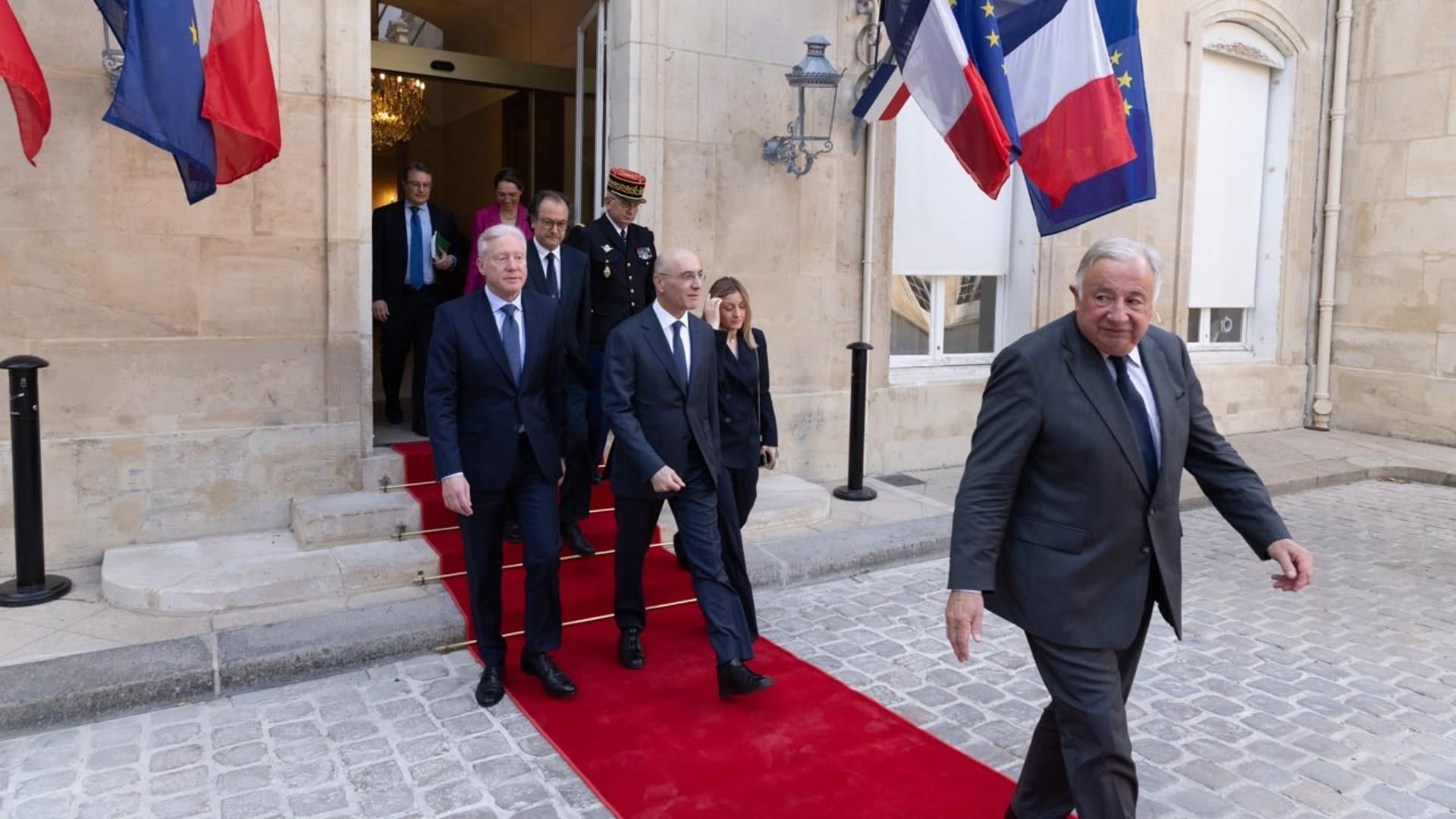
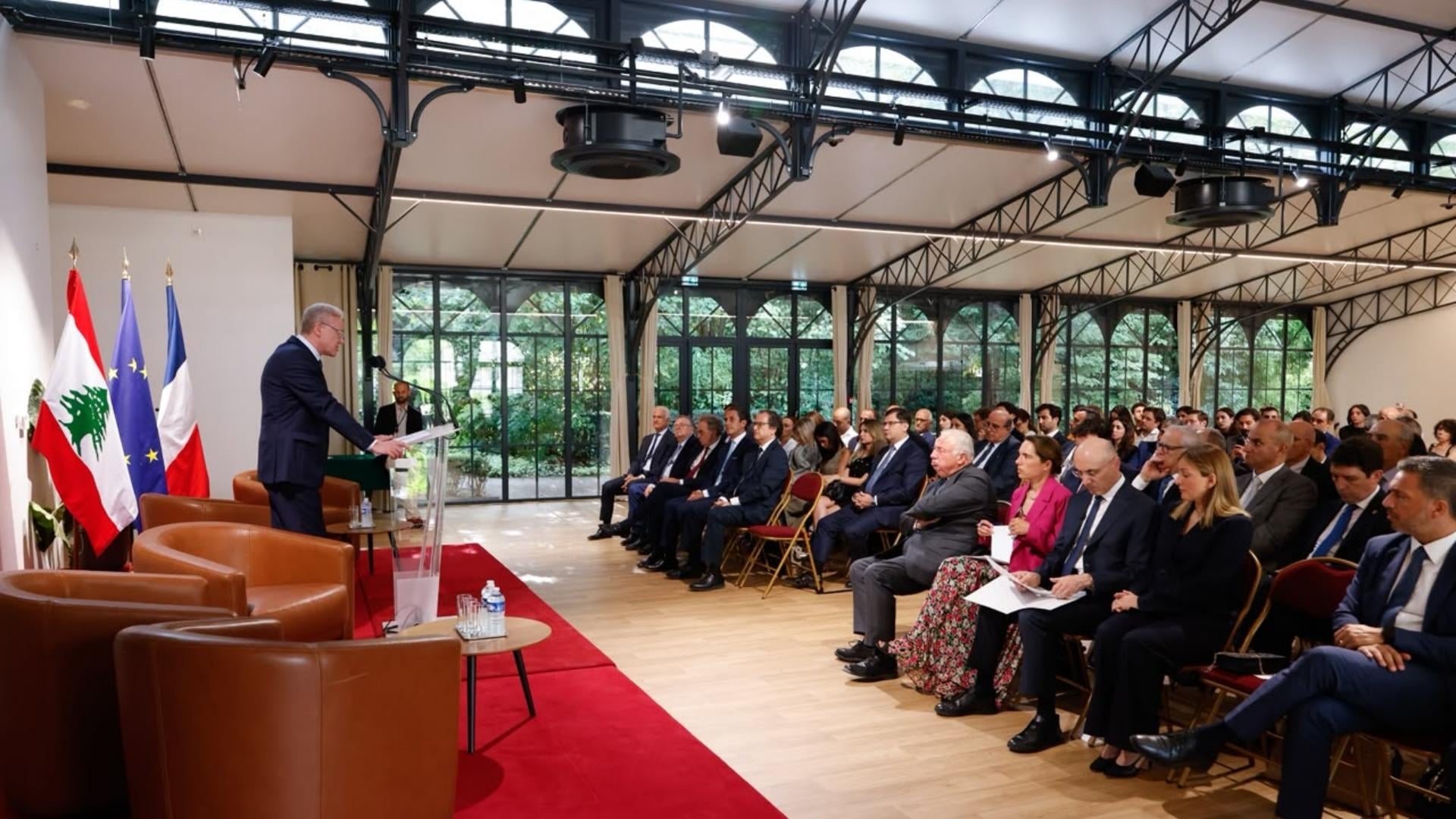
Minister of Foreign Affairs and Emigrants Youssef Rajji participated in a conference held at the French Senate under the title "In Solidarity with Lebanon: Local Authorities at the Heart of the French-Lebanese Partnership," at the invitation of the President of the Senate, Gérard Larcher.
The conference was attended by Minister of Interior Ahmad Al-Hajjar and a number of heads of French regions, municipalities, and local bodies that have close relations with Lebanese local authorities. The conference addressed the development of the situation in Lebanon and cooperation between Lebanon and France at the level of local authorities, with the aim of strengthening the partnership between the two countries in the field of administrative development at the level of civil and municipal bodies.
The conference began with a welcome speech by the President of the Senate, who stressed the organic link between Lebanon and the French Council, pausing at the successive crises that Lebanon has suffered, the most recent of which was the crisis caused by Hezbollah, in his words. He described the Lebanese government's decision to reject the path of war and move towards negotiations as a courageous and historic decision.
Minister Rajji delivered a speech in which he described the Lebanese-French relationship as exceptional, noting that it "has evolved from a relationship of a protecting state to a solid partnership, which is no longer concerned with serving a particular sect, but rather with serving a unifying idea: the idea of a free, sovereign, pluralistic, democratic Lebanon, open to the world, and based on strong and capable institutions."
Rajji affirmed that "Lebanon has chosen to rebuild a fully sovereign state, whose authority is free from any ambiguity, a state that alone monopolizes the decision of its foreign policy and national security and alone exercises the right to use legitimate force." In this context, he pointed to "decisions he described as historic taken by the government, foremost among which is ending the military presence of Hezbollah," stressing that "this decision is what created the political conditions that made the framework agreement possible."
He continued: "The decision to end Hezbollah's military presence was not a response to external pressures nor the fruit of diplomatic negotiations, but rather came as an expression of a pure national will, and of a firm conviction that the state cannot regain its full credibility and prestige as long as there are military organizations operating outside its constitutional authority," stressing that "Lebanon no longer moves according to the dictates of circumstances, but according to a clear vision that considers that sovereignty is indivisible, that national decision is not delegated, and that the monopoly of legitimate force can only be for the state."
While acknowledging that "Lebanon, by virtue of its geographical location, openness, and pluralism, was a country where external influences intersect," he saw on the other hand that "influences are not all alike," and considered that "Lebanon does not refuse cooperation with anyone, but there is a fundamental difference between partnership and guardianship, and between cooperation and intervention."
He added: "Therefore, we welcome every partner who contributes to strengthening the Lebanese state, and we reject everyone who seeks to replace it," stressing that "decisions related to war and peace, national security, and foreign policy are made today in Beirut, and in Beirut alone."
He continued: "This choice requires courage, and sometimes even imposes difficult decisions, but it is an irreversible choice, because it expresses a deep will of the Lebanese people and their aspiration to regain their state, a state that will no longer be a arena for settling the conflicts of others, nor a forward line of defense to serve external interests, nor a bargaining chip used at negotiation tables held far from Beirut."
He explained that "Lebanon looks to France as a partner capable of contributing to building a new system for security, prosperity, and cooperation in the Mediterranean region," praising "the role that France has played for decades, within the framework of the international forces operating in southern Lebanon (UNIFIL)," but he stressed that "everyone realizes that any international force, no matter how important, cannot permanently replace a sovereign state," adding: "Our goal is clear: for the Lebanese Armed Forces to gradually extend their authority over all Lebanese territory, including the south, in accordance with the sovereign decisions of the Lebanese state, and in accordance with relevant Security Council resolutions." However, achieving this goal remains linked to a no less important requirement, as he said, which is "the complete Israeli withdrawal from all Lebanese territories."
He continued: "No state can complete the building of its institutions and sovereignty while part of its territory remains under occupation. Occupation undermines state institutions, fuels tensions, delays the return to political and security stability, and prevents the state from exercising its full authority over its territory. Nor can we talk about sustainable stability unless the state is the sole entity that monopolizes the use of legitimate force," affirming that "the current government builds its vision for the future on the basis that there is no full sovereignty for a state on whose land any foreign military presence continues, nor for a state whose legitimate institutions do not alone exercise public authority and the monopoly of force." While calling on France to "build a partnership that is not limited to the concept of solidarity alone, but rather to help establish a new and more stable balance, and to support a state that has regained its ambition to exercise its full powers and fulfill its responsibilities," he reiterated his affirmation that "Lebanon has chosen the state, institutions, and sovereignty, and that it will no longer be an arena for others to fight over, or a stage for settling their scores, or a means to achieve projects that have no connection to the interest of the Lebanese people."
Rajji concluded by calling on France to "continue to believe that a sovereign, democratic Lebanon governed by its legitimate institutions is not just a possibility but a reality that can be consolidated."