·
·


Lebanon
Political and media circles are focused on the killing of a senior official at a prominent bank, questioning whether the death was politically motivated or merely a personal incident. Meanwhile, residents in southern and western Bekaa regions remain hesitant to fully rebuild due to ongoing war fears.

Political and media circles have been preoccupied with news of the killing of a senior executive at a well-known bank, and whether the cause of death is politically linked or simply a personal accident.
Residents returning to their villages in the south and western Bekaa insist they dare not undertake full reconstruction because no one has reassured them that the war has ended; all they do is carry out essential maintenance for habitation.
Lebanese seeking to reach Syria via the northern border prefer crossing the river or using dirt roads rather than enduring the hardship of reaching the al-Manshiyah border crossing in the Bekaa.
A Bekaa deputy has recently launched a campaign against a minister of public works and a fellow district representative, arguing that asphalt services pass through the latter and benefit specific areas with known political affiliations—claims denied by the ministry.
Passersby in Beirut noticed the asphalt paving of the famed Pierre Gemayel Corniche, also known as the Via-Museum route, being carried out for the third time in just a few months, while nearby streets in greater need of asphalt have received no attention.
A former minister was forced to take a photo with a local politician despite their severed relationship since the municipal elections, and their growing distance during preparations for the parliamentary elections—after a mutual friend embarrassed them by insisting they stand together in front of the camera.
The government is moving toward a stricter approach regarding beneficiaries of dollar purchases through "Sarraf" operations, progressing from reminders to warnings, then prosecution and penalties.
It is said the most difficult phase will be interpreting and applying eligibility conditions across all categories of those affected, following the recent passage of a law amended multiple times in the past weeks without sufficient debate—raising alarms about potential security concerns.
Street movements observed in tandem with the latest session of the Parliament indicate that any financial decision affecting civil servants’ rights could quickly turn into a political confrontation, and political factions have already begun calculating the cost of any compromise ahead of upcoming elections.
Reports suggest widespread frustration among thousands of European families amid the ongoing crisis in the Strait of Hormuz.
A lawmaker drew attention—at least in terms of statements—for remarks devoid of meaning concerning MPs' salaries of 5,000 USD, which have reportedly been collected since last year!
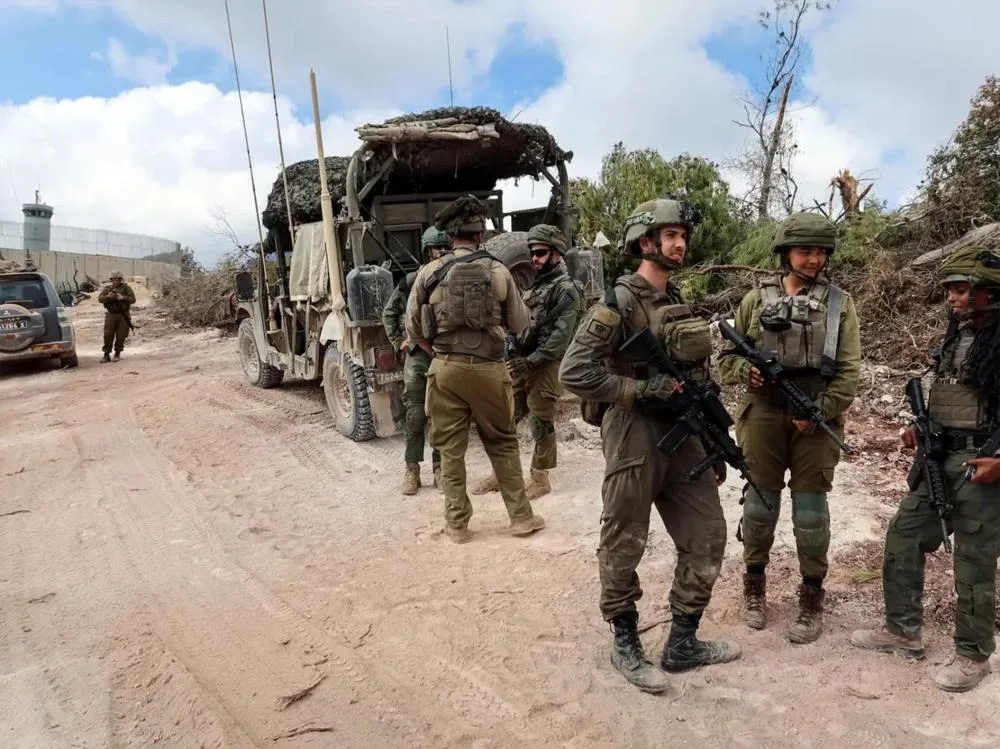
Circles within political parties concerned with the fate of the Ali al-Tahir hills are experiencing an atmosphere where Iran is expected to intervene inevitably if an incursion occurs in the coming days or weeks.
General Joseph Clerfeyt, commander of the Military Coordination Group for Lebanon, expressed surprise at social media campaigns targeting him, calling them entirely disconnected from ground realities and the positive communication currently underway with Lebanese state institutions.
Insiders suggest that the audience of Sheikh Ahmad al-Aseer may become a powerful electoral card in Sidon, Beirut, Bekaa, Tripoli, and Akkar, and that any Sunni figure or force adopting a stance demanding his release from prison could win sympathy from this segment, while forces taking a hardline stance against him might face a tough electoral test.
Platforms affiliated with the Hezbollah militia removed the paragraph in the group’s secretary-general’s recent televised speech mentioning the alleged Jewish thinker Moshe Ya’ir.
Military experts are discussing the possibility of a large-scale Israeli attack on Ali al-Tahir hill, concluding it would inevitably lead to the resistance declaring the end of the ceasefire it has upheld since June 14. This means responding with maximum possible force, including retaliating against the expansion of Israeli targeting toward civilians, resulting in attacks on northern occupied Palestinian settlements within days, followed by an Israeli response on the southern suburbs of Beirut and a broad Iranian retaliation in the north. In such a scenario, Israel must choose between accepting the Iranian deterrence equation leading to an Israeli withdrawal or entering a prolonged depletion of its air defenses—currently limited to around 200 missiles (30 Arrow, 48 Thaad, and 120 Patriot)—which can cover only three to five days of warfare. If the U.S. intervenes, the depletion would extend to the American stockpile, which does not exceed 1,000 missiles, potentially opening the door for a U.S. return to the understanding memorandum with Iran?
Armament figures reveal that Israel cannot sustain a long war alone against Iran. It entered the conflict with a stockpile estimated at around 150 Arrow-2 and Arrow-3 missiles, and according to a research estimate, used 122 missiles by March 24, leaving only 28—about 30 missiles remaining. It cannot rapidly accelerate production to compensate for this consumption, as nearly half the components of the Arrow system are manufactured by Boeing and American suppliers before final assembly and testing in Israel. These are not short-range Tamer missiles that can be mass-produced for the Iron Dome. If the U.S. intervenes, a Thaad battery provides around 48 missiles, and American Patriots and destroyers add dozens of intercepts, bringing the immediate available total to approximately 150–200 missiles. However, this number falls short of covering 200 targets, as some Iranian missiles require two intercepts, and part of the arsenal will protect American bases. Thus, an Iranian missile barrage could deplete the shield within three to five days, forcing a wide U.S. intervention that Washington would have to bear the consequences of.