·
·


Tech & Science
DARPA will launch its Robotic Servicing of Geosynchronous Satellites spacecraft this summer to demonstrate satellite repair and refueling in geosynchronous orbit.

DARPA is preparing to send its Robotic Servicing of Geosynchronous Satellites (RSGS) spacecraft into orbit this summer, aiming to begin hands-on satellite servicing demonstrations by 2027. The mission will target geosynchronous orbit (GEO), approximately 22,000 miles above Earth, to conduct repairs, refueling, and upgrades on satellites that have never undergone in-orbit servicing.
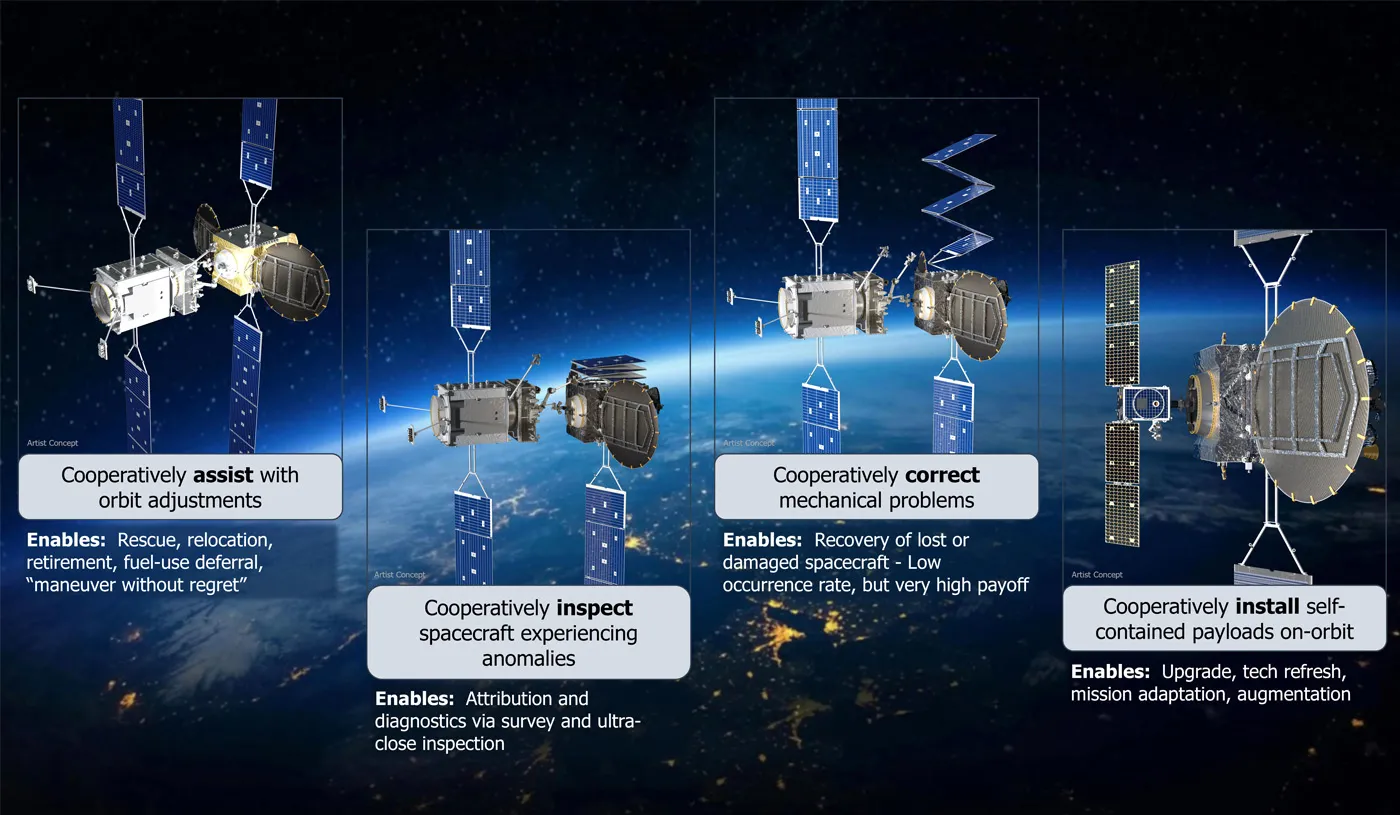
The RSGS spacecraft is based on the Mission Extension Vehicle (MEV) platform developed by Northrop Grumman SpaceLogistics, which previously achieved remote docking with two active Intelsat satellites in 2020 and 2021. Enhancing this platform, the Naval Research Laboratory provided a dual robotic arm system capable of complex tasks such as diagnostics, fault correction, orbit adjustments, and installing new hardware on satellites not originally designed for servicing. NASA is also contributing technical expertise to the project.
Following launch aboard a SpaceX rocket, RSGS will undertake an estimated ten-month journey to GEO using electric propulsion. This timeline means operational servicing activities are expected to commence around 2027. The spacecraft’s planned operations include satellite inspections, anomaly resolution, relocation, and refueling of functioning satellites.
The North American market for on-orbit satellite servicing is forecasted to reach $1.3 billion by 2026. RSGS aims to validate not only the technology but also the commercial viability of satellite servicing. DARPA emphasizes the mission as a government-industry collaboration, with reports indicating that contracts with military and commercial satellite operators are being arranged following the demonstration phase. Northrop Grumman’s SpaceLogistics division is positioned to lead in high-value GEO satellite repair contracts, while competitors such as Astroscale monitor developments closely.
Several regulatory issues remain unresolved, including liability concerns if the robotic arms inadvertently damage client satellites. Agencies such as the FCC, Department of Defense, and NOAA have yet to establish clear frameworks governing these risks. Additionally, data security protocols for servicing sensitive government spacecraft remotely have not been finalized. These regulatory and security challenges must be addressed before RSGS can transition from a demonstration mission to routine commercial operations.
The upcoming launch this summer represents a critical step in moving satellite servicing from theoretical potential to an operational reality supported by government funding and industry collaboration.
DARPA's RSGS spacecraft features dual robotic arms developed by the Naval Research Laboratory, mounted on Northrop Grumman's Mission Extension Vehicle platform.