·
·


World Cup 2026
Carlo Ancelotti, the first foreign coach of Brazil’s national team in World Cup history, is seen as the best hope for Brazil’s sixth title in 2026.

The appointment of Carlo Ancelotti as Brazil’s national team coach marks the first time a foreign manager will lead the team in a World Cup, highlighting his ability to showcase the talents of Brazilian players competing at the highest levels of football.
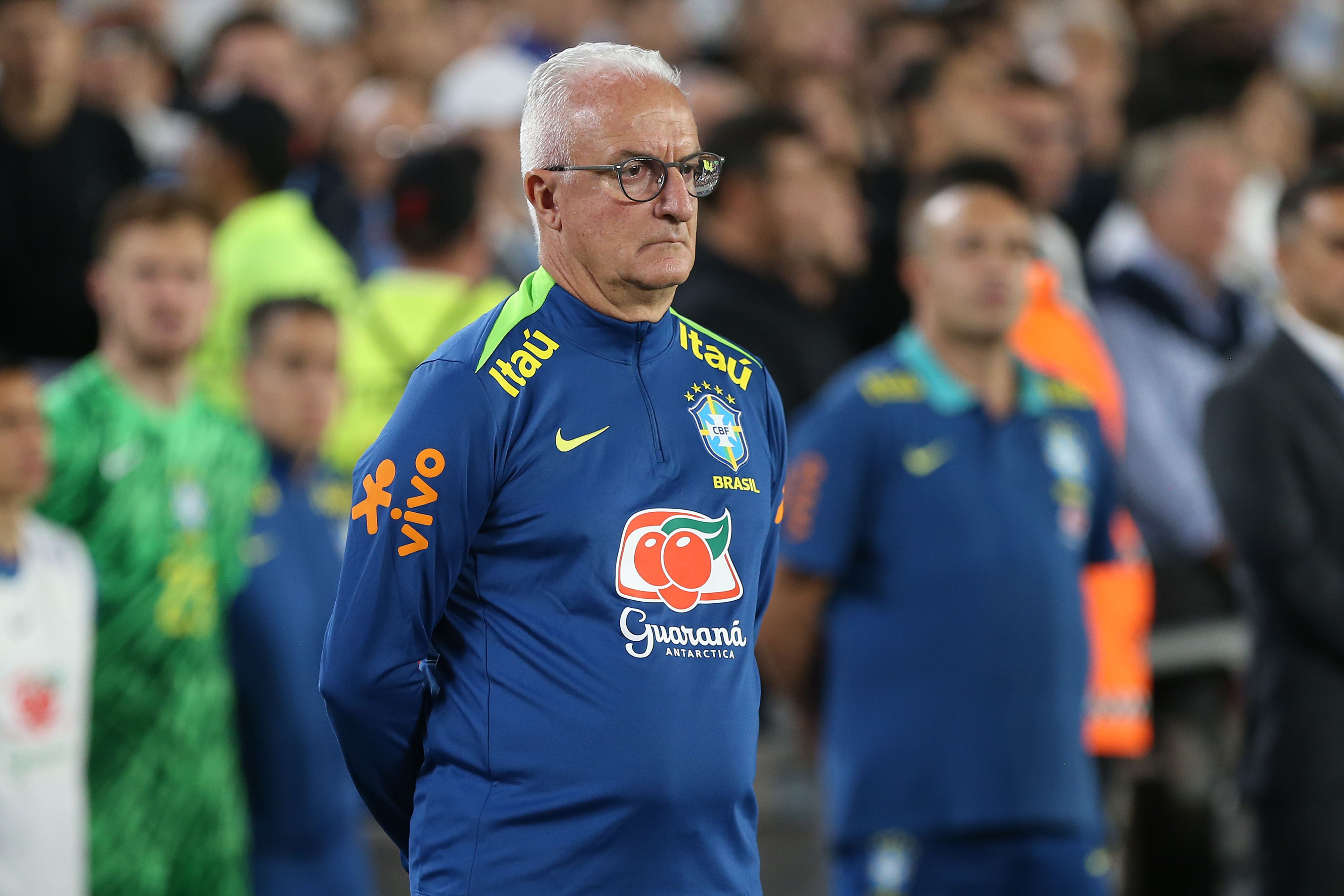
Durival Júnior had just suffered his second defeat in 16 matches as Brazil’s coach. However, the heavy 4-1 loss to Argentina, shortly after a disappointing Copa América campaign that ended in a penalty shootout exit in the knockout stage, was enough to turn most Brazilians against him, likening their frustration to the “Off with their heads!” cry from Lewis Carroll’s “Alice” stories.
Even before the match in Buenos Aires concluded, it was clear that the atmosphere had become unbearable for the dejected Durival, who appeared distracted and distant. Brazil was no longer the “football wonderland” it once was after two decades without a World Cup win, and Brazilian coaches had paid a high price for this drought.
It took three days for Durival to be dismissed, although the decision was effectively made earlier. When Globo TV, traditionally a barometer for the national team’s mood, quoted Luis Roberto saying Brazil needed to “change course going forward and think about the 2026 World Cup,” it was evident the Brazilian Football Confederation (CBF) would have to find its fourth coach for the tournament cycle leading to the North American event.
Two weeks later, Carlo Ancelotti was announced as the new coach, bringing a faint breeze of optimism to fans dreaming of Brazil’s sixth World Cup title.
The excitement surrounding the Italian’s arrival, even as the World Cup approached, was measured. For many years, numerous Brazilians had harbored an almost impossible dream of seeing Pep Guardiola take charge of the national team. Guardiola’s status as one of the greatest coaches in history, combined with his success at Real Madrid where he closely worked with top Brazilian players, was enough to revive that dream.
Yet, the hiring of the first full-time foreign coach also symbolized a painful reality: the rapid decline of Brazilian coaches.
Foreign coaches are not new to Brazilian football and have contributed significantly to its development. The so-called “Hungarian school,” active worldwide in the 1940s and 1950s, reached Brazilian pitches through figures like Dori Kürschner, who introduced deep tactical ideas, and Bela Guttmann, his assistant at São Paulo in 1957. Vicente Feola led Brazil to its first World Cup title in 1958.
In 1965, Argentine Felipe Núñez achieved such success with Palmeiras that his team officially represented Brazil in a friendly against Uruguay.
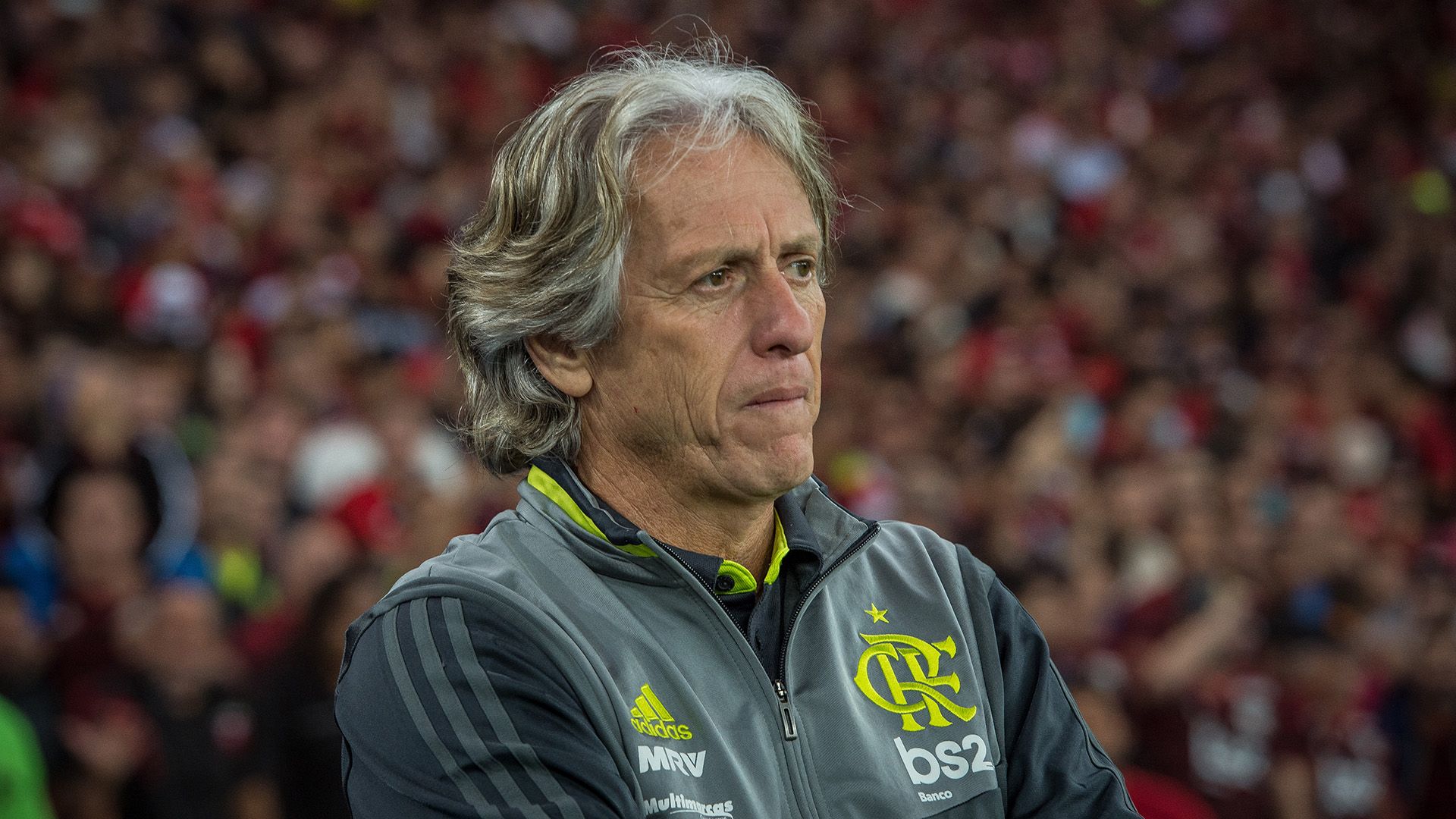
Starting in 2019, the success of Portuguese coach Jorge Jesus with Flamengo opened the floodgates for foreign managers. Other Portuguese coaches, Abel Ferreira at Palmeiras and Arthur Jorge at Botafogo, made history by winning major titles. Argentine Juan Pablo Vojvoda arrived in 2021 as an unknown but quickly became a legend at Fortaleza, leading the small club to national and continental championship dreams. He declined multiple offers from bigger clubs before leaving in 2025 amid an emotional farewell.
Meanwhile, Brazilian coaches became increasingly marginalized, often serving as fallback options. Currently, half of the coaches in the Brazilian Serie A are foreigners.
The prevailing belief—possibly still accurate—is that Brazilian coaches have long been outpaced by modern trends. While Argentine and Uruguayan coaches sometimes manage top clubs in the UEFA Champions League, no Brazilian has done so for decades. The last were Luiz Felipe Scolari at Chelsea and Vanderlei Luxemburgo at Real Madrid in the early 2000s.
Those who succeeded in South America often fell victim to constant coaching changes in Brazil or were eventually appointed to the national team, only to be judged as failures by the public based solely on disappointing results.
In other words, the same country that produces the world’s best footballers struggles to develop top football thinkers and strategists. This mechanism resulted, with very few exceptions, in a cycle of selecting the same types of coaches for Brazil’s national team over recent decades: veterans with past success, tough leaders, consensus figures, or “godfather” personalities.
Carlos Alberto Parreira, 1994 World Cup winner and one of the great football minds of his era, led the cycle until the 2006 World Cup but failed at the critical moment to build a star-studded team. The response to this failure, blamed on the players’ “excessive joy,” was to appoint a strict coach with no prior official team experience: Dunga led Brazil twice, from 2006 to 2010 and 2014 to 2016, but pleased no one in either stint.
Mano Menezes was at his peak in 2010 but could not maintain it. Felipão, between 2013 and 2014, returned only due to distant memories of the 2002 fifth title and the “Scolari family” that contributed to it. He even literally appeared in a commercial portraying himself as a father leading children on the pitch. Ultimately, the prevailing impression was that the semifinal against Germany was a contest between children and adults—something widely understood.
Among all these, Tite seemed most prepared to take on the challenge when he accepted the Brazil job shortly before the 2018 World Cup. His team’s early moments in the final phase of World Cup qualifying were promising. Adenor Leonardo Bacchi, considered the best coach in Corinthians’ history after winning nearly every major title, commanded respect and was viewed by many as a “European-style coach.” Ultimately, Tite could not advance beyond the quarterfinals in two World Cups, and after voluntarily stepping down, he expressed disappointment at not being hired by any major European club.
Without its best recent coach, the CBF, mired in its own institutional chaos, made numerous wrong decisions preparing for the 2026 World Cup, even those that seemed somewhat logical.
Whether one liked or disliked Fernando Diniz, he was the most distinctive Brazilian coach in recent years in terms of his thinking and preference for good ball play. He was delivering historic performances with Fluminense, which was poised to win the 2023 Copa Libertadores, when he was called to juggle his club duties with a temporary national team role while president Ednaldo Rodrigues still dreamed of attracting Carlo Ancelotti.
The mistake was appointing Brazil’s most distinguished coach in decades without a clear plan. Everything was done in an incredibly ad hoc manner. The result was obvious: Ancelotti renewed his contract with Real Madrid at the end of 2023, while Diniz’s results were poor—three losses in six matches versus two wins. Durival Júnior was then chosen; he had performed well with Flamengo and São Paulo, distinguished mainly by his paternal personality and ability to manage the egos of key players. The outcome is well known.
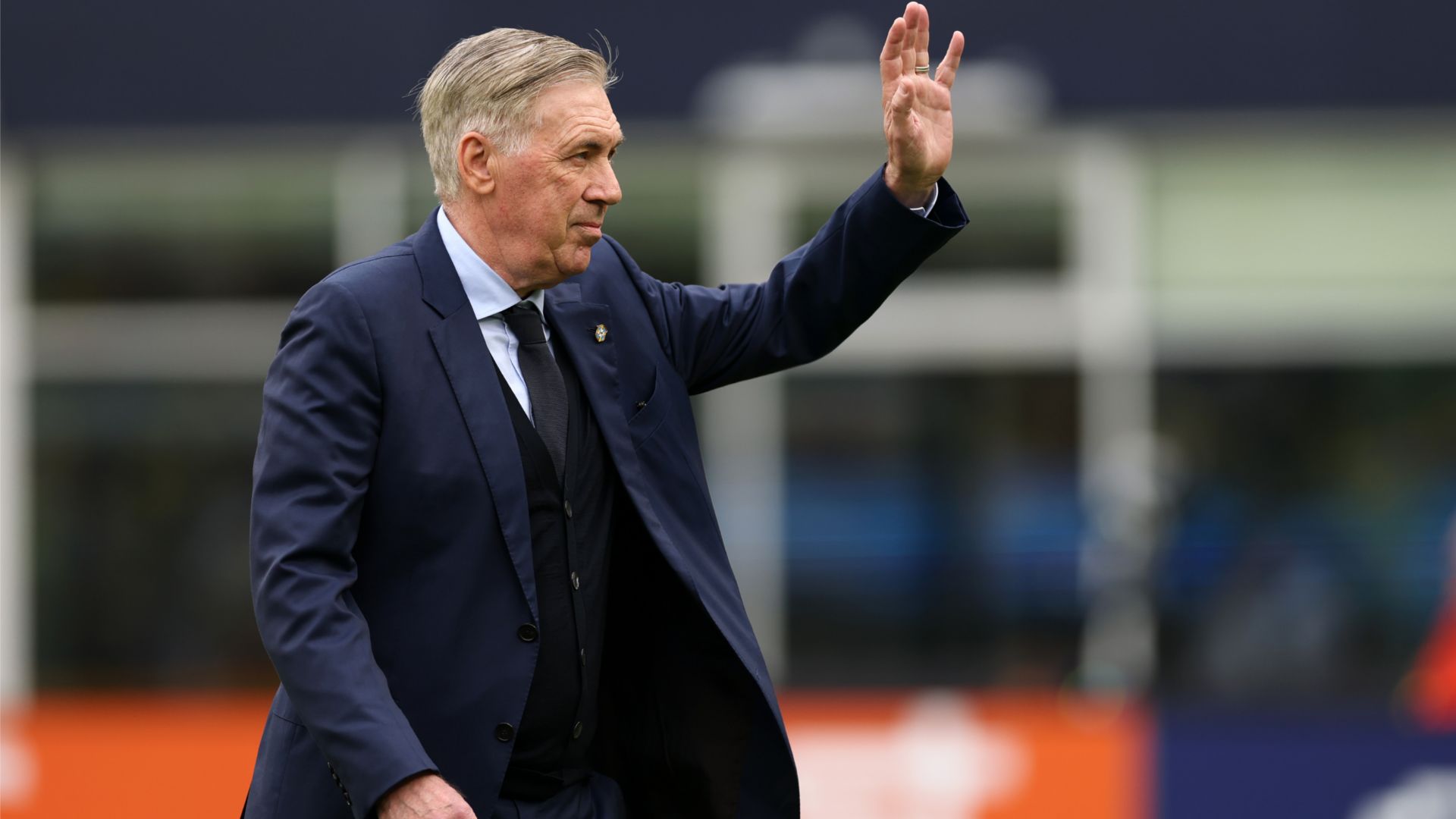
Brazil was fortunate even to reach an agreement with Ancelotti. The Italian did not replicate his previous successes in his final season with Real Madrid in 2024/25, and the club opened the door for his departure—an elegant dismissal. He seized the opportunity to make history with the national team. Negotiations that began with president Ednaldo Rodrigues were carried out by another CBF official, Samir Shud, after Ednaldo’s dismissal.
Brazilian coaches criticized the choice of a foreign manager. Antonio Lopes, who achieved victories in Brazil and was influential in the fifth title as coordinator, strongly opposed it: “Brazil won five titles with five Brazilian coaches. Why appoint a foreign coach?” he told GE.
Emerson Leão, former Brazil coach and 1970 World Cup-winning backup goalkeeper, lamented the current situation that opened the door for Ancelotti: “All clubs, or at least the biggest ones, are run only by foreigners. Where? Where is Brazil? Where are the Brazilian coaches? Where are the people leading this show? (...) I am very frustrated and sad about this new generation of coaches allowing this to happen, unable to show much greater impact, more merit, and higher quality to be part of the Brazilian national team,” he told CNN.
Meanwhile, Brazil’s last two World Cup-winning coaches, Parreira and Felipão, gave their blessings to the Italian, who also received a replica of a jacket worn by Mário Jorge Lobo Zagallo, one of the greatest icons welcoming the national team.
Parreira’s words in a video shown at Ancelotti’s presentation: “Dear Ancelotti, we are very happy that you accepted the invitation to coach Brazil, one of the most famous teams now led by one of the greatest football coaches in the world. We hope you achieve the long-awaited sixth title. All the success in the world.”
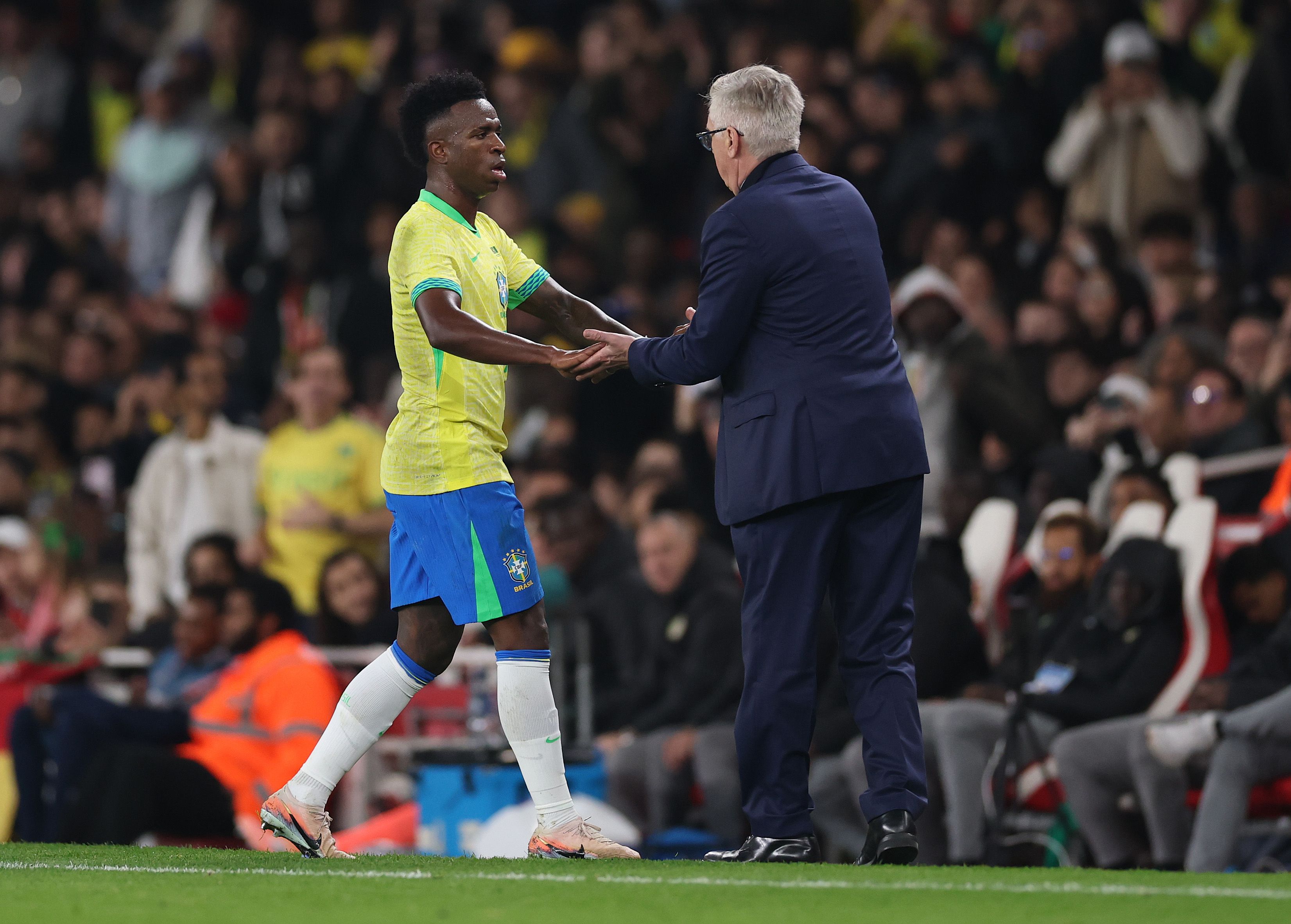
Felipão was present at the ceremony, embraced Ancelotti, and spoke warmly: “It is an honor, pleasure, satisfaction, and happiness to be with you. We wish you all the best. Be yourself, the person you have always been, who will achieve in Brazil what you have before. All the best for our Brazil. We will always be with you.” Even Durival Júnior maintained a polite stance toward the Italian and appeared later in a photo embracing his successor.
Among the eight World Cup-winning nations, the three with the longest title droughts are currently led by foreign coaches. Argentine Marcelo Bielsa coaches Uruguay, German Thomas Tuchel leads England, and Ancelotti may be Brazil’s greatest hope for a sixth title. Despite this coincidence, each case has its own context, and Brazil’s situation strongly reflects the national team’s identity.
Since 2006, over 80% of players called up for World Cup squads have played in Europe. With players moving at a young age to the continent to complete their athletic development, they are no longer fully integrated into Brazilian football culture. Therefore, appointing a European coach to lead a team of Brazilian players trained largely in European football is logical. Even more logical is that Ancelotti is that coach.
Ancelotti’s career runs parallel with Brazil’s football history. Even as a player, he was one of Nils Liedholm’s favorite pupils and developed enthusiasm for Brazilians after witnessing their talent firsthand. Liedholm was one of Sweden’s scorers in the 1958 final lost to Brazil. Before retiring, Ancelotti played alongside stars like Paulo Roberto Falcão and Toninho Cerezo but deepened his connection with yellow-shirted stars as a coach.
At Milan, Ancelotti worked with Ronaldo “Fenômeno,” Ronaldinho “Gaúcho,” Cafu, Dida, Rivaldo, Serginho, and many others. Most notably, he perfected Kaká’s talent, playing a major role in his 2007 FIFA World Player of the Year award. At Real Madrid, he helped Vinícius Júnior evolve from a promising player prone to poor decisions in the final third into a genuine goal scorer.
Under Ancelotti’s guidance, Vinícius was also named FIFA’s best player in 2024. Don Carlo knows football well and is familiar with other current Brazilian candidates: Casemiro, Rodrygo, Éder Militão, and during his brief Everton stint, he had Real Madrid monitor Richarlison. Overall, more than 30 Brazilians have passed through Ancelotti’s club career, ranging from unknowns like Clayton and Diogo at Milan to stars of various generations and promising talents who did not reach the top. In other words, Carlo Ancelotti is an expert on the full spectrum of Brazilian players.
If financial pathways have transformed Brazilian national team players into European-style footballers with extensive European experience—a change difficult to reverse—why not appoint the coach who knows these players best and has maintained contact with them over decades and recent years? Ultimately, Ancelotti’s Italian nationality is merely a detail—unless you are a Brazilian coach.