·
·


World
Abelardo de la Espriella won Colombia's presidential runoff narrowly, pledging a hardline approach against drug traffickers and receiving support from U.S. President Donald Trump.

Abelardo de la Espriella, a prominent lawyer, secured a narrow victory in Colombia's second and final presidential election round on Sunday, marking a sharp shift to the right in the country’s political landscape. He pledged to launch a war against drug traffickers.
The newly elected Colombian president, aged 47, also holds American citizenship and calls himself "The Tiger." He enjoys backing from U.S. President Donald Trump.
According to official results, de la Espriella obtained 49.65% of the votes, leading by a slim margin over his leftist rival, Senator Iván Cepeda, who garnered 48.70%.
De la Espriella announced that Trump congratulated him on his win, stating on social media: "I spoke minutes ago with the President of the United States, President Donald Trump, who expressed his support and recognition of our victory."
Over recent years, Abelardo de la Espriella's name transitioned from that of a well-known criminal lawyer in Colombia to one of the most prominent right-wing political figures in the country. He leveraged his strong media presence and sharp rhetoric against the left and armed groups before emerging as a leading contender in the 2026 presidential race.
De la Espriella is viewed as representing Colombia's rising right-wing populist current, relying on a conservative electoral base that believes the country requires a tougher stance on security, crime, and drug trafficking after years of policies pursued by leftist President Gustavo Petro’s administration.
He has become one of Colombia’s most controversial political figures in recent years due to his harsh positions toward the left and armed groups. His firm political and security discourse has earned him broad popular support while attracting widespread criticism from opponents.
Born in the Colombian city of Barranquilla in 1977, Abelardo de la Espriella gained prominence early as a criminal lawyer specializing in major and complex cases.
He became widely known for defending businessmen, public figures, and high-ranking officials, making him one of the most visible lawyers in Colombian media.
Gradually, his activities extended beyond the legal field into public work and political commentary. He became known for his conservative views and repeated criticisms of leftist movements and governments that adopted conciliatory policies toward armed groups.
De la Espriella used his intense media presence to craft a political image centered on defending a "strong state" and "restoring security," messages that resonated with broad segments of voters frustrated by ongoing violence and the growing influence of gangs and drug networks in parts of the country.
During his campaign, de la Espriella proposed a program focused on tightening security policies, strengthening the army and police forces, and pursuing armed groups and criminal organizations. He also advocated revisiting some agreements made by previous governments with armed factions within peace processes.
He called for adopting economic policies closer to the business sector and private investment, reducing regulatory restrictions, and encouraging both local and foreign investments, considering economic growth a key to addressing social crises.
Supporters describe him as a decisive politician capable of restoring state authority and enforcing the law. Critics argue his "hardline populist rhetoric" could deepen Colombia’s sharp political polarization and threaten gains made in national reconciliation and human rights.
In the recent election campaign, de la Espriella benefited from increasing division between right and left and from public concerns about security and the economy, presenting himself as an alternative able to end what he called the country's "leftist experiment phase."
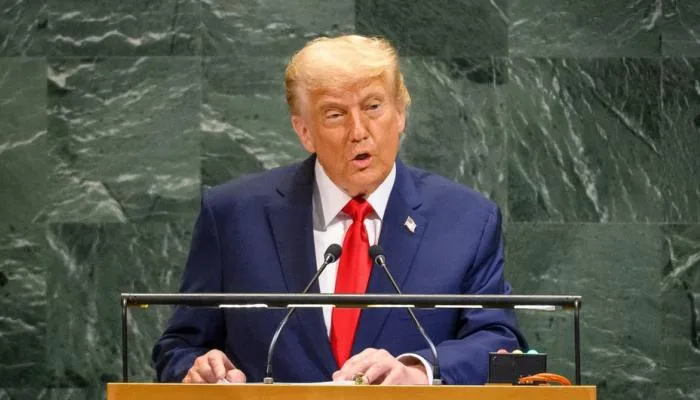
Abelardo de la Espriella attracted special attention from U.S. President Donald Trump during the election campaign, who publicly endorsed him, a move that stirred significant debate within Colombian political circles.
Trump previously described de la Espriella as a "tireless fighter," considering him a candidate capable of enhancing security and stability in Colombia. He sharply criticized de la Espriella’s leftist opponent, Iván Cepeda, labeling him an "extreme Marxist leftist."
This U.S. stance caused division in Colombia's political scene. Conservative and right-wing forces welcomed it as a sign of potentially strong relations with Washington if de la Espriella won. Conversely, left-wing groups viewed it as direct interference in Colombia’s internal affairs and an attempt to influence voters.
Critics warned that de la Espriella’s close association with Trump’s positions might intensify political polarization in Colombia, which is already experiencing growing division between right and left factions over the country's future and economic and security policies.