·
·


World
Egypt is negotiating to obtain advanced French Barracuda submarines with full technological sovereignty, prompting Israeli warnings about a new regional naval power.

Egypt is advancing efforts to acquire the latest French Barracuda submarines under conditions that Israeli sources describe as shocking, sparking concerns in Tel Aviv about Cairo emerging as a formidable regional naval force.
According to the Israeli platform "Kikar," intelligence reports reveal that Egypt has presented demands that astonished senior officials at Naval Group and the Élysée Palace. Cairo is not seeking merely a ready-made product but insists on full technological sovereignty.
The Egyptian plan includes establishing advanced production lines at Alexandria shipyards, where conventional versions of the Barracuda attack submarines would be constructed. The Israeli platform further notes that Egypt's demands extend to securing the right to export submarines manufactured on its soil to third countries, a move that could transform Egypt into a regional security supply hub and position it as a direct competitor to European defense industries.
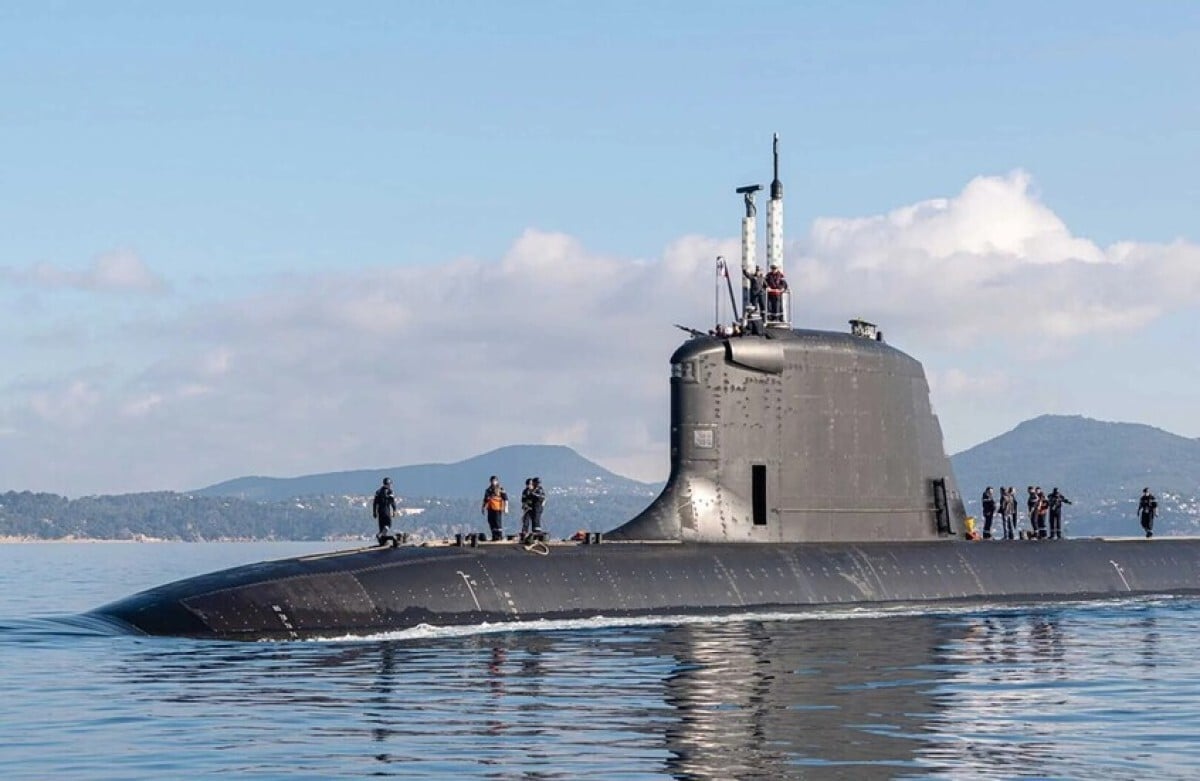
The Israeli report highlights that the Barracuda submarine is a technological powerhouse and a deterrent. Egypt's insistence on the French model stems from the strategic capabilities this platform offers.
Recognized as one of the quietest and most stealthy submarines globally, the Barracuda is particularly valued by Egypt for integrating air-independent propulsion systems, allowing extended underwater endurance without surfacing, alongside MBDA’s naval cruise missile system.
The Hebrew report explains that these capabilities would provide the Egyptian navy with a long reach and precise strike capacity against strategic targets hundreds of kilometers away, fundamentally altering deterrence dynamics amid increasing threats in the Red Sea and Mediterranean.
The Israeli news outlet states that in the context of power plays and Chinese and South Korean threats, Egyptian President Abdel Fattah el-Sisi and the Egyptian military leadership are conducting these negotiations with strategic intent. To pressure the French into technology transfer concessions, Cairo is openly exploring alternatives.
Egyptian delegations are reportedly closely examining South Korea’s advanced KSS-3 submarine and modern Chinese Type 039A models, according to the Israeli platform.
The Egyptian naval fleet comprises 150 warships, including eight submarines, 62 patrol vessels, 13 frigates, and 17 mine countermeasure ships.
The Israeli platform conveys Egypt’s message to French President Emmanuel Macron: if France hesitates to share its professional secrets, Egypt will not hesitate to sign a historic contract with Beijing or Seoul. This step would compel Western powers to exit one of the world’s most lucrative and significant security markets.
Despite this, the Israeli report acknowledges the deep and longstanding security ties between Paris and Cairo. Over the past decade, Egypt has purchased seven advanced French warships, including two Mistral-class helicopter carriers.
In December, Naval Group announced an extension of maintenance agreements for Egypt’s current fleet for an additional five years. However, submarines represent a red line for Paris, as transferring submarine production technology to a non-NATO country is unprecedented and highly sensitive for the French.
The Israeli platform warns that if the deal is signed under Egyptian terms, Egypt will become the dominant naval power in North Africa and the Arab world, possessing an unparalleled naval force with independent production capabilities that would shield it from arms embargoes or external pressures during crises.
The report specifies that 2026 is expected to be a decisive year, with Egypt aiming to commission its first operational submarine between 2032 and 2035, with a significant portion of outfitting conducted under Egyptian flag.
Should negotiations conclude with a signature in 2026, the deal would not only represent a €6 billion commercial contract but also a political declaration establishing a new, powerful security axis in the heart of the Mediterranean.
These developments reflect Egypt’s clear ambition to enhance its naval capabilities and modernize its fleet amid escalating geopolitical and security tensions in the Red Sea and Eastern Mediterranean.
Through this agreement, Cairo seeks self-sufficiency in heavy military industries, marking a qualitative leap in Egypt’s defensive and offensive capabilities.
Israel is closely monitoring these developments with serious concern, viewing Israeli naval qualitative superiority as a red line. Tel Aviv fears that Egypt’s possession of advanced Barracuda submarines, capable of prolonged underwater operations and armed with cruise missiles, will grant Cairo strategic deterrence that could shift regional security balances and restrict Israeli freedom of maneuver in surrounding waters.
Israeli apprehensions about Egypt’s naval capacity expansion arise amid reports of strategic cooperation between Israel, Ethiopia, and a Gulf state targeting control over the Berbera port in Somaliland.
The Israeli platform "Natziv Net" reports that the Berbera port and naval base, constructed by a Gulf country and operational since 2017, is nearing operational status. Although its intended operator remains unclear, potential candidates include the Gulf state, the U.S. Africa Command, or Ethiopia, which signed a memorandum of understanding with Somaliland to access the sea.
The platform adds that the naval facility visible in satellite images could host Israeli Dolphin-class submarines, central to Israel’s nuclear triad, possessing second-strike capability and armed with cruise and ballistic missiles with ranges up to 1,000 kilometers.
Furthermore, the Israeli platform notes that Israel’s maritime presence in Somaliland and the preparation of Berbera port to accommodate Dolphin submarines form part of a complex network of strategic interests involving the Gulf state, Ethiopia, and the United States.