Lebanon
Kan'an: We Back Responsible Negotiations... Depositor Funds Are Not Losses
Nabih Kan'an emphasized that responsible negotiations are essential for Lebanon's sovereignty and security, stressing that depositor funds are not losses but rights to be protected.

President of the Finance and Budget Committee MP Ibrahim Kan'an affirmed that "parliamentary oversight is not an attack on the government, but a protection against its mistakes and against state bankruptcy," stressing that Lebanese people demand clear answers on sovereignty, reform, deposits, and the foundations of dignified living.
In his speech during the government oversight session, he stated, "People don't ask who won the debate, but who saved the country? Either we build a state of decision-making, accountability, and rights, or we remain managing collapse and squabbling over its shares."
On the issue of sovereignty and security, Kan'an noted that "we support the negotiation path led by the state through its president, especially after the military and political outcomes in Lebanon and the region, and their devastating impact on people and infrastructure, which continue albeit at a different pace than before."
He stressed that "responsible negotiations, grounded in clear sovereign and national principles—such as liberating every inch of land, freeing prisoners, strengthening the army, confining weapons to its control, and securing funding for reconstruction—are not weakness or surrender, but a means to protect Lebanon and secure its rights."
Kan'an emphasized the need for war and peace decisions to rest solely with the state, and for the Lebanese Army to be the sole security and military authority across all Lebanese territory. He argued, "We cannot demand major responsibilities from the army while leaving it waiting for aid and promises. Supporting the army must become concrete commitments, with funding, equipment, and a clear plan—the army is the backbone of the state and the guarantee of its unity and sovereignty."
He expressed confidence in what the President of the Republic and the Army Commander will bring to Paris, urging the international community to stand firmly alongside the military institution, concluding with: "To the Lebanese: Want to demand more from the army? Set limits!"
On the financial file, Kan'an responded to accusations against Parliament for delaying the passage of reform laws, saying: "Let us rely on dates, not impressions."
He clarified that the amendment to the banking secrecy law was first approved by the Finance Committee on July 18, 2022, after the government submitted it on May 6, 2022—within two months. He added that the joint committees approved the government’s renewed submission on April 16, 2025, before the full chamber passed it on April 24, following cabinet approval on March 27. As for the bank reform law, Kan'an pointed out that the committee began reviewing it on April 30, 2025, after receiving it on April 17, completed it by the subcommittee on July 21, approved it by the Finance and Budget Committee on July 28, and saw the full chamber pass it just three days later.
Kan'an said: "A law concerning the fate of an entire banking sector and the rights of four million Lebanese inside and outside the country was studied and approved within three months."
He noted that after the law’s enactment, the government introduced new amendments late in 2025, and Parliament began discussing them in February after completing the 2026 budget, only to have the government request their withdrawal following new feedback from the IMF. Then, a new draft was submitted, which Parliament began reviewing in June, completed by the Finance Committee on August 3, and approved by the full chamber nine days later.
Kan'an added: "This is the truth: an original bill, then amendments, then withdrawal, then re-submission, then new amendments sometimes arriving just before sessions. Therefore, do not blame Parliament for time lost between the government, the IMF, and Banque du Liban," emphasizing that "depositor funds are not anonymous losses or unverified numbers erased by decree." He insisted that it is unacceptable to reduce reform to shifting losses onto depositors who did not cause them.
Before any deductions or write-offs, he called for transparent and clear audits of state, Banque du Liban, and domestic and foreign banks’ figures, clarifying responsibilities, recovering illegally transferred or acquired funds, and establishing a binding, implementable mechanism for deposit recovery.
Kan'an asked: "Who wasted? Who transferred? Who benefited? Who will pay? Reform is not measured by the number of laws passed, but by the number of rights restored, funds recovered, and officials held accountable."
He listed enacted laws—including on unlawful enrichment, establishment of the National Anti-Corruption Authority, access to information, whistleblower protection, recovery of assets from corruption crimes, lifting banking secrecy, and bank reform and its amendments—and questioned: "What has actually been implemented from these laws?"
Regarding the financial regulation and deposit recovery bill, Kan'an explained it reached Parliament in February, after the bank reform and general budget laws, and faced unprecedented objections and comments—from the IMF and Banque du Liban to half the government members and professional associations. He noted that the Minister of Finance, an IMF delegation, and the diplomatic corps informed Parliament that bank restructuring was the top priority, and later announced the formation of a committee to address concerns about the gap bill—but without the government reclaiming it.
He demanded the government answer, with numbers—not slogans—on the actual size of the gap after identifying illicit funds, the entity responsible for bearing it, the method of deposit recovery, the implementation timeline, funding sources, and whether the roadmap is actionable or merely a declaration of intent.
On financial accounts, Kan'an reminded that "the Finance and Budget Committee’s oversight revealed since 2010 that state accounts have been missing or inaccurate since 1993, prompting the committee to push for their reconstitution and referral to the Court of Accounts, exposing violations and financial chaos."
Kan'an stated: "Governments and the international community slept on these facts until collapse occurred, as we warned. Do not give us laws written in ink on paper from now on—give us verified figures, implementing decrees, execution deadlines, funding sources, and clear accountability." He cautioned against "submitting a new budget without an economic and social vision or based solely on additional taxes and fees," affirming that "the citizen who lost a significant portion of income and savings cannot remain the perpetual financier of state failure."
Kan'an concluded: "Trust is not a blank check—it is earned daily through achievement, transparency, and respect for institutions. We will stand beside every decision that restores state sovereignty, protects the army, returns deposits, and revives administration and the economy. But we will confront every attempt to buy time, hide numbers, or burden the Lebanese with consequences of policies they had no role in shaping. We have chosen the state: a state of sovereignty, army, and law; a state that restores to the Lebanese their right, dignity, and money, and regains the trust of depositors and investors."
Latest news

Customs Clearance Agents at the Factory Suspended Their Strike

Raya: Caring for the elderly is an act of love and a testimony of faith
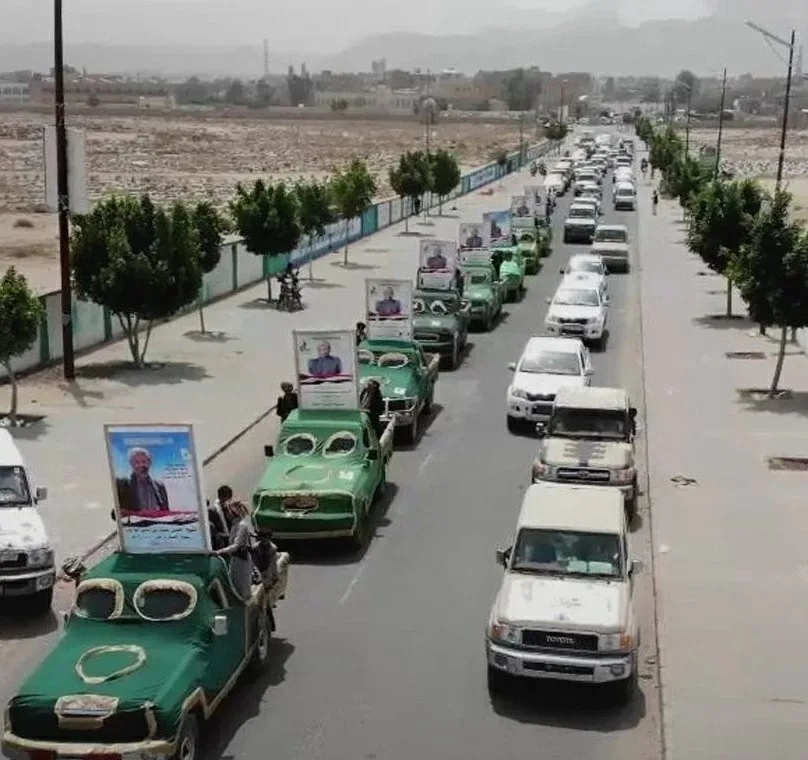
Yemenis Expose Houthi Losses Amid Widespread Mockery