·
·


Lebanon
Lebanese Foreign Minister Yusuf Regie stated Lebanon can resolve Hezbollah's arms issue independently of Iran's regime collapse, emphasizing the need for proper decisions and international support.

Lebanon’s Foreign Minister and Expatriates Affairs Yusuf Regie affirmed that Lebanon has the capability to resolve the issue of Hezbollah’s weapons even if the Iranian regime does not fall. He stressed that this requires making appropriate decisions supported by the international community. In an exclusive interview with the French newspaper Le Figaro, Regie described the Lebanese government’s decisions as courageous but noted the necessity of proceeding cautiously to avoid internal clashes.
When asked whether the internal clashes referred to what some describe as a civil war, Regie rejected this characterization, explaining that a civil war implies conflict between Christians and Muslims or among Lebanese parties. He argued that it is inaccurate to call it a civil war when the state is attempting to reclaim its authority and when the government seeks to enforce the constitution and legal principles against an armed organization—Hezbollah—that has rebelled against the state and drawn it into unwanted wars.
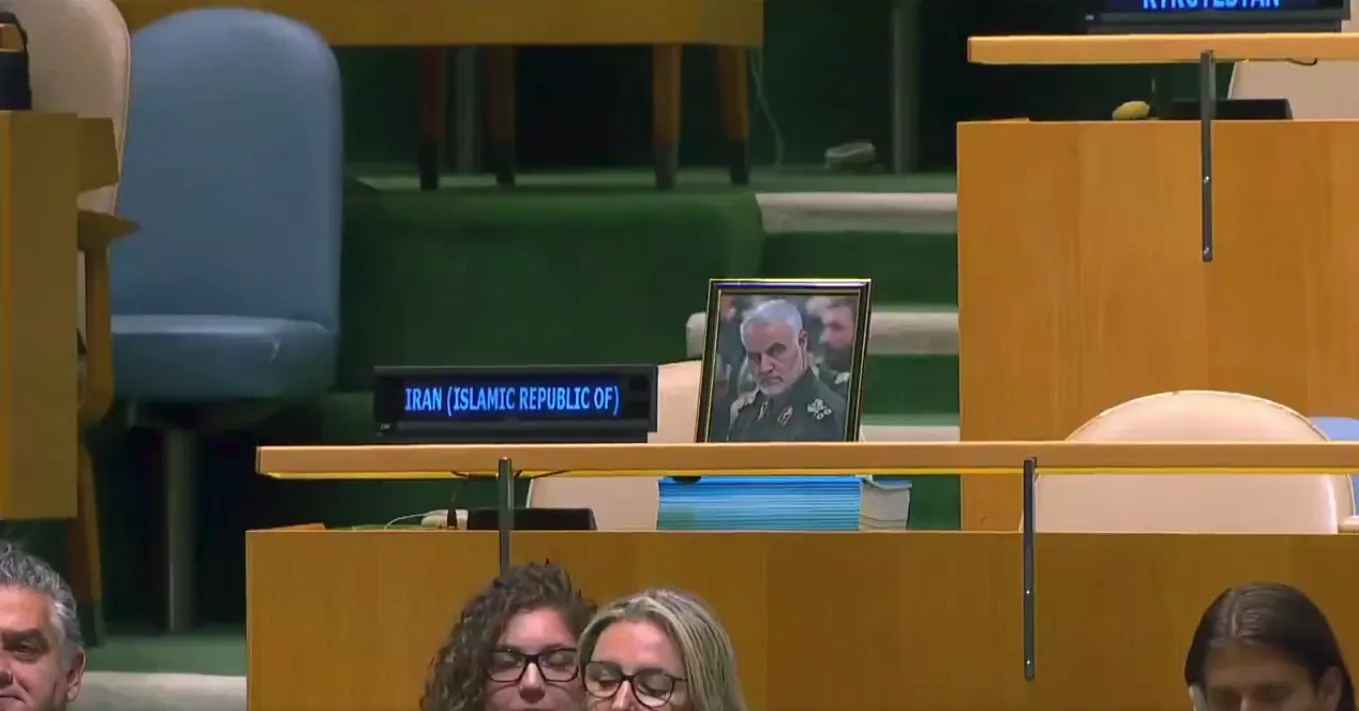
Responding to a question about the Iranian regime, established in 1979, Regie described it as an absolute system based on divine right. He stated that Iran created and funded groups from Shiite communities to destabilize the region. Regie asserted that Tehran’s priorities, alongside the destruction of Israel, are to maintain its control and dominance over Lebanon. He criticized the international community’s leniency toward Iran despite the numerous wars waged by its proxies, hostage kidnappings, assassinations, attacks on embassies and peacekeeping forces, including the killing of about fifty French paratroopers in the Drakkar attack, and other terrorist acts.
Regarding Hezbollah’s status, Regie indicated that the party is defeated both strategically and militarily but continues to control a significant portion of what is called the “deep state.” He noted that Hezbollah retains its weapons and influence within government institutions and administration. Regie emphasized that calls to disarm Hezbollah are not aimed at pleasing Israel, the United States, or the international community, but rather reflect the desire of most Lebanese citizens to live in a normal country. He added, “For the first time in a long while, Lebanon has a president, a prime minister, and a government aligned in their efforts, determined to do everything possible to restore Lebanon’s sovereignty.” He also observed that Hezbollah’s military activities hinder the economy, suppress tourism, deter investments, and drag the country into wars unrelated to it.
On whether a ceasefire in Lebanon should be part of a U.S.-Iran agreement, Regie firmly rejected this notion. He insisted on separating the Lebanese issue from the Iranian file, stating, “We do not accept anyone negotiating or signing agreements on our behalf because that would certainly come at Lebanon’s expense and sovereignty.” Regie highlighted that the president’s decision to engage in direct negotiations with Israel under U.S. auspices demonstrated Lebanon’s ability to pursue an independent sovereign path. He remarked that the political determination of the president and government is strong enough to advance despite all risks.
Regie expressed significant hope in U.S. mediation to achieve a permanent ceasefire followed by an agreement leading to Israeli withdrawal and Hezbollah’s dismantlement, describing the U.S. steps so far as “somewhat positive.” He called on France, which has consistently supported Lebanon, to play a supportive role for the Lebanese army and to provide diplomatic backing while working with the Lebanese state to establish an alternative framework to the UNIFIL forces whose mandate ends at the year’s close.
The foreign minister painted an optimistic picture for Lebanon’s future, expressing hope that the state will regain full sovereignty over its territory, free from Israeli occupation, Iranian Revolutionary Guard personnel, and Hezbollah’s weapons. He clarified that the problem is not with the Shiite community, which he described as “an integral part of the Lebanese state,” but with Hezbollah, which “has taken over, subjugated, and turned it into a hostage.” He added, “This community suffers from Hezbollah’s dominant presence, as do all Lebanese.”
Regie reiterated his criticism of the international community’s tolerance toward Iran despite all the wars waged by Iranian proxies, hostage kidnappings, assassinations, attacks on embassies and peacekeepers, the killing of approximately fifty French paratroopers in the Drakkar attack, and terrorist attacks. He deemed the distinction between Hezbollah’s military and political wings unrealistic, stating, “Hezbollah is a single entity serving Iran, which seeks to destabilize the Middle East.”
Regarding the possibility of the Iranian regime’s collapse, Regie described the Iranian people as great and creative but, like the Shiite community in Lebanon held hostage by Hezbollah, the Iranian people are captives of a totalitarian, absolute regime that kills its citizens. He emphasized that this regime must change primarily for the sake of the Iranian people, but stressed that no one can do this on their behalf.