Lebanon
National Anti-Corruption Commission Launches Digital Platform to Monitor Right to Information Compliance
The National Anti-Corruption Commission launched a digital platform to monitor public administration compliance with the right to information law, coinciding with the International Day for Universal Access to Information.

The National Anti-Corruption Commission launched a digital platform to monitor the compliance of public administrations with the law on the right to access information, on the occasion of the "International Day for Universal Access to Information," during a press conference held by Minister of Information Attorney Dr. Paul Morcos and the Head of the National Anti-Corruption Commission Judge Claude Karam, this afternoon at the Commission's headquarters in Verdun, attended by members of the Commission.
Karam
Initially, the Head of the Commission said: "The right to access information is an inherent human right enshrined in international agreements and covenants, particularly those related to human rights and combating corruption. This right has been embodied in the constitutions and laws of many countries, including Lebanon. Therefore, we are pleased to meet with you today, September 28th, which the United Nations adopted as the International Day for Universal Access to Information. I extend a special welcome to His Excellency the Minister of Information, Dr. Paul Morcos, appreciating his presence, participation, and the ongoing cooperation between the Ministry of Information and the Commission in supporting transparency and enhancing the right to access information."
He added: "The commitment of the National Anti-Corruption Commission to apply the law on the right to access information, and to commemorate this anniversary, is not new but rather a natural extension of work begun by the Commission with the issuance of its first annual report on the proper application of this law in 2023, and the path it followed in this regard during 2024 and 2025. Today, we launch a platform for the National Commission to follow up on the extent of compliance by public administrations and institutions with this law."
Minister Morcos
Then, the Minister of Information delivered a speech, starting by thanking Judge Karam, first for hosting and for the cooperation between the Ministry of Information and the Anti-Corruption Commission. He said: "We do not celebrate the World Day for the Right to Access to Information folklorically. I believe this year carries more than one positive and practical development, measuring the extent of the Lebanese state's commitment to the law on access to information. This law was issued in 2017, amended in 2021, and the first report on it was issued after the implementing decree of 2023. The first annual report was issued in 2023. Today, three years after this report, and with the law now 11 years old, we witness two important things: the first relates to the platform that will measure the responsiveness of public administrations to the applications of this law, and the other relates to the issuance of the new media law, which stipulated access to information, and I will speak about it."
He added: "I leave everything related to the platform to the President, but I will stop at the meanings and implications of practical applications related to the law. The right included in the law allows citizens to know how public money is spent, how the administration makes decisions, and the performance of public institutions. Therefore, our celebration today is not folkloric through issuing reports, but through practical and applied matters. What concerns us in the government generally is that access to information is useful and positive because, first, it is a fundamental condition for building trust between the citizen and the public administration; second, it is essential in combating corruption; and third, it is an economic and investment indicator, because any local or foreign investor asks about three basic things: First: Is there fair justice? Second: Is there honest media? Third: Is there a right to access information to ensure investments? Thus, the last positive aspect for us practically is that the interest of the administration lies in accessing information, and the interest of the state is that people reach information. The positive aspect for the administration is that it indicates what it does, updates its information, and saves itself from a huge amount of questions and doubts, thus providing proactive transparency instead of waiting for accountability."
He continued: "The last thing I say in this field is that it is the first time since 2017 that a visible, practical, and operational possibility is available for the citizen to see how this law is applied and to contribute directly to its application in a practical manner."
He said: "I conclude by speaking about the new media law published about 20 days ago. This law is an update workshop for the media law, which is 30 years old, and the publications law, which is 70 years old. We continue in the update workshop. This law came to stipulate in its reasons for accession the right to access information, but also in the articles it contains, which exceed 120 articles, Article 3 stipulates the society's right to access reliable information, which means preventing misinformation and fake news, etc. It allowed in Article 16 for people to get to know the National Independent Media Body, which will be established by the new media law, how it works, and stipulated granting the body the right to access all information recorded in registers by publishing them fully on a website managed by the body and making them available in paper form to anyone who wants to view them, and issuing certificates regarding them without delay, and they are exempt from fees."
He added: "The new text of the media law applies the law on access to information in this regard. Also, in Article 77, members of the National Media Body, which will be established within the next three months, take an oath swearing to the citizens' right to access information. In Article 80, the decisions of the National Media Body are subject to the principle of reasoning, requiring them to specify the reasons for their decisions, in accordance with the provisions of the law on the right to access information."
He continued: "I conclude by saying that protecting journalists enables them to work freely, objectively, and safely. Article 116 gave them the right to keep sources confidential, reaching protection (that no journalist or person who received information as a participant in the media production process or someone in their position can be asked) to reveal the identity of anyone who provided them with information or specific information that would help identify the source. This is protection for journalistic work, while otherwise allowing and permitting people to learn about the work of the National Media Body and others."
He added: "This year brought two advances in the topic of access to information, whether in the platform that President Karam will speak about, or the new law that came to stipulate the right to access information. This text will be in a permanent update workshop, just as Lebanese media desires."
He concluded: "The National Media Body will soon look into media violations and matters related to media misleading and false news."
Karam
Karam said: "Today we also celebrate the launch of the National Anti-Corruption Commission's platform to monitor the application of the law on the right to access information. This platform is a live platform, not a static report issued once or twice; it is updated continuously, allowing for measuring progress, monitoring deficiencies, and following the evolution of compliance levels over time."
He added: "The platform's database currently covers more than 1,480 administrations and public institutions obligated by the law's provisions. 66% of these entities responded to the Commission's request and provided the required data, reflecting a significant level of cooperation that can be built upon to enhance application. Conversely, the data shows continuing fundamental challenges in compliance, as the percentage of entities that assigned an information officer does not exceed 29%, alongside low compliance rates with the mandatory publication obligations of information and documents that the law requires to be made proactively available. This is the essence of the transition from merely responding to individual requests to establishing transparency as a daily practice within the public administration."
He added: "The platform also serves as a reference for the administrations and public institutions themselves, helping them assess their compliance level, identify gaps, and track achieved progress. At the same time, the platform expands the Commission's oversight capacity, which cannot directly and continuously monitor every administration and public institution in Lebanon. But when information and data become available, citizens, journalists, civil society, and researchers become partners in this oversight, and they can verify, follow up, and hold accountable based on facts and data."
He continued: "This work also directly serves the trends underlying the Second National Strategy for Combating Corruption, which we are currently preparing with the government. From this perspective, the Commission will give priority to enhancing the application of mandatory publication obligations, so we do not wait for individuals to request this information from the administration. This saves a lot of work for the Commission, because the Commission is the reference that reviews appeals and objections to rejection requests."
He said: "Also, the Commission undertook calling on each obligated administration to assign an information officer without delay. This is not a formal procedure, and the absence of an information officer in about 70% of administrations constitutes one of the most prominent gaps that can be addressed directly.
• Training information officers and building their capacities:
Assigning an information officer is not enough; they must be empowered to perform their role and understand the law's obligations and implementation mechanisms. The Commission, in cooperation with relevant official bodies, civil society organizations, and international partners, will activate training programs and capacity building for information officers, enhancing their ability to apply the law.
• Enhancing follow-up with entities tasked with public duties:
The Commission will prioritize direct follow-up with private legal persons tasked with public duties, where low compliance was recorded, through direct communication and not relying solely on what the platform shows; the platform identifies gaps, but addressing them requires direct follow-up.
• Working on the sustainability of the platform and the reliability of its data:
The Commission needs sustainable institutional resources to maintain the platform's updates and verify the validity of its data, ensuring its continuity and reliability as an oversight tool based on accurate and updated data.
• Integrating transparency into institutional performance evaluation:
The Commission recommends that compliance with the law on the right to access information be given explicit weight within institutional and administrative performance evaluation frameworks, so that transparency is not treated as a separate compliance path, but as an integral part of evaluating administration performance.
• Enhancing integration within the National Anti-Corruption Strategy:
The Commission will continue linking this work to the Second National Strategy for Combating Corruption, ensuring that the right to access information, financial and interest declarations, and institutional integrity are addressed within an integrated framework, not as separate initiatives.
• Enhancing the role of citizens, media, and civil society in accountability:
The Commission calls on citizens, journalists, and civil society organizations to use this platform as a tool for monitoring and accountability, relying on its data to ask questions, follow up on the level of administration compliance, and hold the Commission itself and the covered administrations and institutions accountable based on what this data shows."
He added: "As for the achievements, they are:
• In the field of the right to access information:
Since the start of its work until today, the Commission received 28 requests for information and issued 23 decisions regarding them, including 14 decisions accepting the request and 4 rejecting it, while some other requests remain under follow-up or have not yet been finally decided.
• As for complaints related to the application of the law on the right to access information,
The Commission received 106 complaints since the start of its work until today and issued 73 decisions regarding them, including 65 decisions accepting the appeal and 8 rejecting it, while the remaining complaints are still under study and no final decisions have been issued yet.
• In the field of declaring financial status and interests:
The Commission received, since its establishment until today, a total of 45 thousand declarations of financial status and interests submitted by persons subject to the law's provisions. In addition, the Commission worked on following up on cases of failure to submit declarations within legal deadlines, sending hundreds of warnings to those in default, and taking necessary legal actions against them. These actions reached, in some cases, considering some defaulters legally resigned from their positions, according to the law's provisions. It also began auditing a number of these declarations, especially those of senior officials, and the Commission recorded in this context the first indictment related to the crime of false declaration, a step reflecting the activation of its oversight and executive role in this field.
• In the field of corruption complaints and reports:
The Commission also received a large number of complaints and reports related to suspicions of corruption, worked on studying them and conducting necessary investigations, and took appropriate legal actions in cases that warranted it, including referring indictments and files to competent judicial authorities according to procedures.
• These measures collectively fall within the Commission's pursuit of activating laws related to integrity, transparency, and accountability, and transforming the powers granted to it from a legislative framework into concrete practical exercise."
• He continued: "We thank again His Excellency the Minister of Information and the media outlets, the United Nations Development Programme for its continuous technical partnership, and the European Union and the Government of the Kingdom of Denmark for funding this work. We also thank everyone who contributed to the completion of this platform, especially the young volunteer team who worked for months collecting, verifying, and completing data, enabling the construction of the database on which the platform relies today."
• He concluded: "To every administration whose record is now on this platform: the door to cooperation with the Commission is open. Finally, to public opinion: this platform exists because access to information is your right, and the Commission's role is to ensure that its data remains accurate and updated, and that it is an effective tool for transparency and accountability."
Dialogue and Video
Afterwards, there was a dialogue with journalists, and a short video was shown about the right to access information.
The Platform
The Commission stated in a statement that "the platform represents a qualitative leap in monitoring the application of the law on the right to access information, moving from reliance on periodic reports to a data-based electronic platform that allows monitoring compliance levels and measuring progress continuously and publicly. The platform builds on the work launched by the Commission through its first annual report on the proper application of the law in 2023."
Latest news

During Meeting with Rubio, Salam Stresses Need to Activate Tripartite Framework
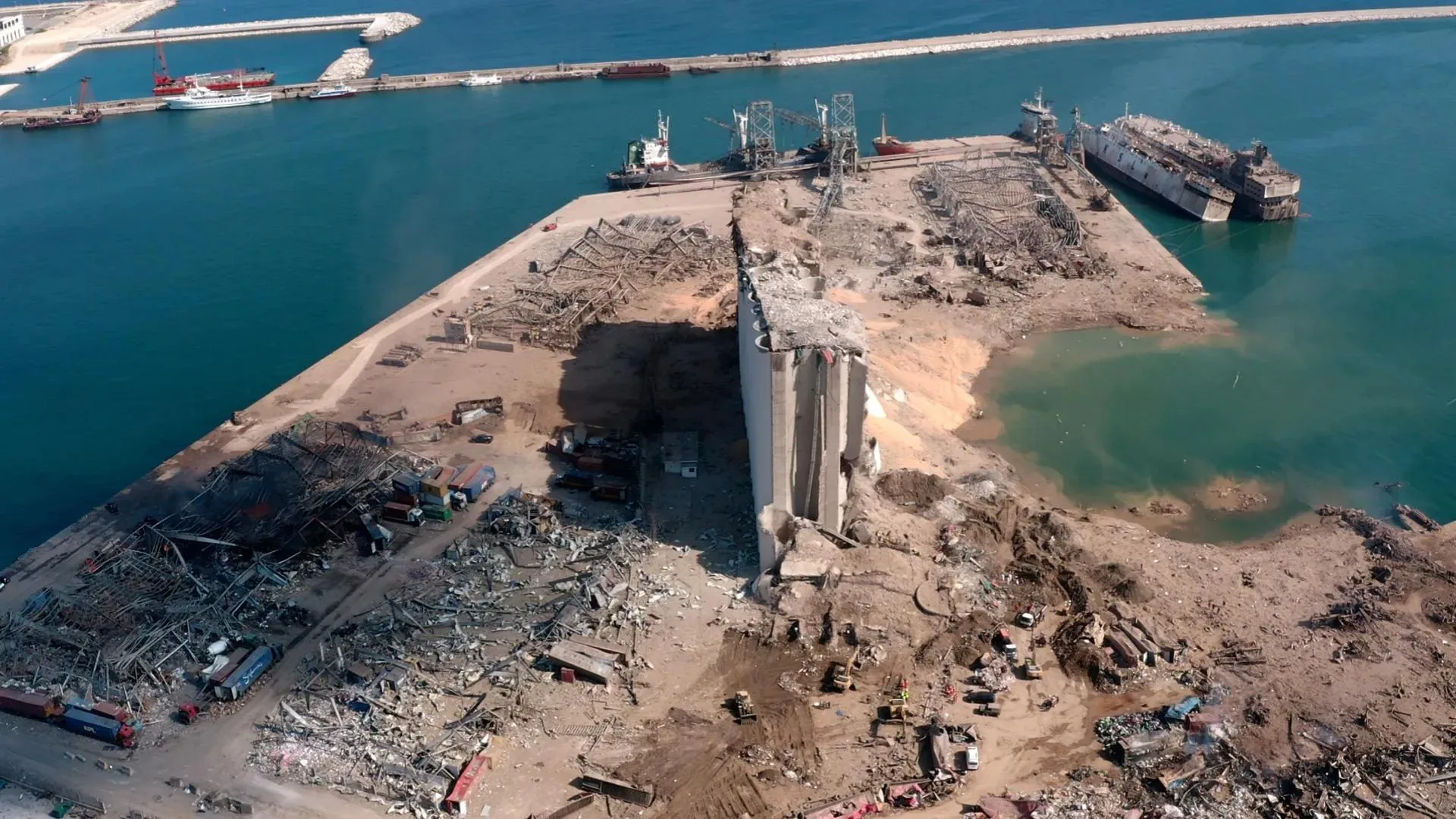
Ministry of Economy Calls for Participation in Public Auction to Sell Beirut Port Silos Scrap

"Oil Trustees": How the IRGC Built a Multi-Billion Dollar Network of New Traders