·
·


World
Former US National Security Advisor John Bolton detailed a scenario where Iran's regular army temporarily governs after the regime's fall, warning of the Revolutionary Guard's persistence.

John Bolton, the former US National Security Advisor, described a moderate scenario in the event of Iran's ruling structure collapsing, where elements of the regular army would temporarily assume control of the country. He cautioned that the Revolutionary Guard, as the most powerful military force, would likely attempt to reconstruct the regime.
In an interview with Eagle Intelligence Reports, Bolton distinguished the roles of Iran’s regular army, tasked with defending the country, from the Revolutionary Guard, whose primary mission, according to Bolton, is to protect the regime.
Bolton explained that weakening the Revolutionary Guard and the Basij militia to the point where they lose operational effectiveness could enable the regular army to intervene, restore internal security, and initiate a constitutional process allowing Iranians to decide their form of government.
He emphasized that he does not anticipate a swift transition to a Western-style democracy, clarifying that his remarks concern the military institution's capacity to prevent chaos and manage a transitional phase, rather than serving as a source of Jeffersonian democracy.
Bolton acknowledged that the regime’s fall would not automatically end instability risks, noting that Iranians have lived under repressive rule for 47 years. He indicated that the post-regime period might involve internal conflicts and attempts to settle old scores.
He warned that ethnic tensions, especially in Kurdish and Baloch regions, could be a source of internal fragmentation. However, he stated that rational discussions about Iran’s future political structure would not be possible while the current regime remains in power.
Bolton identified the greatest danger as the Revolutionary Guard remaining the most heavily armed and organized institution, as it "will exert every effort to reestablish the regime." He argued that Iran’s stability requires neutralizing both the Guard and Basij, which have the capacity to disrupt any political transition.
Regarding recent US and Israeli military operations, Bolton assessed that the strikes inflicted significant damage on Iran’s military-industrial complex, key defense forces, and state institutions. Nevertheless, he rejected characterizing these outcomes as a victory.
He stated, "The operations were successful, but they did not achieve victory," explaining that defining victory has become difficult due to shifting objectives of President Donald Trump, ranging from regime change to nuclear program destruction and weakening Iranian military forces.
Bolton criticized the US administration for not preparing adequately for the possibility of the regime’s collapse and for insufficient efforts to organize or equip the Iranian opposition to manage a transitional phase, calling this a "conceptual failure" that continues to affect the process.
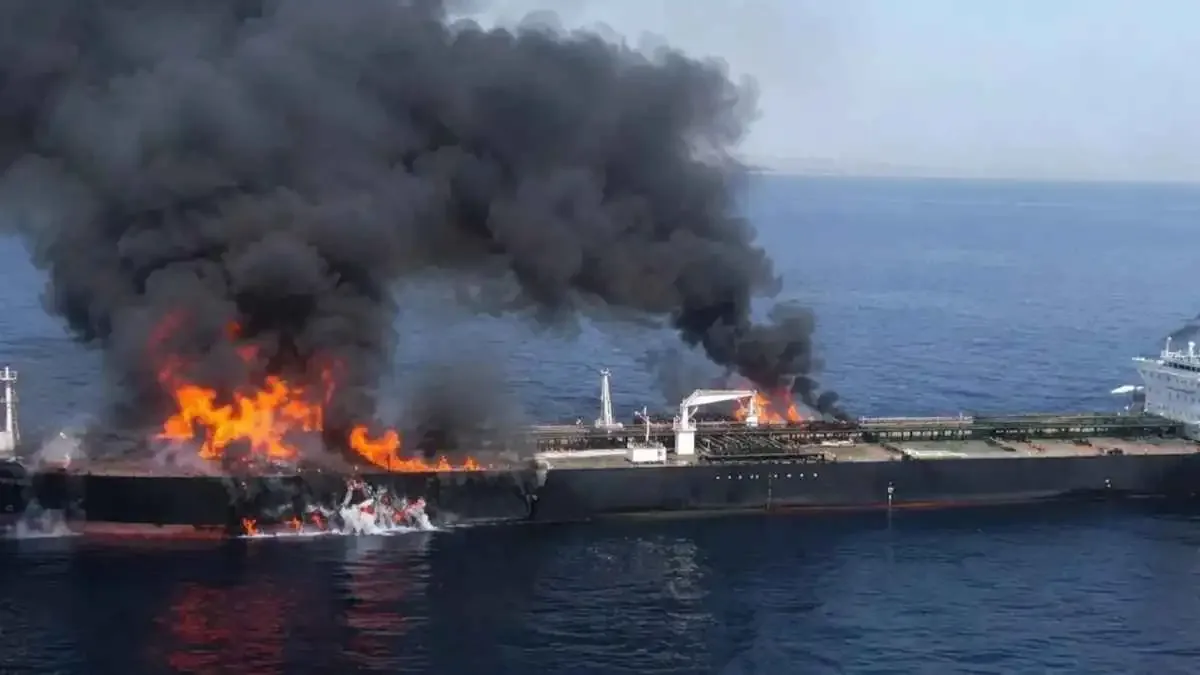
He also expressed surprise at Washington’s lack of readiness for Iran potentially closing the Strait of Hormuz, affirming that "there is no chance" the Pentagon overlooked Trump’s repeated warnings about this scenario.
Bolton suggested that safeguarding navigation and preventing Iranian oil exports might require a prolonged naval operation, especially if the Revolutionary Guard retains its capabilities. He stated that Western forces can contain the Iranian threat but cannot eliminate it entirely.
He concluded that any European involvement in the Gulf should go beyond peacekeeping-like duties and must include actual readiness to use force and deter the Revolutionary Guard from threatening maritime routes again.