Lebanon
Eisenkot Sets 4 Conditions for Forming Government, Vows to Use Majority to Oust Netanyahu
Former Israeli Chief of Staff Gadi Eisenkot outlines four conditions for forming the next government and pledges to leverage the opposition majority in the Knesset to remove Prime Minister Benjamin Netanyahu from power.

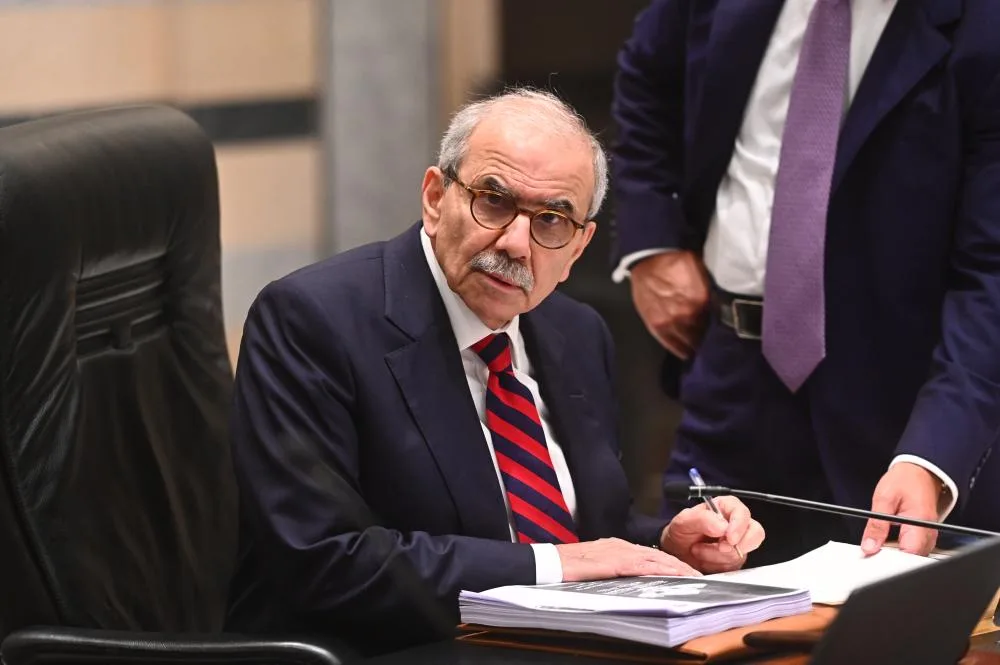
Former Israeli Chief of Staff and leader of the "Yashar" party, Gadi Eisenkot, presented four conditions for forming the upcoming government, pledging to utilize the opposition majority in the Israeli parliament (Knesset) to remove Prime Minister Benjamin Netanyahu from power. This move could redraw the alliance map and grant Arab parties an influential role in government formation calculations.
Eisenkot reaffirmed his pursuit of forming a "broad Zionist government with a responsible approach," stating that any Knesset member who accepts his principles is considered a potential partner, while emphasizing the need to make "exceptional effort" to avoid new elections and a prolonged political crisis.
He outlined four principles for partnership in the next government, concerning the state's identity, commitment to the Declaration of Independence, mandatory service for all citizens, and the government's stance on Hamas, as reported by the Jerusalem Post.
He added that the doors of the government he seeks to form will remain open to every elected official who accepts these principles, considering them the basis for national consensus rather than imposing the will of one political camp on another.
The newspaper quoted him saying he seeks to end the division between the camps of "us" and "them," accusing Netanyahu of leading what he described as a "culture of lies" that tore Israeli society apart from within, affirming the necessity of changing the country's course and improving its standing domestically and internationally.
Eisenkot's 4 Principles for Forming the Coalition Government
1. Recognition of Israel as a Jewish, democratic, liberal state based on equality.
2. Commitment to the values contained in the Israeli Declaration of Independence.
3. Imposing mandatory service on all Israelis, whether military, national, or civil.
4. Recognizing Hamas as a "terrorist organization" and acknowledging the necessity of eliminating its military and governmental capabilities in the Gaza Strip.
Parliamentary Majority Against Netanyahu
Eisenkot pledged to act quickly to employ the majority achieved by opposition parties in the Israeli elections, arguing that their results showed Israelis' rejection of the continuation of Netanyahu's government.
Parties opposing Netanyahu won 67 seats out of 120 in the Knesset, compared to 53 seats for the outgoing coalition camp. However, anti-Netanyahu Zionist parties secured only 48 seats, while the remaining 19 seats went to two Arab parties, complicating the formation of an alternative government given the refusal of most leaders of Jewish opposition parties to cooperate with them.
Netanyahu's Likud party won 27 seats, while Eisenkot's Yashar party came second with 21 seats, without either camp being able to secure an independent majority of 61 seats.
In a statement, Eisenkot said that a majority of Israelis, by a margin of more than half a million votes, voted against what he described as the "October 7th government and draft dodging," and in favor of change.
He added: "Do not let anyone mislead you; in Israel, it is the Knesset that grants confidence to the government, not the other way around," emphasizing the clarity of the election results despite attempts by some parties to question them.
Eisenkot stated that he intends to move quickly to propose legislation regarding the establishment of an official investigation committee into the failures that led to the Hamas attack on October 7, 2023, imposing mandatory service on all Israelis, and repealing controversial laws related to the judicial overhaul plan approved by the outgoing government.
The Ynet website reported that Eisenkot's priorities also include expanding the base of those joining military service, improving benefits and recognition granted to soldiers, alongside requiring all Israelis to perform some form of national service.
These pledges reflect Eisenkot's effort to translate the opposition majority against Netanyahu into legislative and political changes, parallel to negotiations for forming the new government.
Moves to Co-opt Likud Members
In the context of efforts to secure a majority, the Yashar party said its members received phone calls from ministers and MKs in the Likud party, referring to Education Minister Yoav Kish and Deputy Minister in the Prime Minister's Office Almog Cohen.
The party added in a statement: "It is clear there is panic inside Likud," referring to what it described as attempts to co-opt members from opposition parties to defect from their camp and join Netanyahu's camp, according to The Times of Israel.
However, Cohen was quick to deny these claims, confirming he had not spoken with any members of the Yashar party, describing reports about the contacts as "fake news."
Within the framework of coordination among opposition forces, the newspaper reported that Yair Lapid, the number two in the Biahd party, met with Eisenkot, in their first announced meeting since the elections.
Lapid said the meeting discussed the voting results and coordinating next steps based on a shared commitment to fulfilling the voters' will.
For his part, Avigdor Lieberman, leader of the Israel Beiteinu party, said he received several inquiries regarding the possibility of taking the position of Knesset Speaker, but confirmed he does not wish to hold the post nor intends to seek it.
Arab and Haredi Parties in Government Formation Calculations
According to The Times of Israel, Arab MK Ahmad Tibi, the number two in the Joint List alliance, said his party is prepared to support anti-Netanyahu Zionist parties in forming an alternative government, but does not wish to participate in it.
Tibi's party won 11 seats, while the other Arab party, Ra'am, won 8 seats, bringing the total seats of the two parties to 19, a number that allows them to tip the balance in favor of either camp and grant it a parliamentary majority if they decide to offer support.
In contrast, Hebrew media reports cited by the newspaper indicated that figures within the ultra-religious United Torah Judaism party are considering supporting a minority government headed by Eisenkot, without officially joining his coalition.
The party, which includes the Degel HaTorah and Agudat HaTorah factions, won 7 seats in the elections. It was scheduled that MKs of the Degel HaTorah faction would meet with their religious authorities, Rabbis Dov Lando and Moshe Hillel Hirsch, on Saturday evening.
These moves place the positions of Arab and Haredi parties at the heart of government formation negotiations, as their ability to secure necessary parliamentary support may determine outcomes, without necessarily implying their official joining of the coalition.
In another development, The Times of Israel quoted Eisenkot warning of the possibility that Netanyahu might resort to launching a war on Iran to prolong his stay in power.
Eisenkot said he would support Israeli military operations before the new government takes office "only in cases involving direct and immediate threats to Israel that cannot be postponed."
The Times of Israel noted that a new round of fighting with Iran could lead to retaliatory missiles being fired toward Israel, which could complicate coalition formation negotiations or the transfer of power to an alternative government.
Herzog Begins Consultations for Government Formation on Wednesday
Israeli President Isaac Herzog is scheduled to begin consultations with representatives of political parties on Wednesday to hear their recommendations regarding the candidate they endorse for forming the next government, according to The Times of Israel.
The meetings will be held at the Presidential Residence in Jerusalem, after the Chairman of the Central Elections Committee, Supreme Court Judge Noam Sohlberg, presents the official election results to Herzog.
Under his powers, the President chooses the candidate who gets the first opportunity to form the government, after consulting with the heads of parties represented in the Knesset.
Although Presidents have historically tended to task the leader of the largest parliamentary bloc first, the number of Knesset members' recommendations each candidate receives is a fundamental factor in determining who has the chance to be tasked.
The tasked candidate is granted 28 days to form the government, with the possibility of requesting an extension of 14 additional days. If he fails, the President can task another candidate with the mission, who is granted 28 days without the possibility of extension.
If the second attempt fails, a majority comprising 61 Knesset members can recommend tasking a third candidate, who is granted a maximum period of 14 days to form the government. If this attempt also stalls, new elections are held.
The main challenge facing Eisenkot remains converting the opposition majority into a coalition capable of gaining the Knesset's confidence, amid differences regarding cooperation with Arab and Haredi parties, as well as attempts by each camp to maintain the cohesion of its parliamentary bloc.
Latest news

Lebanese Army Implements Security Measures in Several Areas to Maintain Order
Salam Calls for Emergency Meeting to Address Food Poisoning and Adulteration

Security Investigation Launched After Three Graves Opened in Hadath Baalbek