·
·


Tech & Science
Samsung Display unveiled a 1.3-inch micro-OLED panel reaching 40,000 nits brightness, aiming to enhance outdoor usability of AR glasses.

At AWE USA 2026 in Long Beach, Samsung Display introduced a micro-OLED panel measuring 1.3 inches with a peak brightness of 40,000 nits, significantly surpassing the Apple Vision Pro's display by about eight times. This advancement targets the longstanding challenge of making augmented reality (AR) headsets suitable for outdoor and all-day use.

The new RGB OLEDoS (OLED on Silicon) technology differs from conventional micro-displays by eliminating the white-OLED-plus-color-filter method. Instead, each pixel emits its own color directly, reducing light loss and improving energy efficiency. Samsung states that this approach extends battery life and panel durability, essential factors for lightweight and thin wearable devices.
Samsung showcased a "Big Dipper" installation featuring seven micro-display panels arranged to replicate the constellation in a darkened room. Only two of these panels utilized the new high-brightness technology, making the contrast in luminosity and color saturation immediately apparent.
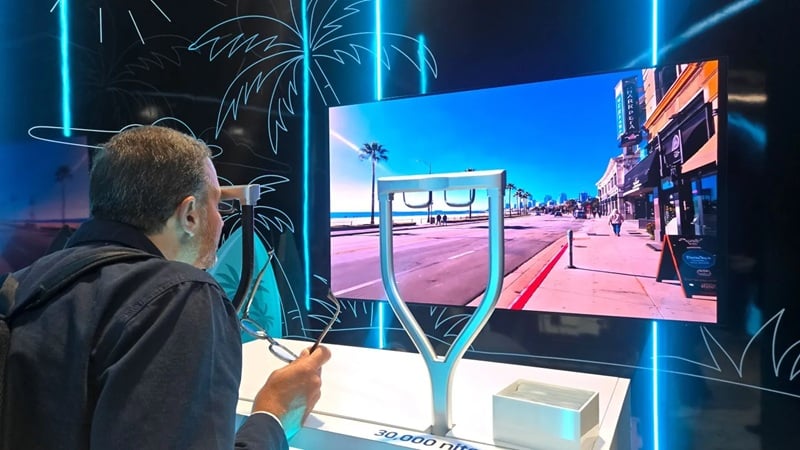
In addition to the 1.3-inch panel, Samsung presented a smaller 0.62-inch version capable of 30,000 nits, integrated into a functional AR glasses prototype. The demonstration included real-time translation, navigation, and weather overlays. However, the prototype was stationary, fixed to a table, and not wearable by attendees.
Earlier in January 2026 at CES, Samsung had displayed a 15,000-nit iteration of the same technology, indicating a rapid progression to 40,000 nits within six months. This suggests an accelerated development roadmap for their micro-OLED panels.
Samsung acquired the US-based micro-display manufacturer eMagin in 2023 to produce RGB OLEDoS technology internally, signaling a strategic move to control the supply chain rather than merely conducting laboratory demonstrations. Reports indicate Samsung is offering these panels to Microsoft for its XR devices and potentially to Apple. Samsung's own Android-based XR smart glasses, developed in collaboration with Google, are anticipated to launch in Fall 2026.
Other companies such as Meta, Pico, and Microsoft are also developing XR hardware. Qualcomm introduced its Snapdragon Reality Elite chip at the same AWE event, designed specifically for next-generation AR glasses.
Samsung has not disclosed any commercial release dates or pricing for devices incorporating this new panel. The Apple Vision Pro currently holds the premium price point at $3,500, and products with similar display technologies are expected to be priced comparably. Presently, the 40,000-nit micro-OLED panel serves as a demonstration of technological capability rather than a market-ready product.