

World
Big Data in the Grip of Cartels: Cyber Earthquake Threatens Latin America
Latin American criminal cartels are increasingly exploiting big data and urban surveillance infrastructure to target witnesses and security forces, posing a severe threat to regional stability.

The danger posed by criminal cartels and drug gangs in Latin America appears to have no limits, nor is it confined to any single domain. Security investigations and judicial research reveal that organized crime syndicates have infiltrated commercial data and the database of secret camera images across most major streets in Latin American capitals.
Latin American security and judicial sources intersect with strategic analytical reports in warning that organized crime networks and cross-border gangs have become adept at exploiting these advanced tools to serve their criminal schemes.
Eliminating Witnesses and Security Personnel
Security and intelligence reports indicate that cartels are now employing this massive data to eliminate witnesses and target police, military, and intelligence personnel in Latin American countries.
These same authorities consider that the technical and financial barriers that previously prevented irregular criminal entities from accessing surveillance tools have completely collapsed. Major drug gangs and criminal networks can now benefit from a global digital environment.
This environment teems with smart camera images, exposed video clips on the internet, and commercial geolocation data available for sale. This reshapes the map of global security threats, as comprehensive surveillance technology and digital data have moved beyond being monopolized by great powers or even official state agencies and traditional intelligence services.
Dual Infiltration
Latin American security agencies are sounding the alarm over these dangerous digital threats, confirming that cartel infiltration of Big Data databases is an ongoing reality whose repercussions will inevitably emerge soon.
According to the same well-informed official sources, this dual infiltration relies on two main fronts. The first involves commercial data and travel records, where cartels can now exploit commercially available databases, including digital browsing data, social media advertisements, travel logs, and traffic movements. These raw pieces of information provide their owner with a deep procedural and field understanding of individuals' movements and lifestyle patterns.
The second front manifests in urban surveillance infrastructures, specifically the ability to hack or exploit "urban surveillance cameras"—concentrated in main streets—and license plate recognition systems belonging to local authorities in some states that are weak and fragile in terms of security.
When the first front intersects with the second, it can be said that Latin American criminal groups now possess intelligence capabilities parallel to those of state agencies.
In assessing the risks of this shift, prominent US research centers specializing in Latin American security affairs, such as the Center for Strategic and International Studies (CSIS), believe that the dangers of this transformation are not limited to the theoretical cyber aspect but may translate into bloody violence and direct threats to institutional stability on the ground.
According to previous audit reports by the US Department of Justice and some investigative inquiries, criminal networks in Latin America have managed to breach official security systems. They have also achieved precise tracking of judges, security officials, and opposition political, party, and parliamentary elites by integrating geographic databases with city cameras.
This digital armament, represented by periodic and escalating technical surveillance, grants cartels superior capability for blackmail and pre-emptive infiltration through the creation of accurate profiles of targeted figures, including determining their movements and the possibility of easily and precisely "removing" them from the public scene.
It also allows for paralyzing the capabilities of the security and military institutions by employing drones and advanced tracking technologies to monitor border guard patrols and security agency responses in the field.
Absence of Latin American Governments
According to informed security readings, the current situation grows more dangerous and aggravated due to the slow response of government and legislative institutions in Latin America to these threats stemming from an unregulated commercial data market, and the lack of regulatory frameworks to protect privacy and prevent the leakage of sensitive technology.
Added to all of the above is the failure of many Latin American capitals to keep pace with the digitization of administration and the construction of a digital security institution dedicated to preventing the encroachment and expansion of cartel threats through the cyber gateway.
There are existing alliance relationships between these criminal groups and armed militias in the Middle East that seek to target American and Israeli interests in the Latin American region, building alternative logistical, military, and material infrastructure to compensate for their major losses in Lebanon and Syria. Thus, the danger is real and extends beyond the borders of Latin America.
In conclusion, observers of Latin American security affairs conclude that this new reality imposes a different reading of concepts of local, regional, and international security, as the true threat now lies in the ability of rogue entities and criminal gangs to possess massive digital databases.
This necessitates the formulation of urgent policies to restrict the flow of commercial data and seal sensitive cyber vulnerabilities before these technologies become a digital substitute for the state itself within the areas of influence of those groups.
Latest news
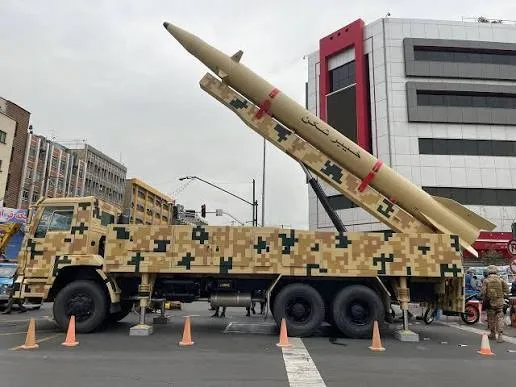
5,000 Fronts: Hidden Network Fuels Iran's Military Arsenal Despite Sanctions and Blockade

CENTCOM Commander: Iran Has Lost Ability to Monitor Strait of Hormuz

Trump: War with Iran "Will End Soon"
